Philodendron Care (Philodendron 'Prince of Orange')

Philodendron

About Philodendron

Philodendron 'Prince of Orange' is a compact, self-heading aroid grown mainly as a decorative foliage houseplant. It forms a short, sturdy stem with leaves radiating from a central point rather than trailing.

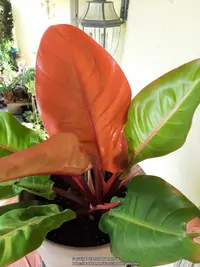
New leaves emerge bright orange, then shift through copper tones to rich green, so the plant shows several colors at once. This color change is its main ornamental feature.

Philodendron species come from tropical American forests, where they grow in warm, shaded, humid conditions. Those traits make this cultivar well suited to indoor life in stable room conditions.

It is considered relatively easy to grow when kept in bright, indirect light, evenly moist but not soggy soil, and protected from cold drafts, which simplifies how to care for Philodendron indoors.

Main Plant Requirements

Care Difficulty

Easy Care

Light Preference

Bright Indirect Light

Water Requirements

Moderate Water

Temperature Preference

Tropical / Frost Sensitive

Hardiness Zone

10–11

Soil Texture

Loamy, Peaty, Organic-rich

Soil pH

Acidic (5.5–6.5), Slightly acidic (6.5–7.0)

Soil Drainage

Moist but well-drained

Fertilization

Light (every 4–6 weeks)

Get Personalized Care Plan

Scan your plant to receive care tips personalized for your specific plant

Available on iOS and Android

How to Care for the Philodendron

This cultivar prefers bright, indirect light to maintain its orange coloration and compact growth.

  • Provide 6–8 hours of bright, filtered light daily, such as near an east window or under light sheer curtains, to avoid leaf scorch.
  • Tolerates light shade and short periods of low light, but new leaves may emerge more green and petioles may stretch toward the light source.
  • Protect from strong midday and afternoon sun, especially in summer; move slightly farther from south- or west-facing windows or provide shade cloth outdoors.

Watering should balance even moisture with good air flow around the roots to prevent rot.

  • Allow the top 2–4 cm of soil to dry before watering, checking with a finger rather than following a fixed schedule.
  • Use a free-draining mix and a pot with drainage holes so excess water escapes, reducing risk of yellowing leaves and mushy stems from overwatering.
  • In brighter, warmer months, soil will dry faster; in cooler or lower-light seasons, extend the dry period and watch for limp, curling leaves as an early underwatering sign.

Stable, warm temperatures support steady foliage production and good color in this plant.

  • Aim for 65–80°F (18–27°C) for best growth, with consistent conditions and minimal daily swings.
  • Short drops to 60°F (16°C) are usually tolerated, but growth slows; below 55°F (13°C) tissue damage may occur, especially on new leaves.
  • This tropical species is not frost-hardy; protect from drafts, cold windows, and heat sources, and shield from prolonged heat above 86°F (30°C) with extra shade and humidity.

This hybrid prefers moderate to high humidity for stable foliage color and growth.

  • Aim for 50–70% humidity; it tolerates brief dips to 40% but growth may slow.
  • Crisp leaf edges, brown tips, and rolled new leaves indicate air is too dry.
  • Group plants, place on a pebble tray with water below the pot base, or use a small humidifier to raise humidity.
  • Keep plant away from heating vents and strong drafts that create excessively dry air.

This plant performs best in a loose, airy, organic-rich mix that drains quickly but holds light, even moisture.

  • Use a base of peat or coco coir with added perlite and medium orchid bark to create a chunky, well-aerated structure.
  • Aim for slightly acidic to neutral pH around 5.5–7.0, which supports nutrient uptake and root health.
  • Increase drainage and oxygen around roots by using at least 30–50% coarse components such as perlite, bark, or pumice in the mix.
  • Avoid heavy garden soil, fine sand-heavy mixes, or containers that stay waterlogged, which encourage root rot in Philodendron 'Prince of Orange'.

This compact hybrid is very suitable for container growing.

  • Choose a pot just 2–5 cm wider than the root ball to limit excess wet mix and reduce rot risk.
  • Select a stable, heavier container if the foliage rosette makes the plant top-heavy as it matures.
  • Opt for terracotta if the mix stays wet too long, or glazed/plastic pots in very dry homes to slow evaporation.

Consistent, moderate feeding supports compact growth and strong foliage color in Philodendron 'Prince of Orange'.

  • Use a balanced liquid fertilizer (around 10-10-10 or 20-20-20) diluted to 1/4–1/2 strength for potted plants.
  • Feed every 4–6 weeks during spring–summer when growth is active.
  • Reduce to 1 light feeding in fall and stop in winter when growth slows.
  • Optionally mix a small amount of slow-release fertilizer or mature compost into the topsoil in spring.

Targeted pruning helps maintain tidy shape and healthy foliage in Philodendron 'Prince of Orange'.

  • Best time for pruning is late winter to early spring, before strong new growth starts.
  • Remove yellowing, dead, or diseased leaves by cutting close to the base with clean, sharp scissors or pruners.
  • Thin crowded inner leaves to improve light penetration and airflow, encouraging sturdier new growth.
  • Shape the plant by selectively shortening overly long petioles, avoiding removal of the central growing point.

Repotting maintains root health and stable growth for this compact indoor Philodendron.

  • Check for roots circling the pot, pushing through drainage holes, or slowed growth as signs it needs a larger container.
  • Plan to repot every 2–3 years in spring, moving to a pot 2–5 cm wider with drainage holes.
  • Use a loose, airy mix (such as peat- or coco-based with perlite or bark) to limit waterlogging and root stress.
  • Water lightly after repotting, keep in bright indirect light, and avoid heavy feeding for 3–4 weeks while roots re-establish.

Vegetative propagation keeps new plants true to Philodendron 'Prince of Orange' color and form.

  • Best method is division in spring, when removing the plant from its pot for repotting.
  • Gently separate the clump into sections, ensuring each division has healthy roots and at least one active growth point.
  • Plant divisions into small pots with fresh, well-drained mix, and water lightly to settle roots.
  • Maintain warm temperatures (70–80°F), high humidity, and bright indirect light to support rooting and recovery.

This tropical houseplant is not frost hardy and needs warm, stable indoor conditions in winter.

  • Keep temperatures above 60°F; avoid locations near drafty windows, exterior doors, or unheated rooms.
  • If grown outdoors in summer, move containers indoors before nights drop below 55°F.
  • Place away from direct blasts of heating vents to limit leaf scorch and rapid moisture loss.
  • Maintain moderate watering, allowing the topsoil to dry slightly more than in summer, and reduce fertilizer.

Care Tips

Rotate For Symmetry

Rotate the pot 90° every 1–2 weeks so new leaves color evenly and the rosette stays compact rather than stretching to one side.

Support Heavy Petioles

If outer leaves start to flop, tuck a short ring stake or small hoop support around the plant to keep petioles upright and prevent creasing at the base.

Color-Friendly Placement

Place the plant where it can be enjoyed from slightly above or eye level, since new leaves unfurl from the center and display their strongest orange tones from the top view.

Clean Leaves Gently

Wipe both sides of the leaves every 3–4 weeks with a soft, damp microfiber cloth to remove dust, improve light capture, and allow early detection of pests while caring for Philodendron.

Seasonal Pot Check

At the start and end of the main growth season, gently slide the root ball halfway out of the pot to check for tight circling roots so you can plan repotting before growth slows or stress shows in the foliage.

Everything About Philodendron

Common Pests and Diseases

Spider mites

This pest feeds on the undersides of leaves, causing stippling, dulling of the bright foliage, and fine webbing, especially in warm, dry indoor air. Symptoms include slow decline in new flushes of orange foliage and a rough, sandpapery feel to leaves.

Solution

Rinse foliage thoroughly with lukewarm water, focusing on leaf undersides, then wipe with a soft cloth and repeat weekly until activity stops. Increase humidity to 50–60%, isolate the plant, and use an insecticidal soap or neem oil spray labeled for indoor use, applying every 7–10 days for several cycles to disrupt their life cycle.

Mealybugs

These insects hide in leaf bases and along petioles, forming white, cottony clusters that stunt new growth and reduce the intensity of leaf color. This pest is attracted to the dense central rosette and sheltered crown of the plant.

Solution

Dab visible insects with cotton swabs dipped in 70% isopropyl alcohol, then rinse the plant after treatment to remove residues. Inspect the crown and petiole joints weekly, isolate the plant, and apply an insecticidal soap or neem oil spray to all leaf surfaces and crevices until no new clusters appear.

Bacterial leaf spot

This disease causes small, water-soaked lesions that turn dark, sometimes with yellow halos, often starting on the newest, tender orange foliage. Symptoms include rapid spread when leaves stay wet and poor air movement around the rosette.

Solution

Remove and discard all affected leaves, sterilizing scissors with alcohol between cuts, and avoid wetting the foliage during watering. Improve airflow, reduce overhead misting, keep leaves dry, and if the problem persists, use a copper-based bactericide labeled for ornamental foliage plants, following all label directions carefully.

Erwinia blight

This disease leads to sudden soft, mushy, foul-smelling tissue at the crown or petiole bases, often after overwatering and high humidity. Symptoms include rapid collapse of new leaves and dark, water-soaked areas that spread quickly through the central rosette.

Solution

Isolate the plant immediately, remove all affected tissue well into healthy, firm tissue, and discard any severely affected plants to protect others. Allow the potting mix to dry slightly between waterings, improve drainage and airflow, keep water away from the crown, and avoid reusing contaminated tools or pots.

Fungus gnat larvae

This pest lives in consistently moist potting mix, where larvae feed on fine roots and tender crown tissue, leading to weak growth and increased susceptibility to Erwinia and other rots. Symptoms include small black adult gnats flying around the plant and slow, pale new growth despite correct light levels for Philodendron indoor care.

Solution

Allow the top 2–3 cm of soil to dry between waterings, then bottom-water when possible to keep the surface drier. Use yellow sticky traps to reduce adult populations and apply a biological control such as Bacillus thuringiensis israelensis (Bti) or beneficial nematodes to the potting mix to target larvae.

Interesting Facts

Color-changing new leaves

New foliage emerges bright coppery orange, shifts through pinkish or apricot tones, and finally matures to solid green, all on the same plant at once. This staged color change is due to pigments such as carotenoids and anthocyanins that are more concentrated in young leaves and decrease as the leaf ages.

Compact hybrid origins

This plant is a man-made Philodendron hybrid selected for its compact, self-heading growth, not a wild species found in nature. Breeders combined parent plants from the Meconostigma group to produce a dwarf plant with colorful juvenile leaves and a tight rosette form.

Self-heading growth habit

Unlike climbing philodendrons, this cultivar forms a thick, upright stem with leaves that radiate from a central point, creating a low, symmetrical rosette. The plant naturally stays relatively short compared with many philodendrons, which makes it suitable for tabletops and small indoor spaces.

Botan icon

Did you know?

Philodendron 'Prince of Orange' was developed specifically for the ornamental foliage trade and gained popularity in the late 20th century as one of the early commercially successful philodendron cultivars bred primarily for its dramatic juvenile leaf color rather than size or variegation.

FAQs about Philodendron

Crispy brown edges on new foliage usually indicate low humidity, excess fertilizer salts, or inconsistent moisture. Rinse the soil thoroughly, maintain evenly moist but not soggy substrate, and raise humidity with a pebble tray or nearby humidifier.

Grow Healthy Plants with Botan Care

Keep your plants happy and healthy with plant identification, disease detection, and easy care guidance.

Botan plant care app — identify plants on mobile

Explore More Plants