

Philodendron (Philodendron 'Prince of Orange') Light Needs

Philodendron grows best in bright, indirect light with brief, gentle morning sun if introduced gradually.

Light Preference

Bright Indirect Light

Philodendron 'Prince of Orange' Light Requirements

This cultivated selection comes from tropical Philodendron ancestry adapted to warm, humid forest edges and understory sites. In those settings, leaves receive filtered light through higher vegetation, with short periods of softer sun rather than open, all-day exposure.

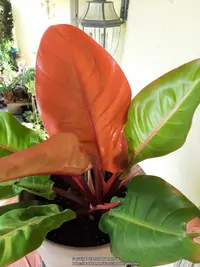
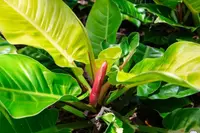
That background explains its indoor preference. Strong but diffused light supports compact growth and the orange tones in new leaves, while harsh afternoon sun can scorch. Preferred light is bright indirect light.

  • Ideal exposure:

    Ideal exposure: Philodendron 'Prince of Orange' needs about 6–8 hours of bright, indirect or filtered light daily, including up to 1–2 hours of gentle direct morning sun.

  • Direct sun:

    Brief early sun is usually tolerated, but midday or afternoon sun can burn the newer orange leaves.

  • Lower light:

    It can survive in moderate shade, but growth often slows and leaf color becomes less vivid.

  • Winter brightness:

    In winter, a brighter position may help compensate for shorter days and weaker sun.

Indoors, choose a bright position where the leaves see the sky but are protected from harsh direct sun.

NConditional
North-facing window:

Use only a very bright, unobstructed north-facing window, and keep it close to the glass.

EBest
East-facing window:

Place it within 1–3 ft of an east-facing window for bright light and mild morning sun.

SConditional
South-facing window:

Set it 3–6 ft back or use a sheer curtain so direct rays do not hit the leaves for long.

WConditional
West-facing window:

Use a sheer curtain or place it 4–6 ft back to soften hot afternoon sun.

If the plant leans or new leaves shrink, move it gradually toward a brighter position.

Excess light usually shows where direct sun hits the leaves.

Pale patches:

Bleached tan or cream areas may appear on exposed leaf sections after harsh sun.

Crisp spots:

Dry brown spots can form on the orange new growth, especially after sudden afternoon exposure.

Dull new color:

Fresh leaves may open less richly colored when strong light damages tender tissue.

Leaf positioning:

Leaves may angle away from the window during the brightest part of the day.

Move Philodendron 'Prince of Orange' out of direct afternoon sun and filter the light with a sheer curtain. Keep damaged leaves in place until they decline, since green tissue can still support growth.

Low light shows gradually, especially during active growth. The plant may stay alive, but it will not grow as strongly.

  • Longer stems:

    New growth may stretch, with wider gaps between leaves as it reaches for light.

  • Leaning growth:

    The crown may tilt toward the nearest window instead of growing evenly.

  • Smaller leaves:

    New leaves can open smaller and less sturdy than older leaves.

  • Muted color:

    The orange flush on new leaves may look weaker in a dim position.

Move Philodendron 'Prince of Orange' closer to a brighter window in small steps over 1–2 weeks. Avoid switching from shade to direct sun in one move.

If ideal brightness is not available, choose the brightest spot without hot afternoon rays rather than a dim corner. Keep the plant close enough that the leaves receive clear daylight for most of the day.

Rotate the pot a quarter turn every 1–2 weeks to keep growth balanced.

A room with only distant window light is unsuitable because new growth can stretch and lose color.

Get Personalized Care Plan

Scan your plant to receive care tips personalized for your specific plant

FAQ

The best light for Philodendron is bright indirect light for most of the day, with only brief gentle morning sun if it has been introduced gradually.

Everything About Philodendron

More Plant Light Guides

Get the Botan App

Discover how to care for your plants with Botan.

Botan app identifying a plant with a phone camera
Top 15 Fast-Growing Trees For Your Garden

13 min read · 28 Jul 2026

Top 15 Fast-Growing Trees For Your Garden

Learn which of the 15 fastest-growing trees will suit your area. We’ll share detailed information on each: growth rate, mature spread, key tree demands, and main vulnerabilities. Read on and make the best choice possible.

Plant Recommendations
Top 15 Fast-Growing Trees For Your Garden
13 Best Front Yard Trees for Every Home and Yard

12 min read · 7 Aug 2026

13 Best Front Yard Trees for Every Home and Yard

A front yard tree can stay for decades. Therefore, choosing one deserves serious consideration. Here are 13 trees that have proven themselves, sorted by their purpose. You'll also find five species to avoid and basic planting information.

Plant Recommendations
13 Best Front Yard Trees for Every Home and Yard
What Plants Don't Like Epsom Salt?

11 min read · 29 Jul 2026

What Plants Don't Like Epsom Salt?

Learn which plants can be seriously damaged by Epsom salt and which will thrive on it. We’ll explain when and how to use it properly, provide tips for indoor & outdoor plants — read on and enjoy a healthy garden.

Plant Care
What Plants Don't Like Epsom Salt?