Flat-leaved Scalewort Care (Radula complanata)

Also known as: Even Scalewort
Flat-leaved Scalewort

About Flat-leaved Scalewort

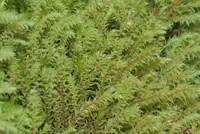
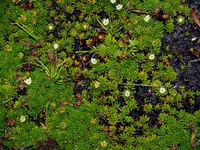
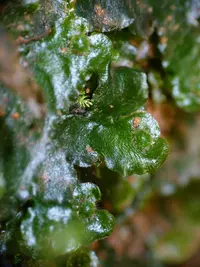
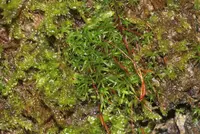
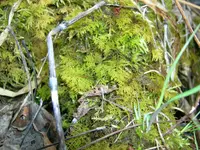
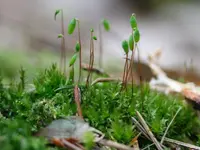
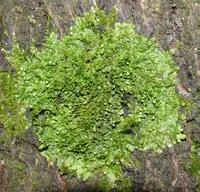
Flat-leaved scalewort, Radula complanata, is a leafy liverwort rather than a typical flowering plant. It forms thin, flat, overlapping mats of tiny green shoots that cling closely to bark, rock, or decaying wood. The shoots create a smooth, slightly glossy carpet-like surface.

This species occurs widely across temperate regions, especially in humid woodlands, on tree trunks, and in shaded ravines. It prefers cool, consistently moist, shaded conditions and clean air, which makes it sensitive to drought and pollution.

Because it is small and delicate, it is more suited to terrariums or specialist collections than to casual houseplant culture. Anyone who wants to learn how to care for Flat-leaved Scalewort should be prepared to provide stable humidity, mild light, and gentle handling.

Main Plant Requirements

Care Difficulty

Hard Care

Light Preference

Shade

Water Requirements

Keep Soil Moist

Temperature Preference

Cool Climate

Hardiness Zone

3–8

Soil Texture

Peaty, Organic-rich, Loamy

Soil pH

Strongly acidic (4.5–5.5), Acidic (5.5–6.5)

Soil Drainage

Waterlogged tolerant

Fertilization

Minimal (feed rarely)

Get Personalized Care Plan

Scan your plant to receive care tips personalized for your specific plant

Available on iOS and Android

How to Care for the Flat-leaved Scalewort

This small liverwort prefers cool, shaded woodland conditions with only brief, gentle sun exposure.

  • Provide dappled or fully filtered light under trees, rocks, or logs; 0–2 hours of weak early morning sun is acceptable, but avoid direct midday or afternoon sun.
  • In very dark sites, use bright but indirect light or thin overhead shade so colonies receive a soft, greenish light for 4–6 hours to maintain compact, healthy growth.
  • Monitor fronds for bleaching or crisp edges, which indicate excess light, and for elongated, pale shoots, which signal the need for slightly brighter, but still indirect, exposure when caring for Flat-leaved Scalewort.

This bryophyte needs consistently moist conditions and does not tolerate drying out.

  • Aim for constantly damp, never soggy, substrate; the surface should feel cool and moist at all times, with no standing water around Radula complanata.
  • Increase misting or gentle watering whenever the surface film of moisture disappears or the substrate lightens in color, especially during warm, windy, or low-humidity periods.
  • Reduce water volume but not frequency in cooler seasons, and watch for pale, shriveled tissues as a sign of underwatering, or slimy, dark patches and odor as early overwatering and stagnation indicators.

This species is adapted to cool, humid climates and is sensitive to both hard frost and strong heat.

  • Maintain an active growth range around 45–68°F (7–20°C), where tissues stay firm and hydrated without heat stress.
  • Short exposures down to about 28–32°F (-2–0°C) may be survived on sheltered substrates, but repeated or deep freezes can damage or kill delicate shoots.
  • Protect colonies from prolonged temperatures above 77–82°F (25–28°C); combine shade, high humidity, and good air movement during hot spells to limit desiccation and thermal stress.

This liverwort needs consistently moist, high-humidity conditions to stay healthy.

  • Aim for 70–90% humidity, as Flat-leaved Scalewort quickly dries out in typical indoor air.
  • Crisping, paling, or curling fronds indicate humidity stress and surface desiccation.
  • Increase humidity with a closed terrarium, covered dish garden, or by placing the substrate over a shallow, constantly damp gravel tray.

This epiphytic liverwort prefers a constantly moist, airy, organic substrate rather than standard potting soil.

  • Use a fine-textured mix of milled sphagnum, leaf litter, and a small amount of shredded bark to mimic decaying wood or mossy rock surfaces.
  • Ensure the mix stays evenly moist but never waterlogged by using a shallow layer with ample air exposure across the surface.
  • Keep pH mildly acidic to neutral (pH 5.0–7.0), which suits Radula complanata colonizing bark or stone in nature.
  • Avoid dense mineral soils, peat plugs that dry to a hard crust, and any mix with added fertilizer salts that can burn delicate tissues.

This species can be grown in shallow containers or terraria when moisture and airflow are carefully controlled.

  • Choose a broad, shallow container so the mat can spread horizontally without deep, stagnant moisture pockets forming below.
  • In closed terraria, leave a small ventilation gap or periodic opening schedule to prevent stagnant, mold-prone air around the mat.
  • On open trays, line the base with inert gravel or mesh so excess water drains away while the upper substrate layer remains evenly moist.

Radula complanata is a tiny epiphytic liverwort that gains most nutrients from rainwater, dust, and decaying organic matter, so added fertilizer is rarely necessary.

Radula complanata benefits from light grooming rather than true structural pruning.

  • Best done in spring or early summer when the mossy mats are actively growing and can recover faster.
  • Pinch or trim away dead, yellowed, or decayed patches with fine scissors or tweezers to keep growth dense.
  • Remove crowded or overhanging fronds to maintain airflow and an even, flat carpeted appearance.
  • Disinfect small tools with alcohol before and after trimming to reduce fungal and algal spread.

This liverwort is usually grown on bark, rocks, or moist substrates, so focus on gentle transplanting rather than frequent repotting.

  • Transplant when mats detach, dry at the edges, or when the substrate decomposes or becomes compacted.
  • Choose cool, moist weather or a shaded indoor period to move colonies, reducing desiccation stress.
  • Lift thin mats carefully with a blunt tool, keeping substrate fragments attached to preserve delicate rhizoids.
  • Press onto fresh, clean, consistently damp bark or rock, then maintain high humidity until growth reanchors.

Radula complanata spreads mainly through tiny fragments and specialized buds, making informal propagation by division the most practical method.

  • Best time is in cool, consistently moist conditions of spring or early autumn.
  • Gently tear or cut small living patches from a healthy mat without letting them dry out.
  • Press fragments onto rough, damp bark, rock, or soil in a shaded, humid environment.
  • Maintain high humidity and very soft, low-mineral water to encourage stable attachment and new shoot growth.

This flat-leaved scalewort is quite cold tolerant in its natural range and usually needs minimal winter care outdoors.

  • In-ground or naturalized colonies typically overwinter under snow or leaf litter without extra protection.
  • For mounted or container-grown mats, avoid freeze-thaw cycles that cause drying and mechanical damage.
  • Move portable pieces into a cool, frost-free, bright shade area if winter temperatures drop well below freezing.

Care Tips

Use stable substrate

Attach the plant to rough, inert materials like cork bark, hardwood, or lava rock using cotton thread or fine fishing line so the thin shoots can anchor securely without being smothered by soil.

Maintain constant airflow

Place mounts where there is gentle but continuous air movement, such as near (not in) the path of a small fan, to reduce fungal growth and help surfaces dry slightly between misting sessions.

Soft water only

Use rainwater, distilled water, or reverse-osmosis water in a fine mister to avoid mineral buildup that can burn delicate leaf lobes and gradually stunt growth.

Shaded terrarium placement

If kept in a terrarium, position the mount low and off to the side, away from direct LED beams, and partially shielded by taller plants or hardscape to mimic its natural position under denser canopy.

Regular colony thinning

Every few months, gently trim or peel back dense patches so underlying layers do not rot from trapped moisture and to maintain healthy, actively growing edges when caring for Flat-leaved Scalewort.

Common Pests and Diseases

Fungus gnat larvae

This pest lives in constantly wet moss or liverwort mats and chews on delicate rhizoids and young shoots, causing thinning patches and slow decline. Symptoms include pale, weakened growth and tiny black adult gnats flying when the colony is disturbed.

Solution

Reduce water saturation so the substrate stays evenly moist but not waterlogged, and improve air movement around the colony. Use yellow sticky traps to catch adults and, if needed, drench the substrate with a biological control containing Bacillus thuringiensis israelensis (Bti) to target larvae without harming the moss-like tissue.

Slugs and snails

These animals graze heavily on moist Radula mats, leaving irregular bare patches and ragged edges on the thallus-like shoots. Symptoms include missing sections of growth and silvery slime trails on and around the colony.

Solution

Hand-pick slugs and snails in the evening or early morning and remove hiding spots such as loose debris and pots in contact with the ground. In outdoor or greenhouse settings, use physical barriers like copper tape, and if pressure is high, place iron phosphate slug bait away from the colony to reduce populations.

Filamentous green algae

This problem develops in overly bright, wet conditions where nutrient-rich water favors fast algal growth that smothers the fine lobes. Symptoms include slippery, stringy green films coating the surface and reducing gas exchange and light penetration.

Solution

Shade the colony from direct sun, reduce dissolved nutrients by avoiding fertilizer runoff, and increase gentle water movement if grown in a terrarium or paludarium. Carefully tease away algal mats with soft tweezers or a soft brush, taking care not to detach the Radula, and maintain better balance of light and moisture to prevent regrowth.

Gray mold (Botrytis)

This disease appears in stagnant, humid air where wet tissue cannot dry between waterings, leading to soft, water-soaked patches that develop fuzzy gray mold. Symptoms include rapid collapse of affected areas and spreading necrotic spots across the mat.

Solution

Improve air circulation, avoid overhead misting that keeps the colony constantly wet, and remove all visibly infected tissue with clean tools. In persistent cases under cultivation, apply a mild fungicide labeled for moss-like plants at low concentration and adjust humidity to a slightly lower, more stable level while still preventing desiccation.

Desiccation damage

This abiotic problem occurs when humidity drops too low or airflow becomes too strong, causing the delicate shoots to dry, curl, and turn brown, especially at edges and raised areas. Symptoms include patchy dieback that starts in exposed spots while shaded crevices remain greener.

Solution

Raise ambient humidity to around 60–80% using trays of water or a humidifier and protect the colony from direct drafts or heating vents. Mist lightly in the morning so tissue can rehydrate without staying wet all night, and in terrariums adjust vents and lighting to balance evaporation and moisture, which is central to Radula complanata care.

Interesting Facts

Ancient lineage liverwort

This species is a leafy liverwort, part of a very old lineage of land plants that diverged from other plant groups early in plant evolution, so its simple structure reflects ancestral plant traits studied in evolutionary biology.

Nitrogen-cycle contributor

Radula complanata hosts nitrogen-fixing cyanobacteria in its tissues, which can convert atmospheric nitrogen into usable forms and subtly enrich nutrient-poor forest substrates.

Air-quality indicator

This liverwort is sensitive to air pollution, especially sulfur dioxide and heavy metals, so its presence and health are often used by ecologists as a bioindicator of relatively clean, humid forest air.

Botan icon

Did you know?

Radula complanata produces a range of distinctive terpenoid compounds in its oil bodies, and chemical profiles of these compounds help bryologists distinguish this species from closely related liverworts in taxonomic studies.

FAQs about Flat-leaved Scalewort

This liverwort forms thin, overlapping mats that can gradually extend over bark, rock, or soil, but it is not considered aggressive. Growth is slow to moderate and usually stays limited to consistently moist, shaded microhabitats.

Grow Healthy Plants with Botan Care

Keep your plants happy and healthy with plant identification, disease detection, and easy care guidance.

Botan plant care app — identify plants on mobile

Explore More Plants