Indian Hawthorn Care (Rhaphiolepis indica)

Also known as: Hong Kong Hawthorn, Sexton's Bride, Yedda hawthorn
Indian Hawthorn

About Indian Hawthorn

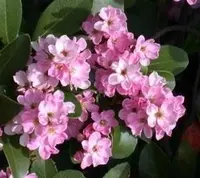
Indian hawthorn, Rhaphiolepis indica, is a compact evergreen shrub widely used in residential landscapes and coastal plantings. It forms dense, rounded mounds with leathery, dark green leaves and clusters of pink or white spring flowers.

This shrub is native to parts of China and other East Asian regions, where it experiences mild winters and warm, bright conditions. In gardens, it is valued for its neat form, moderate growth rate, and tolerance of salt spray and urban conditions.

It is considered relatively easy to grow, especially in full sun, well-drained soil, and with moderate moisture. Understanding how to care for Indian Hawthorn helps keep its foliage healthy and flowering reliable over many years.

Main Plant Requirements

Care Difficulty

Easy Care

Light Preference

Full Sun

Water Requirements

Low Water

Temperature Preference

Warm Climate

Hardiness Zone

7–10

Soil Texture

Sandy, Loamy

Soil pH

Acidic (5.5–6.5), Slightly acidic (6.5–7.0)

Soil Drainage

Well-drained

Fertilization

Minimal (feed rarely)

Get Personalized Care Plan

Scan your plant to receive care tips personalized for your specific plant

Available on iOS and Android

How to Care for the Indian Hawthorn

This shrub prefers consistent sun exposure but can adapt to a range of garden light conditions.

  • Provide 6–8 hours of direct sun daily; morning sun with light afternoon shade is ideal in hotter regions.
  • Tolerates partial shade (around 3–4 hours sun), but flowering of Indian Hawthorn may decrease and growth can become more open.
  • In very strong summer sun, especially in dry or reflective sites, slight afternoon shade reduces leaf scorch and helps maintain foliage color.

Rhaphiolepis indica prefers evenly moist but not saturated soil, especially while establishing.

  • Before watering, allow the top 3–5 cm of soil to dry; use this as a guide rather than a fixed schedule.
  • During the first growing season, check moisture 1–2 times per week; in established shrubs, deep watering every 7–14 days in dry periods is usually sufficient.
  • Ensure sharply draining soil to prevent root rot; yellowing soft leaves suggest overwatering, while crisp browning leaf edges indicate underwatering.

This species performs best in mild climates with moderate seasonal temperature swings.

  • Optimal growth occurs around 65–80°F (18–27°C), supporting steady foliage and flower development.
  • Mature plants typically tolerate down to about 10–15°F (-12 to -9°C) but young shrubs and container plants may suffer damage below 20°F (-7°C).
  • Handles summer heat up to about 95°F (35°C) if soil moisture is adequate; prolonged hard frost or sudden freeze-thaw cycles can cause leaf burn and dieback.

This shrub tolerates a wide humidity range and rarely needs special humidity care outdoors.

  • Target 30–60% humidity; typical outdoor air in most climates is sufficient for Indian Hawthorn.
  • Dry indoor air can slightly crisp leaf edges, especially near heating vents or strong drafts.
  • If grown in a very dry, hot spot, increase local humidity by grouping plants or placing a tray of water and stones nearby.

Rhaphiolepis indica performs best in well-drained, moderately fertile mineral soils.

  • Use a sandy or loamy soil with some organic matter to hold nutrients but still drain freely.
  • Aim for slightly acidic to neutral pH, around 6.0–7.0, to support nutrient availability and leaf health.
  • For container or bed preparation, combine roughly 50% garden loam, 30–40% coarse sand, and 10–20% compost for structure and aeration.
  • Avoid heavy clay, compacted, or waterlogged sites; improve drainage with coarse sand or fine gravel if soil stays wet after rain.

This species is well-suited to container growing on patios, balconies, or entryways.

  • Choose a wide, heavy container to stabilize the naturally dense, bushy canopy against wind and accidental bumps.
  • Use a deep pot that allows a broad root system to form, which helps the shrub tolerate short dry spells in containers.
  • Select thicker-walled clay or concrete pots in hot climates to moderate root-zone temperature and slow rapid moisture loss.

Rhaphiolepis indica benefits from modest, well-timed feeding, especially in containers or poor soils.

  • Apply a balanced slow-release granular fertilizer (around 10-10-10) once in early spring as new growth begins.
  • In richer soils, supplement with a thin layer of compost around the root zone instead of extra synthetic feedings.
  • Use half-strength liquid balanced fertilizer for container plants every 4–6 weeks during the growing season, if needed.
  • Stop feeding 6–8 weeks before expected frost and avoid fertilizing in winter to prevent tender, frost-sensitive growth.

Pruning helps maintain Rhaphiolepis indica shape, health, and flowering performance.

  • Carry out main pruning just after flowering finishes in late spring to avoid removing next season’s buds.
  • Use clean, sharp hand pruners to remove dead, diseased, or crossing branches back to healthy wood.
  • Thin crowded interior shoots to improve airflow and light penetration, lowering disease risk.
  • Lightly shorten overly long stems to maintain a compact, rounded form without heavy shearing.

Transplanting is more common than repotting for this shrub, which is often grown in the ground.

  • Look for circling roots, roots emerging from drainage holes, or declining vigor as signs a container plant needs a larger pot.
  • Schedule transplanting or repotting for late winter to early spring, before vigorous new growth starts.
  • Move plants 1–2 pot sizes up or into a wider planting hole, keeping the root flare at soil level.
  • Water thoroughly after planting, then keep soil evenly moist and shaded for 1–2 weeks to limit transplant shock.

Rhaphiolepis indica is usually propagated from semi-hardwood cuttings rather than seed for consistent traits.

  • Take semi-hardwood cuttings in late summer, 7–10 cm long, from healthy, non-flowering shoots.
  • Remove lower leaves, dip cut ends in rooting hormone, and insert into a free-draining mix of perlite and peat or similar.
  • Maintain high humidity and gentle bottom warmth (68–75°F) with bright, indirect light to encourage rooting.
  • Seeds can be sown in autumn after cleaning and stratifying, but seedlings often vary from the parent plant.

Most established plants are moderately cold hardy but young or container-grown Rhaphiolepis indica benefit from some winter care.

  • In regions colder than about USDA zone 7, choose a sheltered site with good drainage to reduce freeze damage risk.
  • Apply 5–8 cm of mulch around the root zone in late fall, keeping it slightly away from the main stems.
  • Wrap small shrubs with breathable frost cloth during hard freezes, especially in exposed locations.
  • Move container plants into an unheated garage, porch, or bright indoor spot where temperatures stay above 25–30°F.

Care Tips

Salt-spray positioning

In coastal areas, place plants where buildings or fences break direct salt-laden winds, which reduces leaf burn and flower bud damage while still allowing strong light exposure.

Airflow for foliage

Space shrubs so branches do not touch at maturity, which improves air circulation, dries foliage faster after rain, and significantly lowers the risk of fungal leaf spot on Indian hawthorn.

Targeted mulching

Apply a 5–8 cm layer of inert mulch such as pine bark or gravel, keeping it 5–8 cm away from the stems, to stabilize soil moisture and reduce disease splash from soil to lower leaves.

Preventing root binding

When transplanting from a pot, slice tight root spirals in 3–4 vertical cuts about 1–2 cm deep and gently tease roots outward so they grow into surrounding soil instead of circling.

Bud-protection timing

In frost-prone regions, avoid overhead irrigation on cold clear nights and cover low shrubs with breathable fabric to protect developing flower buds from late frost damage when growing Indian Hawthorn.

Common Pests and Diseases

Entomosporium leaf spot

This disease is the most common and damaging problem on Indian hawthorn, causing numerous small red to purple spots that enlarge, merge, and lead to yellowing and premature leaf drop. Symptoms include thinning foliage and weakened plants, especially after cool, wet weather.

Solution

Remove and discard heavily spotted or fallen leaves, avoid overhead watering, and space plants to improve air movement. Choose resistant cultivars when possible and apply a labeled fungicide during cool, wet periods if leaf spots recur, following local Rhaphiolepis indica care instructions.

Powdery mildew

This disease produces a white, powdery coating on young leaves, shoots, and flower buds, leading to distortion and reduced vigor. Symptoms include slowed growth and dull, grayish foliage in shaded, humid locations.

Solution

Increase light and airflow by thinning dense growth and avoiding overcrowding, and water at the base rather than on the foliage. Prune out heavily affected shoots and, if needed, use a labeled systemic or contact fungicide during peak mildew periods, ensuring full coverage of young growth.

Sooty mold

This disease appears as a black, soot-like coating on leaves and stems that develops on the sticky honeydew from sap-sucking insects such as aphids or scale. Symptoms include dull, blackened foliage and reduced photosynthesis, though the fungus itself is mostly superficial.

Solution

Identify and control the underlying honeydew-producing insects with targeted methods such as horticultural oil or insecticidal soap, and avoid excessive nitrogen fertilization that encourages soft, pest-prone growth. Once insects are managed, gently wash affected leaves with water to remove the black coating and improve light exposure.

Scale insects

These insects appear as small, dome-shaped or flattened bumps on stems and leaf undersides, often producing sticky honeydew that can lead to sooty mold. This pest weakens plants by sucking sap, causing yellowing leaves and reduced flowering over time.

Solution

Prune out and discard heavily infested stems, and physically rub off accessible scale with a cloth or soft brush. Apply horticultural oil thoroughly to stems and leaf undersides during dormant or cool periods to smother scale, repeating as needed according to label directions.

Aphids

These insects cluster on tender new shoots and flower buds, sucking sap and excreting honeydew that can attract ants and promote sooty mold. This pest can cause leaf curling, distorted new growth, and reduced flower quality on Indian hawthorn hedges and foundation plantings.

Solution

Blast colonies off with a firm stream of water, and encourage or introduce natural predators such as lady beetles when possible. For persistent infestations, use insecticidal soap or a light horticultural oil, coating the undersides of leaves and young shoots and repeating at short intervals until populations drop.

Interesting Facts

Evergreen coastal shrub

This species is naturally adapted to warm coastal environments in East Asia and tolerates salt spray and wind better than many other ornamental shrubs, which is why it is widely used in seaside plantings in the US and Australia.

Spring flower specialist

It produces dense clusters of 5-petaled, white to pink flowers mainly in spring, and these are highly attractive to bees and other pollinators, making hedges of this shrub useful for supporting urban pollinator activity.

Berry-forming ornamental

After flowering, it develops small dark blue to almost black pomes (berry-like fruits) that persist into winter and are eaten by birds, aiding seed dispersal while adding off-season ornamental interest.

Botan icon

Did you know?

The shrub was introduced from East Asia and became so reliable in warm climates that it is now one of the most commonly used low-maintenance foundation and parking-lot shrubs in many southern US cities, often chosen where other broadleaf evergreens struggle with heat, wind, and salt exposure.

FAQs about Indian Hawthorn

Poor flowering often results from excessive shade, heavy pruning at the wrong time, or nutrient imbalance. Pruning right after flowering, providing full sun, and avoiding high‑nitrogen fertilizer helps maintain reliable blooms and healthy bud formation.

Grow Healthy Plants with Botan Care

Keep your plants happy and healthy with plant identification, disease detection, and easy care guidance.

Botan plant care app — identify plants on mobile

Explore More Plants