Salt‑tolerant siting
Place plants where they can act as a windbreak or front-row shrub in coastal gardens, using their natural salt tolerance to shield less hardy species behind them from salt-laden winds and spray.

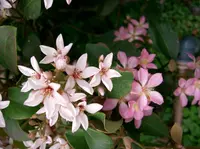
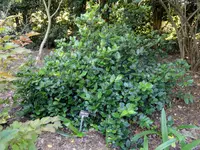
Sexton's bride (Rhaphiolepis umbellata) is a compact evergreen shrub valued for its dense foliage and neat, rounded form. It is often used in low hedges, borders, and coastal plantings. Glossy dark green leaves and clusters of white to pale pink flowers give it a clean, structured look. The plant may also produce small dark berries after flowering. This species is native to coastal regions of East Asia, where it tolerates wind, salt, and variable conditions. Due to its resilience and moderate growth rate, it is considered relatively easy to manage in suitable climates. In general, care for Sexton's bride focuses on good light, well-drained soil, and avoiding prolonged waterlogging.

Care Difficulty
Easy Care

Light Preference
Full Sun

Water Requirements
Moderate Water

Temperature Preference
Warm Climate

Hardiness Zone
7–10

Soil Texture
Sandy, Loamy, Clay

Soil pH
Acidic (5.5–6.5), Slightly acidic (6.5–7.0)

Soil Drainage
Well-drained

Fertilization
Minimal (feed rarely)
Scan your plant to receive care tips personalized for your specific plant
Available on iOS and Android
Rhaphiolepis umbellata prefers bright conditions with some protection from harsh afternoon sun.
This shrub prefers evenly moist but not saturated soil once established in the landscape.
This species grows best in mild, temperate climates with moderate seasonal variation.
This shrub handles typical outdoor humidity well and rarely needs special humidity management.
Rhaphiolepis umbellata prefers freely draining, slightly acidic soil that does not stay waterlogged.
This species grows reliably in containers when the pot and substrate prevent waterlogging and instability.
Rhaphiolepis umbellata benefits from modest, well-timed feeding to support compact growth and flowering.
Pruning Rhaphiolepis umbellata is mainly used to maintain a tidy shape and remove problem wood.
This shrub is usually planted in the ground, so focus on careful transplanting or infrequent repotting of container specimens.
Rhaphiolepis umbellata is commonly propagated from semi-ripe cuttings or seeds under controlled conditions.
This shrub is moderately cold hardy but benefits from simple winter precautions in colder regions.

Plant Health Check
Not sure what's wrong with your plant? Check your plant's health inside the app.
This species is naturally distributed along coastal areas of Japan and nearby regions, where it grows on rocky slopes and seaside cliffs exposed to salt-laden winds.
Its thick, leathery leaves and dense cuticle help limit salt damage, allowing the shrub to survive in soils and air conditions that would stress many other woody ornamentals.
The shrub produces clusters of white to pale pink, lightly fragrant flowers in spring, which are followed by dark blue to black berry-like fruits that persist into winter and provide food for birds.

In traditional Japanese coastal landscapes, this shrub has long been planted as a living windbreak and barrier hedge, taking advantage of its natural resistance to sea winds and salt spray.
Lack of flowers usually comes from too little light, heavy pruning at the wrong time, or excess nitrogen fertilizer. Old, unpruned wood often blooms best, so use light shaping right after flowering and avoid frequent hard cuts.
Keep your plants happy and healthy with plant identification, disease detection, and easy care guidance.