Virginia meadowbeauty Care (Rhexia virginica)

Also known as: handsome Harry
Virginia meadowbeauty

About Virginia meadowbeauty

Virginia meadowbeauty (Rhexia virginica) is a small, herbaceous perennial wildflower often found in moist meadows, bogs, and open wetlands. It forms loose clumps with upright, square stems and narrow, opposite leaves.

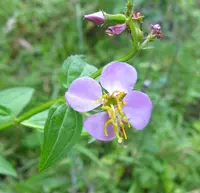
The plant is best known for its bright pink to purple, four-petaled flowers with prominent yellow stamens, which give a delicate but distinctive look in summer. It typically stays low to medium in height and spreads slowly by short rhizomes.

Rhexia virginica prefers full sun to light shade, consistently moist, acidic soils, and does not tolerate drought or heavy disturbance well. Understanding these natural conditions helps guide how to care for Virginia meadowbeauty in gardens or restoration plantings.

Main Plant Requirements

Care Difficulty

Moderate Care

Light Preference

Full Sun

Water Requirements

Keep Soil Moist

Temperature Preference

Cold Hardy

Hardiness Zone

3–8

Soil Texture

Sandy, Loamy, Silty

Soil pH

Strongly acidic (4.5–5.5), Acidic (5.5–6.5)

Soil Drainage

Waterlogged tolerant

Fertilization

Minimal (feed rarely)

Get Personalized Care Plan

Scan your plant to receive care tips personalized for your specific plant

Available on iOS and Android

How to Care for the Virginia meadowbeauty

This moisture-loving wildflower prefers bright conditions with protection from intense afternoon sun.

  • Provide 4–6 hours of direct morning sun with light shade after midday; dappled light under open trees suits Virginia meadowbeauty well.
  • In hot summers, shield the plant from strong sun after 2–3 p.m. to prevent leaf scorch and dried flower buds.
  • In cooler seasons or northern zones, allow closer to 6–8 hours of sun; in deep shade, expect weak stems, fewer blooms, and lanky growth.

This species is adapted to consistently moist, even boggy, soils and does not tolerate prolonged drying.

  • Keep soil evenly moist; the top 1–2 cm should feel damp most of the time, not cracking dry between rains or irrigations.
  • In summer, increase watering during hot, windy periods so the root zone never fully dries; in cooler months, reduce but do not allow extended dryness.
  • Watch for underwatering signs such as drooping, crisp leaf edges, and slow flowering; persistent puddling, sour smell, or black, mushy stems suggests overwatering or poor drainage for Rhexia virginica.

This temperate perennial handles a wide range of outdoor conditions but grows best within moderate warmth.

  • Active growth and flowering occur around 65–80°F (18–27°C), where stems stay sturdy and buds form reliably.
  • The plant survives winter cold down to about 0°F (-18°C) in-ground, dying back above soil while crowns and roots overwinter.
  • Short heat waves up to 90–95°F (32–35°C) are tolerated if soil remains moist; prolonged extreme heat or freeze–thaw cycles with no snow cover can damage crowns.

This wetland species prefers consistently moist air but adapts to typical outdoor humidity.

  • Aim for 50–80% humidity in sites near ponds, boggy edges, or consistently damp low spots.
  • The plant tolerates brief drier spells but foliage may crisp at tips in prolonged air below 40%.
  • If summers are very dry, group Virginia meadowbeauty with other moisture-loving plants and mulch soil heavily to slow evaporation.

Rhexia virginica grows best in saturated yet aerated soils that mimic a bog edge.

  • Use a mix of 50–70% peat or coco coir with compost plus 30–50% sand to hold moisture yet prevent stagnation.
  • Choose a loamy to sandy, organic-rich substrate that stays wet but still feels slightly springy, not dense or sticky.
  • Keep soil slightly acidic, around pH 5.0–6.5, avoiding added lime or alkaline tap water where possible.
  • Avoid compacted clay or fully free-draining gravel beds; amend with organic matter and sand to improve structure and water retention.

This species can grow in containers if the pot is managed like a mini bog.

  • Select a wide, heavy container to stabilize the plant and resist tipping when the saturated mix becomes water-heavy.
  • Use a deep pot that allows a 20–30 cm root zone so the lower mix can stay consistently wet without drowning the crown.
  • Stand the container in a shallow tray of water outdoors to maintain constant moisture while letting excess drain from the pot base.

This wetland native grows well in lean soils, so fertilizing Virginia meadowbeauty should stay light and targeted.

  • Use a balanced, low-strength liquid fertilizer (for example 10-10-10) at 1/4–1/2 label rate if growth appears weak in poor soil.
  • Apply during the growing season every 4–6 weeks only when plants show nutrient deficiency, such as pale foliage.
  • Avoid fertilizing in late fall and winter, when the plant is dormant, to prevent soft, frost-prone growth.
  • In rich or naturally moist soils, skip synthetic products and rely on a thin top-dressing of compost once in spring.

Pruning Rhexia virginica is light and mainly focused on keeping plants tidy and flowering well.

  • Cut back spent flower stems in late summer or early fall to encourage a neater clump and potential light rebloom.
  • Remove dead, damaged, or diseased stems at ground level with clean, sharp hand pruners to limit disease spread.
  • Thin out the most crowded or weak shoots in early spring to improve air flow and maintain a balanced shape.
  • Leave some stems standing over winter in cold climates, then trim them back before new growth emerges in spring.

This species is more often transplanted in garden or wetland settings than grown long term in containers.

  • Transplant in early spring or early fall when temperatures are mild and soil moisture is steady.
  • Look for signs such as slow growth, roots circling a pot, or a plant outgrowing its clump area before moving it.
  • Lift the clump with a generous soil ball, disturb roots as little as possible, and replant at the same depth in moist, acidic soil.
  • Water thoroughly after transplanting and keep the root zone evenly moist for several weeks to reduce transplant shock.

Rhexia virginica is most often propagated by seed or division to maintain healthy stands.

  • Sow fresh seed in fall outdoors or use cold stratification (a cool, moist pre-chilling period) before spring sowing.
  • Provide consistently moist, acidic, humus-rich substrate and bright light for seed germination and seedling growth.
  • Divide mature clumps in early spring, separating sections with several shoots and healthy roots.
  • Replant divisions immediately, keep soil evenly moist, and shade lightly for the first 1–2 weeks to support establishment.

This perennial is generally cold hardy in much of its native range and needs only modest winter care outdoors.

  • Tolerates typical frosts once established, with top growth dying back while roots remain alive.
  • Apply a 5–7 cm layer of mulch after the ground cools to insulate the root zone, keeping mulch off the crowns.
  • For container-grown plants in colder zones, move pots into a sheltered, unheated space to prevent repeated freeze–thaw cycles.

Care Tips

Edge Moisture Management

In rain gardens or pond edges, plant on a very slight slope or raised berm so the crown stays just above standing water while roots still access consistently moist soil.

Light Competition Control

During the first 2–3 seasons, hand-weed grasses and tall perennials within a 15–20 cm radius so young plants are not shaded out or starved of moisture and nutrients.

Late-Winter Cleanup

Leave stems and seedheads standing through winter for structure and wildlife, then cut them back to 5–8 cm in late winter before new shoots emerge to reduce fungal carryover.

Targeted Clump Division

Every 3–4 years, divide dense clumps in early spring by lifting and splitting them into smaller sections with healthy roots, then replant immediately to maintain vigor and expand your planting.

Soil Oxygen Protection

In heavy, wet soils, avoid walking or placing stones directly around the root zone to prevent compaction, which reduces oxygen levels and weakens plants when growing Virginia meadowbeauty.

Common Pests and Diseases

Leaf spot

This disease causes small water-soaked or purple-brown spots on leaves that may merge and lead to premature leaf drop, especially in warm, humid weather. Symptoms include most intense spotting on older foliage and lower parts of the plant.

Solution

Remove and discard heavily spotted leaves to reduce spore load, and avoid overhead watering so foliage dries quickly. If leaf spot is severe in a planting used for growing Virginia meadowbeauty, improve spacing and airflow and consider applying a labeled copper or chlorothalonil fungicide during prolonged wet periods, following label directions carefully.

Powdery mildew

This disease appears as a white or gray powdery coating on upper leaf surfaces and tender stems, which can cause leaf distortion and reduced vigor. Symptoms include worst coverage in crowded, shaded, or late-season growth.

Solution

Thin or divide dense clumps to increase sun and airflow, and water at soil level rather than onto foliage. Prune out badly affected stems and, if needed, apply a horticultural oil or potassium bicarbonate product labeled for powdery mildew, coating both leaf surfaces thoroughly.

Aphids

These insects cluster on soft shoot tips and flower stems, sucking sap and causing curling or distorted growth, and may leave sticky honeydew on leaves. This pest often builds up during warm, calm weather and can attract ants.

Solution

Spray stems and leaf undersides with a firm stream of water to dislodge colonies, repeating every few days as needed. For persistent infestations, use insecticidal soap or a light horticultural oil applied in the early morning or evening, making sure to cover all infested surfaces and avoiding application in high heat.

Spider mites

This pest feeds on leaf undersides, causing fine speckling, a dull or bronzed appearance, and in heavy infestations fine webbing between leaves and stems. Symptoms include increased damage during hot, dry spells when humidity is low.

Solution

Rinse foliage thoroughly, including leaf undersides, at least weekly to knock down mite populations and raise local humidity. If damage continues, apply insecticidal soap or horticultural oil labeled for mites, and reduce plant stress by maintaining consistent soil moisture in the root zone.

Interesting Facts

Moist acid-bog specialist

This species is strongly associated with acidic, wet habitats such as sphagnum bogs, wet meadows, and pond margins, and often disappears when sites are drained or limed.

Buzz-pollinated flowers

Its magenta-pink flowers are adapted for buzz pollination, where bees vibrate their flight muscles to shake out pollen from the anthers, improving pollination efficiency.

Seasonal color shift

The plant often develops striking reddish to purple stems and foliage later in the season, especially in full sun and nutrient-poor, acidic soils.

FAQs about Virginia meadowbeauty

This species strongly attracts native bees and some butterflies, especially when planted in sunny, moist sites. Its open, pink flowers provide accessible pollen. Planting in groups increases visibility and supports local pollinator populations in summer.

Grow Healthy Plants with Botan Care

Keep your plants happy and healthy with plant identification, disease detection, and easy care guidance.

Botan plant care app — identify plants on mobile

Explore More Plants