

Substrate inoculation
Introduce Rhizocybe pruinosa to a sterilized, moist sawdust or woodchip substrate by mixing a small amount of clean, active mycelium evenly through the top 2–3 cm to help the fungus establish a uniform colony before fruiting.

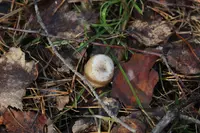
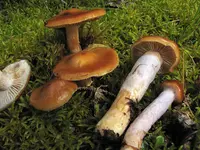
Rhizocybe pruinosa is a small, saprophytic fungus rather than a typical ornamental plant. It usually forms pale, often whitish to greyish caps with a fine, frosted look and slender stems. Fruit bodies appear in scattered groups on leaf litter or soil rich in decaying organic matter.
This species is reported mainly from temperate woodlands in Europe and nearby regions, often in mixed or conifer forests. It relies on natural decomposition processes, so it is not commonly cultivated, and information on how to care for Rhizocybe pruinosa as a deliberate “planting” is very limited.
Where attempts are made to grow it, conditions that mimic a cool, shaded woodland floor with consistent moisture and plenty of leaf litter are likely to be most suitable.

Care Difficulty
Moderate Care

Light Preference
Partial Shade

Water Requirements
Moderate Water

Temperature Preference
Warm Climate

Hardiness Zone
Unknown

Soil Texture
Loamy

Soil pH
Slightly acidic (6.5–7.0)

Soil Drainage
Well-drained

Fertilization
Minimal (feed rarely)
Scan your plant to receive care tips personalized for your specific plant
Available on iOS and Android
This woodland fungus prefers soft, indirect light that mimics dappled forest shade.
Moist, but not waterlogged, soil is essential for stable fungal growth and fruiting.
This species thrives in cool to mild conditions typical of shaded woodland floors.
This fungus has minimal humidity sensitivity and usually does not require targeted humidity control in outdoor conditions.
This woodland fungus relies on consistently moist, well-structured substrate rather than conventional potting soil.
This species is not well suited to container growing, as it depends on complex soil and root interactions in the ground.
This wild fungus usually grows without supplemental feeding, so fertilization is generally unnecessary for Rhizocybe pruinosa in natural or woodchip-rich settings.
As a mushroom-forming fungus, Rhizocybe pruinosa does not require pruning in the horticultural sense; only basic site tidying is useful.
This species is not managed like a potted plant; instead, treat any intervention as careful transplanting of colonized substrate rather than true repotting.
Propagation of Rhizocybe pruinosa is usually left to natural spore spread, and deliberate culture is technically demanding for most home growers.
In suitable climates this fungus is largely self-sustaining and does not require dedicated winter care from the home gardener.

Plant Health Check
Not sure what's wrong with your plant? Check your plant's health inside the app.
This species typically fruits in late autumn and early winter, often persisting through the first frosts when many other agarics have already disappeared.
Mature caps and stems often show a fine, whitish pruinose coating, especially in dry weather, which is a key field character separating it from similar brownish woodland mushrooms.
It is strongly associated with decaying leaf litter in coniferous and mixed forests, where it helps decompose organic matter and recycle nutrients back into the soil.
This is a little-known, inconspicuous mushroom, and its edibility is not well studied. It should be treated as inedible and left unharvested. Do not eat unidentified wild fungi, even if they look harmless.
Keep your plants happy and healthy with plant identification, disease detection, and easy care guidance.

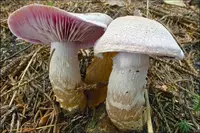
goatcheese webcap
Cortinarius camphoratus
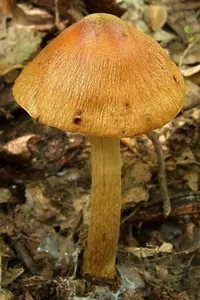
wrinkled cortinarius
Cortinarius corrugatus
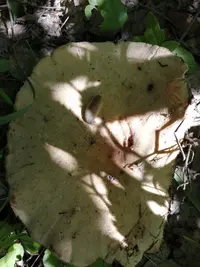
Neolentinus cyathiformis
Neolentinus cyathiformis
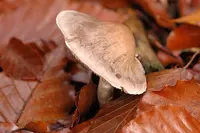
variable webcap
Cortinarius anomalus
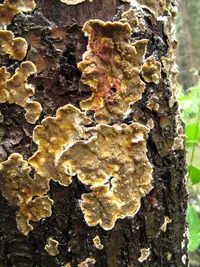
Broadleaf Bleeding-crust
Stereum rugosum
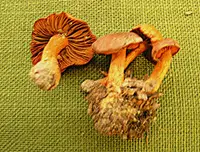
cinnabar webcap
Cortinarius cinnabarinus
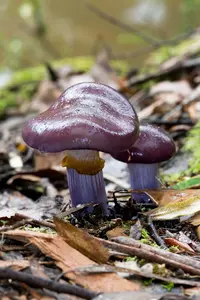
Emperor Cortinar
Cortinarius archeri
blue-girdled webcap
Cortinarius collinitus