Mountain Currant Care (Ribes alpinum)

Also known as: alpine currant
Mountain Currant

About Mountain Currant

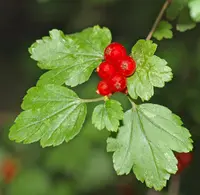
Mountain currant, Ribes alpinum, is a compact deciduous shrub grown mainly for its dense green foliage rather than showy flowers or fruit. It forms neat, bushy mounds that suit hedges and foundation plantings.

This species is native to cooler regions of Europe and western Asia, where it grows in woodlands, scrub, and rocky slopes. Its small, lobed leaves and modest yellow-green flowers give a discreet, natural look in gardens.

Ribes alpinum is valued for its hardiness, tolerance of shade, and ability to cope with urban conditions, which makes it relatively straightforward to care for Mountain Currant. It generally prefers well-drained soil with moderate moisture and will accept anything from partial shade to full sun in cooler climates.

Main Plant Requirements

Care Difficulty

Easy Care

Light Preference

Partial Shade

Water Requirements

Moderate Water

Temperature Preference

Cold Hardy

Hardiness Zone

3–7

Soil Texture

Sandy, Loamy, Clay

Soil pH

Acidic (5.5–6.5), Slightly acidic (6.5–7.0)

Soil Drainage

Moist but well-drained

Fertilization

Minimal (feed rarely)

Get Personalized Care Plan

Scan your plant to receive care tips personalized for your specific plant

Available on iOS and Android

How to Care for the Mountain Currant

Ribes alpinum prefers cool, bright conditions with moderate direct sun exposure.

  • Provide 4–6 hours of sun daily, ideally morning sun with light afternoon shade, especially in warmer regions.
  • Plant in a site with partial shade, such as north- or east-facing aspects, to protect foliage from scorching midday summer sun.
  • In hot climates, increase filtered or dappled shade in summer; in cooler climates, Mountain Currant can handle more open sun without leaf burn.

Ribes alpinum prefers evenly moist, well-drained soil rather than constant wetness.

  • Water when the top 3–5 cm of soil feels dry, allowing moisture to reach the full root zone without pooling around the base.
  • During spring and early summer growth, monitor weekly and adjust so soil stays slightly moist; reduce frequency in late summer and fall as growth slows.
  • Watch for yellowing, soft leaves as a sign of overwatering and dry, curling leaves or slowed growth as signs the shrub is staying too dry.

This shrub is cold-hardy and adapts well to cool temperate climates.

  • Active growth is strongest around 55–70°F (13–21°C), with good performance in typical spring and fall outdoor conditions.
  • Dormant plants usually tolerate winter lows down to about -20°F (-29°C) or lower, depending on cultivar and snow cover.
  • In summer, it handles brief heat up to about 85–90°F (29–32°C) if soil moisture is maintained; extended hot, dry periods can stress foliage and reduce vigor.

Humidity is rarely critical for Mountain Currant, which adapts well to typical outdoor conditions in temperate climates.

Ribes alpinum prefers moderately moist, structured soil that drains freely yet holds some organic matter.

  • Use a loamy soil with a mix of mineral particles and organic material to support both drainage and nutrient retention.
  • Aim for slightly acidic to neutral pH around 6.0–7.0, incorporating garden compost to improve structure and fertility.
  • Improve drainage and aeration on heavier sites by working in coarse sand or fine gravel through the top 20–30 cm of soil.
  • Avoid waterlogged, compacted, or very shallow soils where roots may suffocate or be prone to rot, especially in winter.

This species can be grown in containers outdoors if the container is chosen and managed carefully.

  • Select a deep, heavy container to give the shrub stable anchoring against wind and reduce tipping as the crown fills out.
  • Fill the pot with a free-draining mix, such as garden loam blended with compost and coarse grit, to prevent persistent saturation around the roots.
  • Raise the container slightly on feet or blocks so drainage holes remain clear and excess water can escape quickly after rain.

Ribes alpinum is modest in its nutrient needs but responds well to light feeding on poor soils.

  • Apply a balanced slow-release fertilizer (around 10-10-10) once in early spring as new growth starts.
  • On richer soils, use a thin layer of garden compost or well-rotted manure instead of granular products.
  • Use fertilizers at 1/2 the label strength to avoid lush, weak growth and salt buildup.
  • Avoid feeding Mountain Currant in late fall or winter, when the plant is dormant.

Ribes alpinum benefits from periodic pruning to maintain a dense, healthy framework.

  • Carry out main pruning in late winter or very early spring before buds break.
  • Remove dead, damaged, crossing, or inward-growing shoots with clean, sharp bypass pruners.
  • Thin out some of the oldest stems at the base to encourage vigorous new growth and better light penetration.
  • Lightly trim shoot tips after flowering to refine hedge shape without removing too much green tissue.

This shrub is usually grown in the ground, so care focuses on transplanting rather than frequent repotting.

  • Transplant in early spring or early fall, when temperatures are mild and soil is workable.
  • Choose a slightly larger planting hole than the root ball, loosening sides to help roots spread out.
  • Water thoroughly before and after moving to reduce root stress and eliminate air pockets.
  • In containers, shift to a larger pot only when roots circle the sides or growth becomes noticeably slower.

Ribes alpinum is most commonly propagated from cuttings and sometimes by seed or layering.

  • Take semi-ripe cuttings in mid to late summer, 8–12 cm long, from healthy non-flowering shoots.
  • Insert cuttings into a free-draining mix, keep evenly moist, and maintain high humidity with a vented cover.
  • For hardwood cuttings, use dormant 1-year shoots in late fall, placed in outdoor sand or gritty soil.
  • Seeds require a cold period; sow in fall outdoors or cold-stratify in a refrigerator before spring sowing.

This species is naturally cold hardy and usually needs minimal winter care in the ground.

  • Tolerates typical winter frosts in most temperate regions with no stem protection required.
  • Apply a 5–8 cm mulch layer around the root zone in late fall to moderate soil temperature and moisture.
  • For container plants, move pots into a sheltered, unheated area to prevent repeated freeze–thaw of the root ball.

Care Tips

Encourage Dense Hedges

Shear back current season’s growth by 1/3 in late spring after flowering to promote dense side branching and a tighter hedge line when growing Mountain Currant.

Rejuvenate Old Shrubs

Every 2–3 years, remove 1–3 of the oldest stems at ground level in late winter to keep the shrub vigorous, reduce disease buildup, and maintain good light penetration into the canopy.

Mulch for Root Cooling

Apply a 5–8 cm layer of shredded bark or composted wood chips over the root zone, keeping it 5 cm away from stems, to stabilize soil moisture and keep the shallow roots cool in summer.

Wind and Snow Support

In exposed sites, install low, sturdy stakes or a discrete shrub ring around young plants to prevent wind rock and snow breakage until the framework of branches becomes thicker and self-supporting.

Monitor Suckering Spread

Check annually for unwanted basal shoots spreading beyond the intended planting area and remove them with a sharp spade to keep hedge lines straight and prevent encroachment into paths or beds.

Common Pests and Diseases

Currant blister aphid

This pest causes yellow, reddish, or blistered patches on the upper leaf surface, with colonies of soft-bodied aphids underneath. Distorted young leaves and sticky honeydew may appear on affected shoots.

Solution

Prune and dispose of heavily infested shoots early in the season and encourage natural predators such as lady beetles by avoiding broad-spectrum insecticides. For small shrubs, hose off colonies with a strong stream of water, and if needed apply an insecticidal soap or horticultural oil thoroughly to the undersides of leaves before blisters become severe.

Currant sawfly

These insects defoliate bushes by skeletonizing leaves, often leaving only leaf veins and causing a sudden bare appearance. Symptoms include clusters of green, caterpillar-like larvae feeding on lower branches first, then moving upward.

Solution

Inspect plants frequently from spring onward and hand-pick or shake larvae into soapy water at the first sign of feeding. In heavier infestations, use a plant-safe biological insecticide containing spinosad, and keep the area under shrubs clear of leaf litter where pupae may overwinter.

Powdery mildew

This disease produces a white, powdery coating on leaves, young stems, and sometimes fruit, leading to distorted growth and reduced vigor. Symptoms include premature leaf drop and poor new shoot development in severe cases.

Solution

Prune to open the center of the shrub and remove and discard infected shoots and fallen leaves to improve airflow and reduce inoculum. Water at the base, avoid overhead irrigation, and if the problem is recurring, apply a sulfur or potassium bicarbonate fungicide labeled for currants at the first signs of infection as part of broader Ribes alpinum care instructions.

Leaf spot

Symptoms include small brown or purplish spots on leaves that may merge, causing yellowing and early leaf drop. This disease weakens shrubs over time and can reduce winter hardiness.

Solution

Gather and discard fallen leaves in autumn and prune out densely tangled branches to improve air circulation. If leaf spot appears regularly, apply a copper-based or other labeled fungicide in early spring just as leaves emerge, following label directions and combining treatment with good sanitation.

Currant bud mite

This pest causes swollen, misshapen buds that fail to open normally, sometimes leading to patchy foliage and reduced flowering or fruit set. Affected buds often appear abnormally large and rounded compared to healthy pointed buds.

Solution

In late winter, inspect and prune out all swollen buds and destroy them before mites spread, focusing on the most affected shoots. Maintain strong plant vigor with proper watering and nutrition, and in severe, persistent cases consider removing and replacing heavily infested plants with certified clean stock.

Interesting Facts

Naturally dioecious shrub

This species is usually dioecious, meaning male and female flowers occur on separate plants, so only female shrubs set fruit if a male is nearby for pollination.

Tolerant of deep shade

It is one of the few currants that grows reliably in quite low light under trees and in urban shade, which is why it is widely used as a hedge in city plantings across northern Europe and North America.

Mild, almost tasteless berries

The small red berries are technically edible but are watery and very bland, so the plant is valued more for ornamental hedging and wildlife support than for fruit production.

Botan icon

Did you know?

In parts of Scandinavia and Central Europe, this shrub has been used for centuries as a clipped boundary hedge around farmsteads and gardens because it tolerates repeated pruning, cold winters, and poor soils while remaining dense and leafed out from top to bottom.

FAQs about Mountain Currant

This shrub is generally moderate-growing, adding about 15–30 cm of new growth per year once established. Growth is slower in dry, compacted, or very poor soils and quicker in cool climates with consistent moisture and mulch.

Grow Healthy Plants with Botan Care

Keep your plants happy and healthy with plant identification, disease detection, and easy care guidance.


Botan plant care app — identify plants on mobile

Explore More Plants