Encourage Sucker Colonies
Allow a few strong root suckers each year to form a loose thicket, then remove weak or badly placed shoots at ground level so the colony can fill a bank or stream edge evenly without becoming an impenetrable tangle.

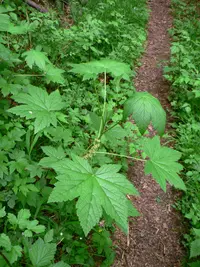
Stink currant, Ribes bracteosum, is a deciduous shrub native to moist forests and stream banks of the Pacific Northwest in North America. It forms upright, multi-stemmed clumps with large, lobed leaves and dangling clusters of small, greenish to reddish flowers followed by dark berries.
The foliage has a strong odor when crushed, which gives the plant its common name but does not affect its hardiness. It is generally easy to grow in cool, moist climates, especially in partial shade and humus-rich, well-drained soil.
Gardeners who want to care for stink currant should focus on providing consistent moisture and protection from hot, drying conditions, as it naturally thrives in sheltered, woodland settings.

Care Difficulty
Moderate Care

Light Preference
Partial Shade

Water Requirements
Keep Soil Moist

Temperature Preference
Cold Hardy

Hardiness Zone
5–8

Soil Texture
Loamy, Silty, Organic-rich

Soil pH
Acidic (5.5–6.5), Slightly acidic (6.5–7.0)

Soil Drainage
Moist but well-drained

Fertilization
Minimal (feed rarely)
Scan your plant to receive care tips personalized for your specific plant
Available on iOS and Android
Ribes bracteosum prefers cool, bright sites that mimic open woodland edges.
This species favors consistently moist but not waterlogged soil, especially during active growth.
This currant is naturally adapted to cool, coastal and montane climates.
This species tolerates a wide humidity range but grows best in moderately moist air.
Ribes bracteosum prefers consistently moist, deep, organic-rich soil with reliable drainage.
This species can be grown in containers, but only if the pot is large and moisture-retentive enough to support its vigorous, moisture-loving root system.
This native shrub typically needs minimal feeding in garden soil, so fertilization supports growth mainly on poor or disturbed sites when caring for stink currant.
Ribes bracteosum benefits from light, targeted pruning to maintain health and flowering wood.
This shrub is usually grown in the ground, so focus on careful transplanting rather than frequent repotting.
New plants are commonly produced from cuttings or seeds, with timing and moisture control critical for success.
This cold-hardy shrub normally needs little special winter care in temperate climates.

Plant Health Check
Not sure what's wrong with your plant? Check your plant's health inside the app.
When crushed or brushed, the leaves release a strong skunky odor, which likely helps deter mammal herbivores and makes this shrub easy to identify even before it flowers.
This species is native to the Pacific Northwest and typically grows along streams, seeps, and coastal forests, showing a strong preference for cool, moist, partially shaded habitats.
The dark purple to nearly black berries are edible and were traditionally used by Indigenous peoples, but they contain many seeds and are usually eaten fresh in small quantities or mixed with other fruits.

This species often forms dense thickets that provide important cover and nesting sites for songbirds in Pacific Northwest riparian and coastal forest ecosystems, making it a structurally significant shrub in those communities.
The berries are technically edible but usually considered poor quality, watery, and strongly flavored. They are sometimes used cooked or mixed with sweeter fruits. Always confirm correct identification before eating any wild Ribes species.
Keep your plants happy and healthy with plant identification, disease detection, and easy care guidance.