
red currant Identification (Ribes triste)

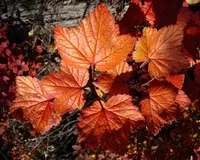
Recognize red currant by its low, many-stemmed shrub form, usually under 3 feet (0.9 m) tall, with alternate leaves divided into 3 to 5 rounded lobes.

The flowers hang in short drooping clusters from the stems, and each flower is small, saucer-shaped, and reddish to purple.

Ribes triste Identification

Is This red currant?

Use a clear photo to confirm what plant you have.

Clear images work best. Avoid photos taken too close or too far away

Check the leaf shape, flower clusters, and berry form first on Ribes triste.

  • A low shrub with several upright to arching woody stems arising from the base.
  • Leaves are simple and palmately 3- to 5-lobed, roughly rounded, and about 1-3 inches (2.5-7.5 cm) wide.
  • Flowers hang in short drooping clusters; each small flower has narrow petals and a tubular green to reddish calyx.
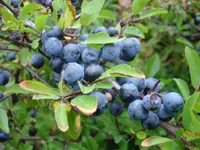
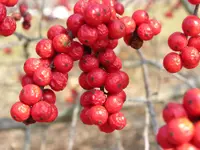
  • Berries are bright red, smooth, and held in hanging strings rather than singly.

The hanging flower and fruit clusters are especially useful when leaves alone are not enough.

Ribes triste shows several visible stage changes, especially once flowers and berries appear.

  • Young plant: Young plants are low and lightly branched, with slender stems and small palmately lobed leaves spaced along the shoots.
  • Mature plant: Mature plants form a denser, many-stemmed shrub about 1-3 feet (30-90 cm) tall, with broader lobed leaves and a more rounded outline.
  • Flowering stage: Flowering shoots carry short, drooping clusters of small greenish to purplish flowers below the leaves, making the branch tips look looser than nonflowering shoots.
  • Fruiting stage: After flowering, the hanging clusters become more conspicuous as translucent bright red berries replace the flowers, each berry about 1/4 inch (6 mm) wide.

In spring, Ribes triste leafs out with fresh green foliage as hanging flower clusters become visible. The small flowers are often the clearest seasonal clue before fruit develops. By early to midsummer, translucent red berries are the main identification feature. After leaf drop in fall, the shrub loses most of its visual distinctiveness and appears as bare, twiggy stems through winter.

A few northern currants can be confused with red currant.

swamp red currant(Ribes glandulosum)

Both are low shrubs with 3- to 5-lobed leaves and red berries. Ribes glandulosum usually has bristly, gland-tipped hairs on stalks and flowering parts; Ribes triste is typically smoother.

northern black currant(Ribes hudsonianum)

Leaf shape and shrub size can overlap. The quickest check is fruit color: Ribes hudsonianum ripens black, while red currant bears red fruit.

Ribes triste is native to northern North America, including Alaska, much of Canada, and the northern United States. Its range is useful in identification because it is mainly a boreal and cool-temperate species rather than a shrub of warmer inland regions. It typically grows in moist woods, open conifer forest, streambanks, bog edges, and other cool, damp sites. Finding a currant in shaded, wet northern habitat helps narrow it toward Ribes triste, especially in spruce-fir or mixed woodland settings.

Scan. Check. Confirm.

Use Botan to identify or verify a plant from a photo when details are unclear or a second opinion would help.

FAQ

The clearest clue is its hanging clusters of bright red berries paired with small, palmately lobed leaves, usually with 3 to 5 lobes. That combination is central to red currant identification in season.

More Plant Identification Guides

Scan Your Plant. Get the Details.

Identify a plant from a photo with Botan, then see its profile, care information, and common problems.

Botan app identifying a plant from a photo
12 Best Plants That Repel Spiders For Your Home and Garden

8 min read · 24 Jul 2026

12 Best Plants That Repel Spiders For Your Home and Garden

Spiders constantly appear in places you don't want them. A few common plants can help repel them using scent alone. Here are 12 options suitable for both indoors and outdoors, plus care tips for each.

Plant Recommendations
12 Best Plants That Repel Spiders For Your Home and Garden
Best Fertilizer for Vegetable Gardens – What to Use for Each Plant

11 min read · 20 Jul 2026

Best Fertilizer for Vegetable Gardens – What to Use for Each Plant

Here, you’ll find the right fertilizer formula for vegetables in your garden. Learn how to adjust feeding correctly throughout the growing cycle, spot nutrient deficiencies by their symptoms, and keep your plants healthy and prolific.

Plant Recommendations
Best Fertilizer for Vegetable Gardens – What to Use for Each Plant
How to Mulch in the Fall and When to Wait Until Spring

5 min read · 12 Nov 2026

How to Mulch in the Fall and When to Wait Until Spring

In the fall, mulch gives the roots of trees and shrubs insulation and more stable conditions through winter. In the spring, it mainly suppresses weeds and keeps moisture in the soil during the growing season.

Beginner Guides
How to Mulch in the Fall and When to Wait Until Spring