Glaucous Crystalwort Care (Riccia glauca)

Glaucous Crystalwort

About Glaucous Crystalwort

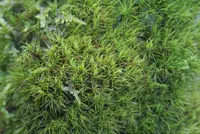
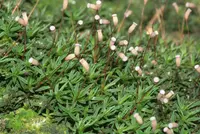
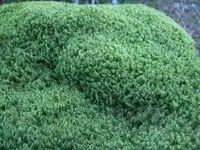
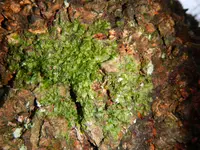
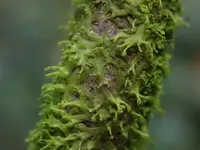
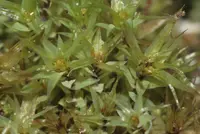
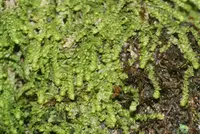
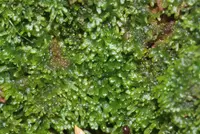
Glaucous crystalwort (Riccia glauca) is a small, thalloid liverwort often used in aquariums, paludariums, and moist terrarium setups. It forms flat, branching mats that create a soft, carpet-like effect over rocks, wood, or substrate.

In nature, it occurs in damp habitats such as wet soil, stream margins, and periodically flooded areas. Its simple structure and rapid vegetative spread make it adaptable but also prone to drying out quickly if conditions are not humid enough.

This species prefers clean water or consistently moist surfaces, gentle water movement, and moderate light. Understanding how to care for Glaucous Crystalwort mainly involves keeping it humid, stable, and free from smothering algae or debris.

Main Plant Requirements

Care Difficulty

Moderate Care

Light Preference

Partial Shade

Water Requirements

Aquatic

Temperature Preference

Warm Climate

Hardiness Zone

Unknown

Soil Texture

Silty, Peaty, Organic-rich

Soil pH

Acidic (5.5–6.5), Slightly acidic (6.5–7.0)

Soil Drainage

Waterlogged tolerant

Fertilization

Minimal (feed rarely)

Get Personalized Care Plan

Scan your plant to receive care tips personalized for your specific plant

Available on iOS and Android

How to Care for the Glaucous Crystalwort

Riccia glauca needs consistent light but is sensitive to intense direct sun, especially when grown emersed near water or on damp substrates.

  • Provide bright, indirect light or light shade, with 4–6 hours of gentle morning sun and protection from strong midday and afternoon rays.
  • In outdoor culture, use dappled light under taller plants or shade cloth; Glaucous Crystalwort can tolerate partial shade but grows thinner in very low light.
  • If growth becomes pale, loose, or elongated, increase light; if fronds bleach, turn brown, or dry at the edges, reduce direct sun exposure.

Riccia glauca thrives in consistently moist to submerged conditions and declines quickly if allowed to dry out.

  • Keep the substrate or surface constantly moist; in shallow water or aquaria, ensure at least a thin water layer always covers the thallus, avoiding any complete drying.
  • Use fine, well-drained substrates or mesh supports so water can flow freely; stagnant, foul-smelling water and rotting, slimy fronds indicate chronic overwatering with poor circulation.
  • Crisping, shrinking, or light brown, brittle patches signal underwatering or exposure to air; adjust water level seasonally if evaporation is high in warm weather.

This species prefers mild, stable conditions and is sensitive to both frost and extreme heat.

  • Aim for 64–77°F (18–25°C) for strongest growth, which supports steady photosynthesis and dense mats in aquaria or shallow water setups.
  • Avoid temperatures below 41°F (5°C); freezing causes tissue death, so protect outdoor colonies from frost by submerging deeper or moving under cover.
  • At 82–86°F (28–30°C), increase water movement and shading; prolonged exposure above 86°F (30°C) can cause bleaching, thinning, and eventual dieback.

This species needs constant high humidity to keep its thin thallus tissues hydrated and photosynthesizing well.

  • Aim for 70–90% humidity; extended exposure below 60% leads to drying and browning tips.
  • Dry air causes curling, pale or grayish patches, and brittle segments that crumble when touched.
  • Use covered glass containers, humidity domes, or place near an aquarium to trap moisture and stabilize air humidity for Glaucous Crystalwort.

Riccia glauca usually anchors to moist substrates rather than traditional potting soil.

  • Use a very fine, organic-rich medium such as sifted peat or coco coir mixed with sand to hold moisture but prevent stagnation.
  • Ensure the substrate stays constantly damp but not submerged, with excess surface water drained or wicked away to maintain oxygen at the base.
  • Keep pH slightly acidic to neutral (pH 5.5–7.0) by avoiding limed mixes and heavy additions of crushed coral or alkaline gravel.
  • Avoid dense clay, thick mud, and chunky bark-based mixes that trap water pockets, exclude air, or allow thalli to rot at the contact points.

This species is well suited to shallow containers, trays, or aquaria that allow controlled moisture around the thalli.

  • Choose wide, shallow containers so the mat can spread horizontally while moisture levels stay uniform across the surface.
  • Use inert liners or smooth glass/plastic trays so excess water films drain off quickly instead of pooling under the plant layer.
  • If used in aquaria, place it in stable, low-flow zones so water movement does not dislodge or fragment the forming mat.

This moss-like liverwort has modest nutrient needs but responds to light, consistent feeding in active growth.

  • Use a dilute balanced liquid fertilizer (around 10-10-10 NPK) at 1/4–1/2 strength for aquatic or terrarium setups.
  • Apply every 2–4 weeks during the main growing season when Riccia glauca shows fresh, bright green tips.
  • Reduce feeding to monthly or stop entirely in winter or dormancy, especially under low light conditions.
  • For naturalistic layouts, very thin nutrient-rich substrate or compost underlay can support growing Glaucous Crystalwort without heavy water-column dosing.

Trimming Riccia glauca keeps mats compact, encourages fresh growth, and prevents shading of nearby plants.

  • Best timing is during active growth, once the mat becomes thick, uneven, or shades lower leaves or other species.
  • Remove dead, yellowed, or decaying fronds first, then thin crowded patches to maintain a low, even cushion.
  • Use fine scissors, aquascaping shears, or sharp tweezers, making shallow cuts across the surface rather than pulling clumps.
  • Regular light trimming improves water flow, light penetration, and overall health of the patch or floating mat.

This species is usually attached or anchored rather than traditionally potted, so transplanting focuses on dividing and re-securing mats.

  • Transplant when growth forms thick, overlapping layers, lifts from its anchor, or when sections shade each other and slow growth appears.
  • Best timing is spring to early summer, when Riccia glauca is actively growing and recovers from handling more quickly.
  • Gently lift the mat, divide into smaller sections, and reattach using mesh, fishing line, or placing between stones or shallow substrate.
  • Keep newly set pieces very stable with steady moisture and gentle water flow to limit stress and encourage quick re-anchoring.

Propagation of this liverwort relies on simple vegetative division rather than sexual reproduction from spores in typical cultivation.

  • Use division of healthy mats or tufts, separating them into small, intact sections by hand or with fine scissors.
  • Best season is spring or early summer, when light and temperature support fast regrowth and establishment.
  • Provide bright, indirect light, stable moisture, and gentle water movement so cut surfaces stay hydrated but not smothered.
  • Place divisions on mesh, rocks, or shallow substrate, holding them in place until new growth visibly grips the surface.

Outdoor winter care needs vary with climate, but this species generally dislikes hard freezing and prolonged ice cover.

  • In mild climates, maintain consistent moisture and avoid complete desiccation of mats during cold, dry spells.
  • In regions with frost, grow Riccia glauca in containers that can be moved indoors or to a cool, frost-free space.
  • For outdoor ponds, consider overwintering a backup portion indoors under cool, bright conditions as insurance against winter loss.

Care Tips

Anchor To Substrate

Press thin mats firmly onto rock, wood, or mesh and secure with fine fishing line or plant netting so the thallus can attach and form a stable, even carpet instead of floating away or clumping.

Control Layer Thickness

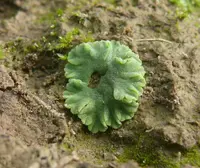
Regularly thin out and re-spread dense patches to a single, even layer so light and water reach all tissues and the lower parts do not yellow, rot, or detach.

Optimize Water Movement

Provide gentle, laminar water flow across the surface so debris is carried away and oxygen is replenished without creating turbulence that breaks apart or lifts the mats.

Debris And Algae Management

Siphon detritus from around the plant during water changes and manually remove filamentous algae strands early, before they smother the fine tissue and block light.

Use Quarantine Tanks

Start new cultures in a separate, small container or tank for a few weeks to observe pests, algae, or dieback before combining them with established colonies, which simplifies Riccia glauca care instructions in the long term.

Common Pests and Diseases

Algal overgrowth

Symptoms include a bright green, slimy layer coating the thallus surface and shading the plant, often in high-light, nutrient-rich water. This disease competes for light and nutrients and can quickly smother the thin Riccia tissue.

Solution

Reduce light intensity or duration, lower dissolved nutrients through smaller, more frequent water changes, and manually siphon or gently brush off algae from the Riccia mats. Improve water circulation and avoid overfeeding fish or invertebrates to prevent excess nutrient buildup when growing Glaucous Crystalwort in aquaria or paludariums.

Filamentous cyanobacteria

This disease appears as dark green to blue-green slimy sheets or threads that trap bubbles and creep over the Riccia cushions. These bacteria thrive in low-flow, nutrient-imbalanced water and can cause tissue dieback under the mats.

Solution

Increase water movement and oxygenation, manually remove as much cyanobacteria as possible, and perform several partial water changes to correct excess nutrients. In stubborn cases, temporarily reduce light and use an aquarium-safe antibacterial or cyanobacteria treatment following label directions, monitoring Riccia for stress.

Aquatic snail grazing

These insects are not involved; instead, small snails feed on soft Riccia tissue, leaving ragged edges and thin patches where the mat was once dense. Damage is most noticeable in low-nutrient setups where snails turn to live plants for food.

Solution

Physically remove excess snails, reduce overfeeding that supports large snail populations, and introduce natural predators such as certain small loaches or assassin snails if compatible with the tank. Keep Riccia in floating portions or protected areas like breeder boxes or mesh cages to limit direct grazing on the main culture.

Detritus smothering

Symptoms include dull, brownish mats where fine debris, fish waste, and decaying plant material accumulate between the thalli, reducing light and gas exchange. This condition encourages localized decay and can cause portions of the mat to detach and break apart.

Solution

Increase gentle water flow over the Riccia to keep particles suspended for filtration and regularly siphon debris from around and within the mats. Periodically lift and gently rinse the Riccia in dechlorinated water, then thin overcrowded clumps so light and water can penetrate the interior.

Interesting Facts

Glaucous thallus surface

The thallus of this liverwort has a distinctive bluish-gray, or glaucous, sheen caused by the structure of the outer cell layers, which scatters light differently from the greener tissues below.

Preference for open soils

In nature it is most often found on open, periodically disturbed soils such as field margins or bare ground, where competition from taller vegetation is low and light reaches the thallus surface.

Asexual fragmentation strategy

This species spreads efficiently when small thallus pieces break off and root into nearby moist soil, so disturbance can actually increase local colony expansion under suitable conditions.

FAQs about Glaucous Crystalwort

Growth is relatively quick under stable moisture and light, with new patches forming in a few weeks and dense mats developing over several months. Fragmented pieces establish faster, so many aquarists and terrarium keepers use division instead of seed.

Grow Healthy Plants with Botan Care

Keep your plants happy and healthy with plant identification, disease detection, and easy care guidance.

Botan plant care app — identify plants on mobile

Explore More Plants