New Mexico locust Care (Robinia neomexicana)

New Mexico locust

About New Mexico locust

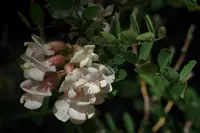
New Mexico locust (Robinia neomexicana) is a deciduous shrub or small tree known for its showy pink, pea-like flower clusters and sharp thorns along the branches. It typically has pinnate leaves with many small leaflets that give the canopy a light, feathery look.

This species is native to the southwestern United States, especially dry mountain slopes and canyons. It is adapted to poor, rocky soils and often colonizes disturbed ground through root suckers.

Robinia neomexicana is generally tough and drought tolerant once established, which can make it relatively easy to grow in dry climates. Understanding how to care for New Mexico locust mainly involves providing full sun, well-drained soil, and space for its suckering habit.

Main Plant Requirements

Care Difficulty

Easy Care

Light Preference

Full Sun

Water Requirements

Low Water

Temperature Preference

Cold Hardy

Hardiness Zone

4–9

Soil Texture

Sandy, Loamy, Rocky

Soil pH

Slightly acidic (6.5–7.0), Slightly alkaline (7.0–7.5)

Soil Drainage

Well-drained

Fertilization

Minimal (feed rarely)

Get Personalized Care Plan

Scan your plant to receive care tips personalized for your specific plant

Available on iOS and Android

How to Care for the New Mexico locust

This sun-loving shrub or small tree thrives in bright, open sites with long daily exposure.

  • Provide 6–10 hours of direct sun daily; full sun promotes dense growth and abundant flowering in New Mexico locust.
  • Plant where it receives strong morning sun and can tolerate hot afternoon sun, ideally with some light wind to reduce leaf scorch in very exposed sites.
  • In cooler climates it handles full sun all day; in very hot, arid regions, a few hours of light afternoon shade can reduce stress and leaf drop.

This drought-tolerant species prefers deep, infrequent watering once established.

  • Allow the top 5–8 cm of soil to dry between waterings; the plant should not sit in soggy soil, which increases root rot risk.
  • During the first 1–2 growing seasons, water slowly but deeply when foliage starts to look slightly dull or leaves feel less firm.
  • Mature Robinia neomexicana in the ground often needs watering only after extended dry periods or when young leaves wilt and the soil is dry several cm down.

This hardy species tolerates a wide temperature range once established.

  • Active growth is strongest around 65–85°F (18–29°C), with good performance in typical warm temperate summers.
  • The tree is cold-hardy to about -20°F (-29°C) once mature, but young plants benefit from protection during their first 1–2 winters.
  • In hot regions, it tolerates brief spikes to 100–105°F (38–41°C) if soil is not waterlogged and roots are insulated by mulch.

Humidity is rarely a concern for this species, which evolved in dry, upland habitats.

  • Target 20–50% humidity, similar to typical indoor air in heated or air-conditioned homes.
  • New Mexico locust tolerates very dry air but may show leaf tip browning if roots are also kept too dry.
  • If foliage shrivels in extremely arid rooms, increase humidity slightly by grouping plants or placing a shallow water tray nearby, without wetting the roots.

This species prefers lean, well-aerated, fast-draining soil that mimics its native rocky slopes.

  • Use a gritty mix such as 50–60% sandy or loamy topsoil blended with 40–50% coarse materials like sand, fine gravel, or perlite for strong drainage.
  • Aim for slightly acidic to neutral pH, roughly 6.0–7.5, which supports nutrient availability without encouraging excess vigor.
  • Incorporate only a modest amount of compost, about 10–20%, since overly rich, high-organic mixes can cause weak, sappy growth and instability.
  • Avoid heavy clay, compacted sites, or low spots that stay wet, and break up subsurface hardpan to improve root aeration and prevent waterlogging for Robinia neomexicana.

This species can be grown in containers for a limited period, mainly as a young specimen or patio feature.

  • Choose a deep, heavy container to counterbalance the woody, upright canopy and reduce the risk of tipping in wind.
  • Provide a very fast-draining mix and elevate the pot slightly so drainage holes are never blocked against the ground.
  • Select a thick-walled, non-glazed or breathable pot material to prevent excessive moisture retention while still buffering rapid temperature swings around the roots.

This drought-adapted tree needs minimal feeding in typical garden soil, so fertilization for New Mexico locust is usually light and targeted.

  • Use a balanced slow-release fertilizer or a thin layer of compost in early spring if growth is weak or soil is poor.
  • Apply at most once per year during the growing season, keeping granules away from the trunk flare.
  • Use half-strength products on young or container-grown plants to avoid root burn.
  • Skip fertilizing in fall and winter, when the tree is dormant and not actively using nutrients.

Pruning Robinia neomexicana helps manage size, structure, and safety rather than boost flowering.

  • Carry out main pruning in late winter to very early spring before bud break.
  • Remove dead, damaged, rubbing, or crossing branches with clean, sharp bypass pruners or a pruning saw.
  • Thin congested interior shoots to improve light penetration and reduce wind damage risk.
  • Shorten or remove awkward or leaning stems to maintain a stable, open-crowned tree form.

This species is usually grown in-ground, so care focuses on transplanting young trees rather than long-term container culture.

  • Transplant in late fall or early spring when the tree is dormant and soil is workable.
  • Look for roots circling the nursery pot, slow canopy growth, or the container drying out very fast as signs it needs moving up or out.
  • Handle the root ball gently, loosening only the outer circling roots to limit transplant shock.
  • Set the tree at the same depth as in the pot, water deeply, and keep soil evenly moist for the first growing season.

Propagation of Robinia neomexicana is commonly done from both seeds and root suckers.

  • Collect ripe seed pods in late summer to fall, then scarify seeds lightly and soak overnight to improve germination.
  • Sow seeds in a gritty, well-drained mix and keep at 65–75°F with moderate moisture until germination.
  • In late winter to early spring, dig and transplant rooted suckers, preserving as much root as possible.
  • Provide bright light, wind protection, and consistent moisture for the first season to help new plants establish.

This tree is cold hardy in much of its range and usually needs little winter care once established.

  • Young or newly transplanted trees benefit from 5–8 cm of mulch over the root zone, kept away from the trunk.
  • In very cold or exposed sites, wrap the lower trunk of young trees with a breathable guard to reduce bark injury.
  • Container-grown plants, if any, should be moved into an unheated garage or against a sheltered wall to moderate root freezing.

Care Tips

Root sucker control

Inspect the area around the tree 2–3 times per year and promptly cut root suckers at ground level or slightly below to prevent the plant from forming an unwanted thicket.

Thorn-safe handling

When pruning or working near the canopy, wear thick leather gloves and long sleeves, and use long-handled loppers so the sharp thorns cannot easily puncture skin or damage clothing.

Wind and snow management

In exposed or snowy sites, selectively thin crowded branches in late winter to reduce sail effect and snow load, helping to limit limb breakage and maintain a stable structure.

Nitrogen-aware planting

Avoid planting heavy nitrogen feeders like turf grass tight to the trunk, since this nitrogen-fixing species already enriches the soil and can cause nearby plants to grow weak, sappy growth more prone to pests.

Habitat-focused underplanting

Use drought-tolerant, sun-loving understory plants that can handle slightly enriched, dry soil under the canopy, which aligns well with growing New Mexico locust in low-maintenance wildlife or xeric plantings.

Common Pests and Diseases

Locust borer

This pest is a yellow-and-black longhorn beetle whose larvae tunnel through trunks and branches, weakening the wood and causing dieback. Symptoms include oval exit holes, frass (sawdust-like material), and sudden branch failure, especially on stressed trees.

Solution

Prune and destroy infested branches during late winter to remove larvae before they emerge, and maintain tree vigor through proper watering and avoiding trunk injury. In areas with heavy pressure, contact a certified arborist to time preventive trunk or branch insecticide treatments to adult beetle flight in late summer, as part of broader Robinia neomexicana plant care.

Black locust leaf miner

These insects are small beetles whose larvae feed between the upper and lower leaf surfaces, causing brown, papery blotches and premature leaf drop. This pest can make trees look scorched in late spring and summer, though mature trees often survive repeated attacks.

Solution

Rake and remove fallen leaves in autumn to reduce overwintering stages and limit next year’s population. For young or high-value trees, encourage natural predators by avoiding broad-spectrum insecticides, and consider consulting a local extension service about timing targeted foliar treatments if defoliation becomes severe for several years in a row.

Leaf spot (fungal)

This disease causes small brown or black spots on leaflets that may merge into larger blotches, sometimes followed by early leaf yellowing and drop. Symptoms include more severe spotting during warm, wet weather or on trees in dense plantings with poor airflow.

Solution

Promote good air circulation by pruning crowded branches and avoiding overhead irrigation that keeps foliage wet. Remove and dispose of heavily spotted fallen leaves, and in persistent, severe cases on young trees, a labeled ornamental tree fungicide applied at budbreak and repeated as directed can help protect new growth.

Canker disease

This disease is caused by various fungi that infect through wounds, leading to sunken, discolored patches on branches or trunk and localized dieback above the infected area. Symptoms include cracked bark, oozing sap, and dead twigs that fail to leaf out in spring.

Solution

Prune out affected branches several inches below visible cankers during dry weather, disinfecting tools between cuts, and avoid wounding the trunk or major limbs. Improve overall vigor through proper site selection, watering during prolonged drought, and removal of severely infected trees that pose a structural hazard.

Locust twig borer

This pest is a small moth whose larvae tunnel into young shoots and small branches, causing wilting, flagging tips, and breakage of new growth. Symptoms include tiny entry holes and frass near shoot tips, often most visible in late spring and early summer.

Solution

Prune and destroy affected twigs as soon as wilted tips appear to remove larvae and reduce reinfestation. Support tree health with appropriate irrigation and avoid heavy late-summer fertilization that stimulates lush, vulnerable new shoots, and consult a local arborist if damage is extensive on small or newly planted trees.

Interesting Facts

Southwestern nitrogen fixer

This desert-adapted legume hosts nitrogen-fixing bacteria in its root nodules, enriching poor, rocky soils across the US Southwest and improving conditions for later-successional shrubs and trees.

Spiny pollinator magnet

Stout paired spines along the stems protect the plant from browsing animals, while its dense clusters of fragrant pink to rose flowers provide abundant nectar for native bees, butterflies, and hummingbirds in late spring.

Erosion control specialist

Its deep, wide-spreading root system and tolerance of dry, gravelly slopes make it a common component of natural revegetation and erosion control efforts in canyons, roadsides, and disturbed mountain sites where few other woody species can establish.

Botan icon

Did you know?

In many upland and canyon habitats of the southern Rocky Mountains and adjacent deserts, this species often acts as an early colonizer on landslides, burn scars, and old mine spoils, forming thickets that stabilize the substrate and create shade and organic matter that allow more sensitive tree species to return over time.

FAQs about New Mexico locust

This species often spreads by root suckers, forming thickets if not managed. In open ground it can move beyond the original planting. Regular removal of suckers and thoughtful siting help keep it contained in landscapes.

Grow Healthy Plants with Botan Care

Keep your plants happy and healthy with plant identification, disease detection, and easy care guidance.

Botan plant care app — identify plants on mobile

Explore More Plants