swamp rose Care (Rosa palustris)

swamp rose

About swamp rose

Swamp rose, Rosa palustris, is a deciduous shrub rose native to wetlands, marsh edges, and stream banks in eastern North America. It forms upright, thicket-forming canes with prickles and attractive, mid-green foliage.

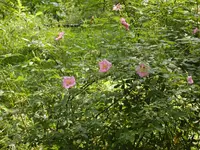
The plant produces fragrant, single pink blooms in summer, followed by red hips that support wildlife. It tolerates periodic flooding and cold winters, which makes it robust in suitable climates.

This species prefers full sun, consistently moist soil, and slightly acidic, organic-rich conditions. Understanding these natural wetland habits helps guide how to care for swamp rose in gardens or restoration plantings.

Main Plant Requirements

Care Difficulty

Moderate Care

Light Preference

Full Sun

Water Requirements

Aquatic

Temperature Preference

Cold Hardy

Hardiness Zone

4–9

Soil Texture

Loamy, Silty, Organic-rich

Soil pH

Acidic (5.5–6.5), Slightly acidic (6.5–7.0)

Soil Drainage

Waterlogged tolerant

Fertilization

Minimal (feed rarely)

Get Personalized Care Plan

Scan your plant to receive care tips personalized for your specific plant

Available on iOS and Android

How to Care for the swamp rose

This wetland shrub needs generous light to flower well.

  • Provide 6–8 hours of direct sun daily, with a preference for morning sun and some light afternoon shade in hotter regions.
  • Swamp rose tolerates partial shade, but with less than 4–5 hours of sun you can expect fewer blooms and more open, leggy growth.
  • In summer, monitor for leaf scorch on very hot, exposed sites; in early spring and late fall, maximize exposure by avoiding shade from buildings or evergreens.

This species is adapted to consistently moist to wet conditions.

  • Keep soil consistently damp; in garden beds, the surface should rarely dry more than 1–2 cm deep, especially during active growth.
  • Rosa palustris suits pond margins, ditches, or low spots where water may stand briefly but still has some slow drainage, not stagnant anaerobic water.
  • Watch foliage for stress: underwatering causes dull, wilting leaves and dry soil cracks, while overwatering in heavy clay leads to yellowing leaves and rotten, soft roots.

This hardy shrub tolerates a wide temperature range once established.

  • Active growth is strongest around 65–80°F (18–27°C), with good flowering and shoot development in this range.
  • The plant survives winter cold down to about -20°F (-29°C) when planted in the ground and fully dormant, making it suitable for many temperate climates.
  • Summer heat up to 90–95°F (32–35°C) is tolerated if soil stays moist; extended extremes above this or sudden late frosts can damage young, tender shoots.

This species thrives in consistently moist air typical of wetlands but adapts to average outdoor humidity.

  • Aim for 50–80% humidity in its immediate environment, especially during hot, dry weather.
  • Dry air can cause leaf edges to brown and flower buds to dry and drop early.
  • To support swamp rose in drier climates, plant near ponds, use mulch over roots, or group plants to create a slightly more humid microclimate.

Rosa palustris prefers consistently wet, organic-rich soil that mimics boggy or marsh conditions.

  • Use a deep, loamy soil high in organic matter, with fine texture that holds water yet does not turn anaerobic for long periods.
  • Aim for pH 5.5–7.0; incorporate composted leaf mold or well-rotted compost to buffer pH and improve structure.
  • For heavy clay, add coarse sand and organic matter to increase aeration while still allowing the soil to stay saturated.
  • Avoid sharply drained, sandy soils or raised positions where water runs off quickly, as chronic dryness reduces growth and flowering.

This species can be grown in containers if the pot is managed to stay consistently wet and very stable.

  • Choose a large, heavy container to counterbalance tall, cane-like growth and reduce tipping in strong winds.
  • Use a water-retentive mix in the pot while standing the container in a shallow, non-draining tray to sustain swampy moisture around the roots.
  • Position the container where runoff from roofs or hose irrigation naturally refills the tray, avoiding locations where water easily spills away from the base.

Rosa palustris benefits from light, targeted feeding but often grows acceptably in fertile, naturally moist soils without extra inputs.

  • Apply a balanced slow-release fertilizer (around 10-10-10) at half strength in early spring as new growth begins.
  • In lean soils, top-dress with 2–3 cm of compost around the root zone, keeping it away from direct stem contact.
  • Feed once more in midsummer if growth or flowering seems weak, then stop all fertilization by late summer.
  • Avoid high-nitrogen products that encourage soft, disease-prone shoots rather than sturdy stems and flowers.

Rosa palustris responds well to thoughtful pruning that maintains an open, healthy framework and reliable flowering.

  • Carry out main pruning in late winter to very early spring while plants are still dormant.
  • Remove dead, damaged, crossing, or inward-growing stems first to improve air flow and reduce disease pressure.
  • Shorten older, woody canes to outward-facing buds to encourage vigorous new flowering shoots.
  • Use clean, sharp bypass pruners and make angled cuts just above a healthy bud or branch junction.

This species is usually grown in the ground in wet sites, so focus on careful transplanting rather than frequent repotting.

  • Transplant in early spring or early fall when temperatures are mild and soil moisture is high.
  • Move plants when growth is slow, roots encircle the planting hole, or a container plant shows circling roots.
  • Dig a wide root ball, disturb roots as little as possible, and replant at the same depth in a prepared, moist site.
  • Water thoroughly after transplanting, keep soil consistently moist, and shade temporarily if needed to reduce transplant shock.

Rosa palustris is commonly propagated by hardwood cuttings, seed, and sometimes by layering in suitable wet conditions.

  • Take hardwood cuttings in late fall or winter, 15–20 cm long, and insert into a gritty, moist medium outdoors or in a cold frame.
  • Sow stratified seed in late fall or late winter, providing a cold period to break dormancy and promote even germination.
  • Use simple layering in spring by bending a flexible stem to the ground, wounding slightly, and pegging it into consistently moist soil.
  • Maintain cool conditions, high humidity, and steady moisture around cuttings or layers to support root initiation and survival.

This cold-hardy native tolerates typical winters in much of its range and generally needs minimal special winter care.

  • In colder regions, apply a 5–8 cm mulch layer over the root zone after the ground cools but before it freezes hard.
  • Avoid piling mulch directly against stems to reduce rot and rodent damage through winter.
  • Container-grown plants benefit from moving to a sheltered, unheated space or sinking pots into the ground to insulate roots.

Care Tips

Seasonal Cane Renewal

Mark and selectively remove the oldest, woodiest canes at ground level every 2–3 years to keep the shrub open, encourage vigorous new growth, and maintain better air circulation in wet sites.

Shallow Water Tolerance

If planting beside a pond or drainage swale, position the crown just above typical high-water levels so roots can tolerate brief shallow flooding without the stem base remaining submerged for long periods.

Targeted Mulch Management

Use a 5–8 cm ring of coarse, woody mulch that stops a few cm short of the stems to keep the root zone cool and moist while reducing fungal splash and discouraging weed competition.

Wildlife-Friendly Thicketing

Allow some suckers to mature into a loose thicket on at least one side of the plant to provide cover for birds while still thinning the interior shoots annually so light and air reach the center.

Systematic Pest Scouting

From late spring, inspect undersides of leaves and tender shoots every 7–10 days for aphids, sawfly larvae, and leaf spots, so that caring for swamp rose includes early intervention with pruning or approved controls before infestations escalate.

Common Pests and Diseases

Rose rosette disease

This disease causes abnormal red, witch’s broom-like shoots, excessive thorns, and distorted leaves and buds. Symptoms include a rapid decline of affected canes and eventual plant death.

Solution

Immediately remove and destroy symptomatic canes or entire plants, including roots, to reduce spread by eriophyid mites. Space plants to allow good airflow, avoid using leaf blowers that move mites, control nearby multiflora rose, and replant only with healthy, certified stock after removing infected material and debris.

Black spot

This disease produces round black spots with fringed edges on leaves, followed by yellowing and premature defoliation, especially in humid, wet conditions. Symptoms include progressive leaf loss that weakens the plant over the season.

Solution

Prune and discard infected leaves and canes, and avoid overhead watering so foliage dries quickly. Improve air circulation, keep fallen leaves cleaned up, and use a labeled rose fungicide as a protectant during long wet periods as part of broader Rosa palustris care instructions.

Powdery mildew

This disease shows as a white, powdery coating on young leaves, shoots, and buds, often in late spring or early summer. Symptoms include distorted, curled foliage and reduced flowering when severe.

Solution

Increase sun exposure and airflow where possible, avoid excess nitrogen fertilization that produces very soft growth, and water at the soil level rather than on foliage. Remove heavily affected shoots and, in recurring cases, apply a rose-safe fungicide preventively when conditions favor mildew (warm days, cool nights).

Rose sawflies (slug sawflies)

These insects feed on the leaf surface, leaving windowpane-like damage or skeletonized foliage on lower and inner branches. This pest can noticeably thin the leaf canopy in late spring to early summer.

Solution

Inspect undersides of leaves regularly and hand-pick or crush larvae when numbers are low. For heavier infestations, rinse foliage with a strong stream of water, prune and discard badly affected leaves, and use a labeled horticultural soap or spinosad product targeting sawfly larvae while protecting pollinators.

Japanese beetles

These insects chew flowers and foliage, often leaving lacy, skeletonized leaves and damaged blooms in mid-summer. This pest is especially attracted to roses growing in sunny, open sites.

Solution

Hand-pick adults in early morning into soapy water before they aggregate in large numbers, and remove highly attractive spent blooms promptly. Avoid placing beetle traps close to the planting area, protect key specimens with fine mesh netting when beetle pressure is high, and consider spot treatment with a labeled low-impact insecticide on foliage if nonchemical measures are insufficient.

Interesting Facts

Obligate wetland shrub

Rosa palustris is classified as an obligate wetland species in North America, meaning it almost always occurs in saturated soils such as swamps, bog margins, and wet ditches in its natural range.

High wildlife value

Its dense, thorny stems provide nesting and protective cover for birds and small mammals, while the flowers support bees and other pollinators and the hips are eaten by wildlife into winter.

Salt and flooding tolerance

This species tolerates periodic flooding and modest soil salinity better than many other native roses, so it can persist along tidal marsh edges and in low-lying wet meadows.

Botan icon

Did you know?

Rosa palustris is considered a conservative species in many parts of its range, meaning its presence often indicates relatively intact, high-quality wetland habitat that has not been heavily disturbed.

FAQs about swamp rose

Poor flowering usually comes from too little sun, overly dry or waterlogged soil, excessive nitrogen fertilizer, or heavy pruning at the wrong time, which removes flower buds formed on older wood. Check each factor systematically and adjust conditions.

Grow Healthy Plants with Botan Care

Keep your plants happy and healthy with plant identification, disease detection, and easy care guidance.

Botan plant care app — identify plants on mobile

Explore More Plants