
salmonberry Identification (Rubus spectabilis)

Recognize salmonberry by its upright, thicket-forming canes, broad leaves divided into three leaflets, and large five-petaled flowers borne singly or in pairs on short side shoots.

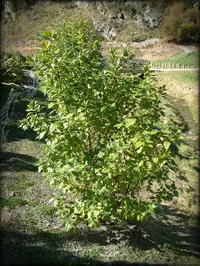
Look for arching stems with fine prickles and shrub-like growth often reaching 4 to 10 feet (1.2 to 3 m) tall.

Rubus spectabilis Identification

Is This salmonberry?

Upload a clear image to check whether your plant ID is correct.

Clear images work best. Avoid photos taken too close or too far away

  • 1 free identification
  • No sign-up
  • 30,000+ plants in database

Check the shrub’s canes, leaves, flowers, and berries for a quick match.

  • Arching woody canes form a thicket and usually carry fine prickles rather than dense, heavy thorns.
  • Leaves are alternate and usually split into 3 leaflets; the terminal leaflet is larger, with coarse teeth.
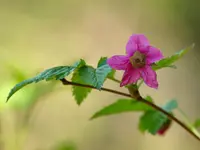
  • Flowers are single to paired, open and cup-shaped, with 5 petals, often deep pink to reddish pink.
  • Berries look raspberry-like, rounded, and about 1/2 to 1 inch (1.3 to 2.5 cm) across, yellow to orange-red.

The combination of prickly arching canes, three-part leaves, and large pink flowers is especially useful.

Salmonberry shows distinct visual shifts from first shoots to flowers and developing fruit.

  • Young plant: Early shoots are upright and lightly branched, with soft green stems and broad, simple-looking young leaves before the plant forms its fuller thicket habit.
  • Mature plant: Older plants form arching, woody canes in loose colonies, often reaching 4-10 feet (1.2-3 m) tall, with larger leaves clearly divided into three leaflets.
  • Flowering stage: Flowers appear singly or in pairs on bare-looking or lightly leafed canes, showing five bright pink to magenta petals that make the shrub easy to recognize.
  • Fruiting stage: The developing aggregate fruits resemble raspberries, turning yellow, orange, or red, and stand out against the green foliage with a plump, glossy surface.

In early spring, salmonberry often stands out before many nearby shrubs leaf out. Bare to lightly leafing canes show large pink to magenta flowers, making thickets easy to spot. By late spring into early summer, yellow to orange-red berries become obvious. Leaves drop in fall, leaving pale brown canes visible through winter and making the arching, bristly stems easier to recognize.

A few brambles and shrubs can be mistaken for salmonberry at a glance.

thimbleberry(Rubus parviflorus)

Often confused because both have pink to white flowers and soft-looking berries. Thimbleberry has large, simple maple-like leaves with 5 shallow lobes, not compound leaves with 3 leaflets. Its stems are thornless.

black raspberry(Rubus leucodermis)

Can resemble it through arching, prickly canes and three-part leaves. Black raspberry usually has a whitish, waxy cane coating and smaller pale flowers in clusters, not larger solitary flowers. Ripe fruit turns dark purple-black, not yellow to red.

Rubus spectabilis is native to the Pacific coast of North America, from south-central Alaska through British Columbia and Washington to Oregon and northern California. It is most often found in moist woods, streambanks, wet thickets, and coastal forests, often in lowland to foothill settings. That habitat is a useful clue because this species is strongly associated with cool, damp sites in the Pacific Northwest rather than dry inland ground.

  • Prickly canes: The stems carry prickles that can scratch skin during handling. This is a skin-contact injury risk for humans and pets moving through dense growth.
  • Berry look-alike risk: Its salmon-red aggregate fruits can be confused with red baneberry (Actaea rubra), a poisonous plant for humans and pets if eaten. A key difference is that red baneberry has many small berries on a single upright cluster, not raspberry-like fruits on prickly canes.

Check Your Plant ID

Use Botan to compare a photo and confirm the plant, which helps avoid mix-ups with similar species.

FAQ

The quickest salmonberry identification clue is the flower: large, 5-petaled blooms in bright pink to magenta, often appearing before or with the leaves on arching, prickly canes. The berries ripen yellow to orange-red.

More Plant Identification Guides

Identify Your Plant and Learn More

Upload a photo to Botan for identification, then review plant details, care information, and common problems for that species.

Botan app identifying a plant from a photo
How Often to Water Fruit Trees

7 min read · 11 Aug 2026

How Often to Water Fruit Trees

Irrigation needs change as roots establish and weather shifts. This guide gives practical starting intervals, explains how soil and tree type change them, and shows how to recognize both excess moisture and drought stress.

Plant Care
How Often to Water Fruit Trees
How to Bottom Water Plants: Complete Guide

6 min read · 13 Jul 2026

How to Bottom Water Plants: Complete Guide

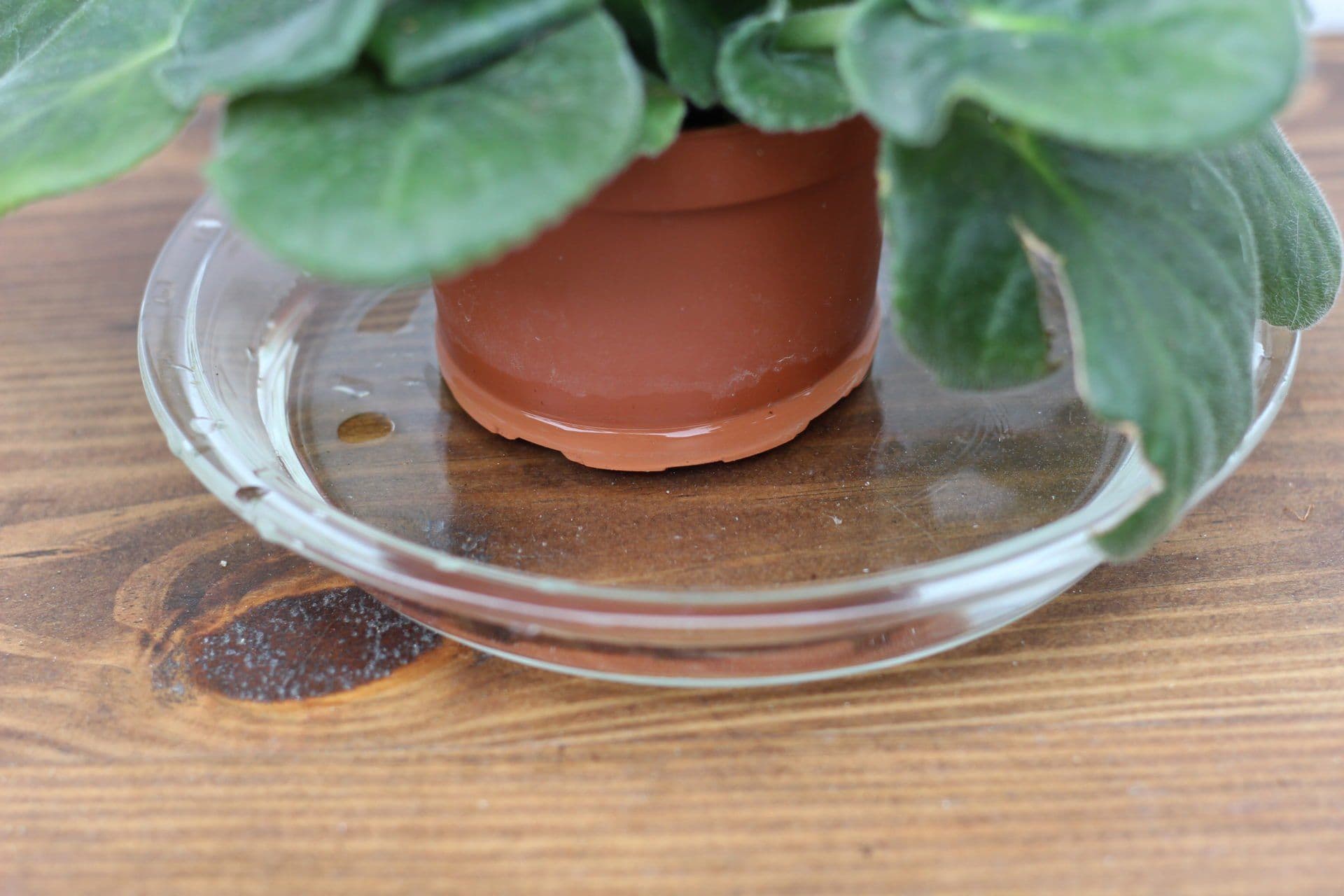
Bottom watering helps soil absorb moisture evenly and keeps foliage dry, reducing the risk of missed dry spots or root problems. Place the pot in a tray of water for a short time, then let it drain well.

Plant Care
How to Bottom Water Plants: Complete Guide
Christmas Cactus vs Thanksgiving Cactus: How to Tell Them Apart

7 min read · 24 Nov 2026

Christmas Cactus vs Thanksgiving Cactus: How to Tell Them Apart

Christmas and Thanksgiving cacti look remarkably similar, but their stem shapes, flowers, and blooming seasons reveal important differences.

Plant Recommendations
Christmas Cactus vs Thanksgiving Cactus: How to Tell Them Apart