Control Plant Spread
Periodically thin and trim back older, woody sections to keep mats from becoming too dense, which improves air flow and reduces the risk of rot in the center of the clump.

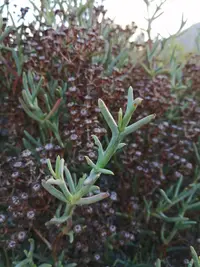
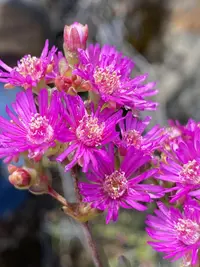
Kraal tentfig (Ruschia multiflora) is a compact, mat-forming succulent from arid regions of South Africa. It belongs to the Aizoaceae family, often called ice plants. The plant forms low cushions of small, fleshy leaves and produces many bright, daisy-like flowers that can cover the foliage in peak bloom. It is usually grown as a groundcover in rock gardens, gravel beds, or in containers where good drainage is available. This species suits gardeners looking to care for Kraal Tentfig in sunny, dry conditions with poor, sandy soil. Its drought tolerance makes it relatively easy for attentive growers, but it dislikes prolonged moisture and heavy, compacted substrates.

Care Difficulty
Easy Care

Light Preference
Full Sun

Water Requirements
Low Water

Temperature Preference
Warm Climate

Hardiness Zone
9–11

Soil Texture
Sandy, Loamy, Rocky

Soil pH
Slightly acidic (6.5–7.0), Neutral (7.0)

Soil Drainage
Well-drained

Fertilization
Minimal (feed rarely)
Scan your plant to receive care tips personalized for your specific plant
Available on iOS and Android
This compact succulent prefers bright, direct sun to flower and stay compact.
This drought-tolerant succulent needs thorough but infrequent watering and very sharp drainage.
This species prefers warm, dry conditions and does poorly in hard frost.
This drought-tolerant succulent handles typical indoor humidity well and rarely needs special humidity management.
This species needs very fast-draining, mineral-based soil to prevent root rot and mimic its native arid habitat.
This succulent is very suitable for container growing, including shallow dishes and rock-garden planters.
This drought-tolerant succulent, often called Kraal Tentfig, needs only light feeding to stay compact and floriferous.
Ruschia multiflora benefits from occasional light pruning to maintain a dense, flowering mat.
This succulent groundcover prefers minimal disturbance, but occasional transplanting or repotting supports healthy growth.
Ruschia multiflora is commonly multiplied by stem cuttings, which root well in suitable conditions.
This succulent is somewhat frost tolerant but benefits from simple winter precautions in colder regions.

Plant Health Check
Not sure what's wrong with your plant? Check your plant's health inside the app.
In its native Namaqualand and western South Africa, this species helps form dense mats of magenta flowers that contribute to the region’s famous seasonal “flower carpets” after winter rains.
The trailing stems often root at the nodes where they touch sandy soil, allowing the plant to slowly expand into wide, stabilizing mats that help bind loose, erosion-prone substrates.
Flowering is closely tied to cool-season rainfall in its winter-rainfall habitat, so in cultivation it tends to bloom most reliably when given a mild, bright winter with periodic watering that mimics its natural climate.
Sparse or absent flowering often results from insufficient light, overly rich or high-nitrogen soil, or heavy, unpruned growth. Provide strong sun, avoid frequent fertilizing, and lightly trim after flowering to stimulate new, flower-bearing shoots when growing Kraal Tentfig.
Keep your plants happy and healthy with plant identification, disease detection, and easy care guidance.