Camembert Brittlegill Care (Russula amoenolens)

Camembert Brittlegill

About Camembert Brittlegill

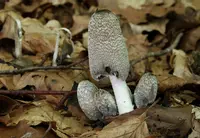
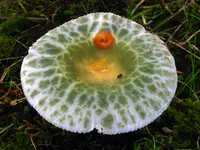
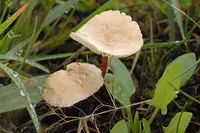
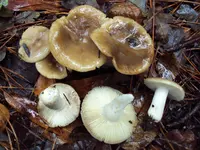
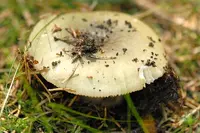
Camembert brittlegill, Russula amoenolens, is a wild mushroom rather than a typical garden plant. It forms fleshy, brittle caps with pale to brownish tones and white, closely spaced gills.

This species is named for its distinct cheese-like smell, which can help with field identification. It usually appears on forest floors, often in mixed or broadleaf woodlands in temperate regions.

It does not behave like a standard ornamental plant and is not suited to pots or beds. Conditions must mimic a woodland habitat, which makes it difficult to cultivate deliberately and limits how to care for Camembert Brittlegill to habitat protection rather than active growing.

Main Plant Requirements

Care Difficulty

Hard Care

Light Preference

Partial Shade

Water Requirements

Regular Water

Temperature Preference

Cool Climate

Hardiness Zone

Unknown

Soil Texture

Loamy, Silty, Organic-rich

Soil pH

Acidic (5.5–6.5)

Soil Drainage

Moist but well-drained

Fertilization

Minimal (feed rarely)

Get Personalized Care Plan

Scan your plant to receive care tips personalized for your specific plant

Available on iOS and Android

How to Care for the Camembert Brittlegill

This ectomycorrhizal fungus prefers stable, shaded woodland light conditions rather than direct open sun.

  • Provide dappled or filtered light under deciduous trees, roughly equivalent to 1–3 hours of weak, early-morning sun and shade the rest of the day.
  • Choose north- or east-facing woodland edges for Camembert Brittlegill so leaf litter and canopy protect it from harsh midday and afternoon sun that can dry the substrate.
  • In summer, thicker canopy cover helps prevent substrate overheating, while in late autumn more open light is acceptable as long as the forest floor does not dry out.

This woodland fungus depends on consistently moist, not waterlogged, soil around its tree partners.

  • Aim for soil that feels evenly moist 3–5 cm below the surface, with leaf litter helping retain moisture while excess water still drains away.
  • During dry spells, forest soil that becomes dusty, cracked, or hydrophobic indicates insufficient moisture for Russula amoenolens fruiting.
  • Persistent standing water, foul smell, or slimy leaf litter signal poor drainage and oxygen loss, which can suppress mycelium and reduce mushroom formation.

This species fruits best in mild, temperate woodland conditions without temperature extremes.

  • Optimal fruiting typically occurs around 55–68°F (13–20°C), common in late summer to autumn in temperate forests.
  • Mycelium in soil can tolerate brief drops near 32°F (0°C), but repeated hard frosts below 28°F (-2°C) reduce visible fruiting bodies.
  • Sustained heat above 80°F (27°C) dries leaf litter and upper soil, so shade, organic mulch, and tree cover are important to buffer temperature swings through the season.

Humidity is not a meaningful care factor for this wild ectomycorrhizal fungus, so no special humidity management is recommended for Camembert Brittlegill in natural or outdoor cultivation settings.

This ectomycorrhizal fungus relies on suitable forest soil conditions rather than a conventional potting mix.

  • Prefers naturally developed, loose, humus-rich forest soil with abundant leaf litter and fine roots, mimicking beech or mixed-wood habitats.
  • Requires very well-drained mineral soil beneath the organic layer; avoid compacted clay or waterlogged ground that limits gas exchange around roots.
  • Performs best in slightly acidic to neutral conditions, roughly pH 5.0–7.0, typical of many temperate woodland soils.
  • To improve site conditions, lightly mulch with shredded leaves or coarse composted bark without burying the existing fine root zone.

This species is not suitable for container growing because it depends on complex root and soil relationships that standard pots cannot replicate.

Russula amoenolens is a wild ectomycorrhizal fungus that should not be fertilized directly, as it relies on its tree host and natural soil processes.

Russula amoenolens does not require pruning, since it is a mushroom-producing fungus rather than a woody or leafy plant.

This fungus is not suited to conventional repotting; it lives in symbiosis with tree roots in the soil rather than in containers.

  • Transplant only by moving intact host trees or undisturbed soil blocks that already contain the mycorrhizal network.
  • Attempting to lift individual mushrooms breaks the underground mycelium and does not establish a new colony elsewhere.
  • If trees are transplanted, keep as much native soil around the root ball as possible to preserve fungal associations.
  • After any soil move, maintain stable moisture and avoid heavy fertilization so the symbiosis can re-establish.

Propagation of Russula amoenolens is specialized and not practical for typical home cultivation, so it is rarely attempted outside research settings.

This species is naturally cold hardy in its native climates and does not need specific winter care from gardeners.

Care Tips

Host tree mapping

Record the exact tree species and locations where you find fruiting bodies, since this ectomycorrhizal fungus relies on specific hosts and future flushes are most reliable near the same individual trees.

Minimal disturbance zone

Mark a 1–2 m radius around productive spots and avoid raking, tilling, or heavy foot traffic there so fine tree and fungal roots are not compacted or broken, which helps sustain recurring patches when growing Camembert Brittlegill.

Selective leaf management

Gently remove only the top, loose leaf layer when foraging or observing, but leave the compact, decomposed layer intact to preserve moisture and the stable microclimate the mycelium network needs.

Moisture buffering mulch

In dry periods, lightly add a thin layer of undecayed leaf litter or pine needles from the same site instead of commercial mulch to buffer soil moisture without disrupting the native forest floor structure.

Hygienic foraging tools

Clean knives, baskets, and boots between different patches to limit movement of soilborne pathogens that can damage host tree roots and indirectly reduce future Russula amoenolens fruiting.

Common Pests and Diseases

Mycophagous slugs

This pest feeds directly on mushroom caps and stems, leaving ragged holes and slime trails on fruiting bodies of the fungus. Symptoms include missing sections of the cap edge and shallow gouges in the flesh.

Solution

Hand-pick slugs during evening or early morning, reduce dense groundcover where they hide, and use physical barriers such as copper tape or rough diatomaceous earth around fruiting patches. Beer traps or iron phosphate slug baits can be used sparingly, placed away from desirable wildlife and pets.

Springtails

These insects live in the leaf litter and can chew on very young or decaying fruiting bodies, leaving small pits or surface scarring. This issue is mainly cosmetic for wild mushrooms but can distort delicate caps in cultivation-like setups.

Solution

Improve surface drainage and avoid over-wet litter to reduce ideal springtail habitat. Gently lift and thin dense debris, and if needed, use targeted, labeled insecticidal soaps on surrounding litter rather than directly on mushrooms to lower their numbers.

Fungus gnats

These insects lay eggs in moist organic material, and the larvae can tunnel in developing fruiting bodies, causing soft spots, internal browning, and collapse of caps. Adults are often seen hovering above damp, mushroom-rich patches.

Solution

Reduce excess moisture in the immediate area by allowing the forest duff or substrate surface to dry slightly between rains or irrigations if in a managed setting. Sticky traps help capture adults, and a biological control such as Bacillus thuringiensis var. israelensis (Bti) can be applied to the substrate to target larvae without harming non-target organisms when used as directed.

Mycophagous fly larvae

This pest group includes various fly maggots that bore into caps and stems, producing tunnels, brown waterlogged tissue, and premature decay of fruiting bodies. Symptoms include small entry holes on the cap surface and soft, collapsing flesh.

Solution

Harvest mushrooms promptly once mature to limit exposure time for egg-laying adults if managing a monitored patch. Remove and discard heavily infested fruiting bodies away from the site to break the life cycle, and maintain moderate airflow at ground level by avoiding thick, stagnant piles of leaf litter directly over known fruiting zones.

Interesting Facts

Distinct Camembert aroma

This mushroom is notable for its strong smell closely resembling ripe Camembert cheese, caused by specific volatile organic compounds that are uncommon in most other russulas.

Oak forest specialist

It typically forms ectomycorrhizal associations with oaks in dry, warm deciduous forests, exchanging mineral nutrients for sugars from the tree roots.

Inedible but not deadly

Although not considered poisonous, it is classed as inedible due to its acrid taste and unpleasant odor, so it is generally avoided by mushroom foragers.

Botan icon

Did you know?

This species was only formally described in 1975, yet it has since become a well-known reference mushroom in Europe because its distinctive cheese-like odor makes it unusually easy to recognize in the field compared with many other russulas.

FAQs about Camembert Brittlegill

This species is considered inedible. It has a strong cheese-like odor and can cause gastrointestinal upset such as nausea, vomiting, or diarrhea. It should not be collected for food or tasted, even in small amounts.

Grow Healthy Plants with Botan Care

Keep your plants happy and healthy with plant identification, disease detection, and easy care guidance.

Botan plant care app — identify plants on mobile

Explore More Plants