water club mushroom Care (Vibrissea truncorum)

water club mushroom

About water club mushroom

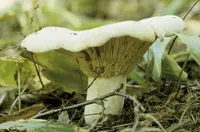
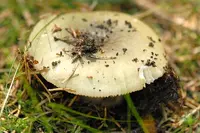
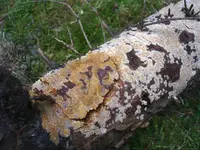
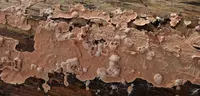
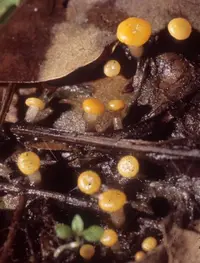
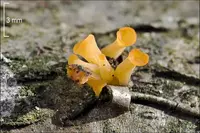
Water club mushroom, Vibrissea truncorum, is an aquatic fungus, not a true plant, that grows on decaying wood in clean, cold streams and seeps. It forms small, club-shaped yellow to orange fruiting bodies that rise above the water surface on slender, pale stems.

This species is most often found in mountain and boreal regions of the Northern Hemisphere, where water stays cool and well oxygenated. It has quite specific habitat needs, so it is challenging to cultivate and usually suits advanced enthusiasts who want to learn how to care for water club mushroom.

In general, it favors shaded, consistently wet environments with moving, unpolluted water and stable, cool temperatures, which are difficult to reproduce indoors or in typical garden settings.

Main Plant Requirements

Care Difficulty

Hard Care

Light Preference

Shade

Water Requirements

Aquatic

Temperature Preference

Cool Climate

Hardiness Zone

3–7

Soil Texture

Silty, Organic-rich

Soil pH

Acidic (5.5–6.5)

Soil Drainage

Waterlogged tolerant

Fertilization

Minimal (feed rarely)

Get Personalized Care Plan

Scan your plant to receive care tips personalized for your specific plant

Available on iOS and Android

How to Care for the water club mushroom

This stream-dwelling fungus prefers cool, soft light similar to shaded forest creeks.

  • Provide bright shade or dappled light, with no more than 1–2 hours of weak morning sun and full protection from harsh midday and afternoon sun.
  • Allow 4–6 hours of indirect, filtered light daily; deep, constant shade can slow growth and reduce the vivid orange color of water club mushroom.
  • In summer, shield from strong sun using leaf cover, shade cloth, or placement on the north or east side of larger plants.

This species is adapted to constantly moist, flowing water environments, not intermittently dry soil.

  • Maintain saturated but oxygenated conditions, such as shallow moving water or very wet, coarse substrate; never let the surface crust or dry out.
  • Aim for cool, clean water; excess organic sludge, stagnant pools, or foul odor indicate low oxygen and conditions that can kill fruiting bodies.
  • Watch caps and stems: shriveling or dull color suggests drying, while slimy, collapsing tissue can mean prolonged stagnation or anaerobic conditions.

This fungus thrives in cool to mildly temperate conditions typical of shaded streams and seeps.

  • Aim for 45–60°F (7–16°C) as an optimal range, with best development during cool spring and fall periods.
  • Tolerates brief drops near 32°F (0°C) in water that does not freeze solid, but repeated hard frost without flowing water can damage fruiting bodies.
  • Above 70°F (21°C), especially with warm, low-flow water, productivity declines; provide extra shade and cooler water input during hot spells.

This fungus needs very high, stable humidity to form and maintain healthy fruiting bodies.

  • Aim for 90–100% humidity by positioning cultures over or beside continuously moving, cool water rather than in dry room air.
  • Dry air causes shriveling, pale caps, and halted growth, so shield the habitat from fans, heaters, and direct sun.
  • Increase humidity with a closed terrarium-style setup with strong ventilation, using open water trays and frequent fine misting that never fully dries out.

Vibrissea truncorum is not grown in typical soil and instead requires a permanently wet, oxygenated substrate that mimics submerged or splash-zone stream edges.

  • Use a mix of coarse sand, fine gravel, and well-rinsed, decayed hardwood leaf litter to create a stable, organic-rich bed under shallow flowing water.
  • Ensure constant saturated conditions with water moving gently across the substrate so it stays wet yet oxygenated rather than stagnant.
  • Keep pH near neutral, around 6.5–7.2, by using low-lime materials and avoiding chalky rock or alkaline tap water when possible.
  • Improve aeration and structure by layering particle sizes (fine sand over coarser gravel) to prevent compaction while still anchoring the delicate mycelium.

This species is only marginally suited to container culture and is best attempted in specialized aquatic-style setups.

  • Choose a low, wide, non-porous container to keep a shallow moving water layer stable without rapid edge drying.
  • Slightly tilt the container and use an external pump to create a gentle, continuous current across the substrate surface.
  • Anchor stones or mesh at the outflow side to prevent the loose sand–gravel substrate from being displaced by water movement.

Vibrissea truncorum naturally colonizes nutrient-poor, decaying wood and usually needs no added fertilizer in cultivation.

Pruning Vibrissea truncorum is generally unnecessary, as fruiting bodies are short-lived and arise from decaying wood.

This fungus is best managed by positioning suitable decaying wood rather than by classic repotting or transplanting.

  • Move or install fresh, water-soaked hardwood pieces in cool, clean, flowing water when existing wood is breaking down completely.
  • Transplant only during mild weather in spring or fall to reduce stress on the developing mycelium, the thread-like feeding network.
  • Shift colonized wood gently, keeping it intact and moist to avoid tearing the hidden mycelium structure.
  • After relocation, secure wood so it does not dry out or shift, then allow time for the fungus to re-establish and fruit.

Propagation of Vibrissea truncorum is specialized and usually left to natural spore dispersal in suitable stream habitats.

In climates within its natural range, this stream-dwelling fungus is cold hardy and needs no specific winter care.

Care Tips

Flowing water mimic

Place culture trays or jars in a shallow, gently aerated water bath to imitate cool, moving stream conditions and keep the substrate surface evenly moist without direct splashing on fruiting bodies.

Clean stream substrate

Use well-washed fine gravel mixed with a small amount of decayed hardwood leaf litter as a base, then sterilize or pasteurize it before inoculation to reduce competing fungi and algae in cultivation setups.

Low‑light shielding

Install a shade cloth or use a translucent lid to diffuse light over the culture, which limits algae growth on the substrate and helps maintain the moist microclimate needed for stable fruiting.

Cool-air circulation

Run a small, indirect fan over the water surface rather than directly over the mushrooms to keep air fresh, avoid stagnant pockets, and help prevent mold while still retaining high local humidity.

Streambed hygiene

Regularly siphon off debris, dead tissue, and surface biofilm from the water bath and replace with fresh, cool water to keep nutrient levels low and discourage bacterial slime while growing water club mushroom.

Common Pests and Diseases

Aquatic fungus gnat larvae

This pest lives in cool, flowing water and feeds on soft fungal tissues, including young water club mushroom fruiting bodies. Symptoms include thinning clusters, collapsed stalks, and visible slender larvae on or around the substrate.

Solution

Rinse affected colonies gently with cool, clean, moving water to flush out larvae, and remove heavily damaged fruiting bodies so they do not decay in place. Reduce organic debris accumulation by periodically refreshing or filtering the water source, and if grown in controlled culture, use fine mesh screens and clean, well‑aged water to limit adult access for egg laying.

Freshwater springtail grazing

These insects can colonize constantly wet substrates and graze on delicate fungal tissue, especially on newly emerging fruiting bodies. Symptoms include minor pitting, uneven margins on caps, and small mobile white or gray insects that may jump when disturbed.

Solution

Physically dislodge springtails by increasing gentle water flow over the colonized surface or by submerging and swishing the substrate in clean, cool water. Limit excess decaying plant material and biofilm buildup, and in culture setups, improve circulation and periodically flush containers to keep populations low while maintaining the cool, oxygen‑rich conditions needed for healthy Vibrissea truncorum care.

Bacterial soft rot

This disease occurs in constantly wet, low‑oxygen microzones and causes rapid softening and collapse of the bright orange fruiting bodies. Symptoms include water‑soaked, slimy tissue, loss of structure, and a sour or foul odor from affected clusters.

Solution

Remove and discard all slimy or foul‑smelling fruiting bodies and any obviously decaying plant debris from the immediate area. Improve water movement and oxygenation so surfaces do not stay stagnant, avoid nutrient‑rich runoff, and in controlled culture, regularly refresh the water and thin dense clusters to prevent anaerobic pockets from forming.

Oomycete water mold

This disease is caused by water‑borne oomycetes that colonize damaged or senescing fungal tissue and can spread along submerged stems and surrounding organic matter. Symptoms include a cottony, whitish growth on decaying tissue and progressive deterioration of nearby fruiting bodies in slow or stagnant water.

Solution

Cut away and discard all visibly colonized tissue along with a small margin of seemingly healthy material, then increase water turnover or flow rate around the habitat. Avoid introducing unsterilized plant debris from other water bodies, and in aquaria or laboratory culture, clean surfaces, nets, and containers between uses to limit spore transfer and reinfection.

Interesting Facts

Bright orange apothecia

This fungus forms tiny, club-shaped fruiting bodies in vivid yellow-orange to orange, which stand out sharply against the dark, wet wood or moss where it grows.

Strict habitat specialist

It is strongly tied to clean, cold, fast-flowing streams and rivulets, usually fruiting on submerged or periodically flooded decaying wood, moss, or plant debris in well-oxygenated water.

Indicator of water quality

Because it prefers unpolluted, cool running water and stable stream conditions, its presence is often associated with relatively undisturbed, high-quality freshwater habitats.

Botan icon

Did you know?

The spores of this species are released from its tiny club-shaped heads into moving water, and dispersal likely relies heavily on stream flow to carry them downstream to new submerged wood and moss substrates, making running water itself a key part of its life cycle.

FAQs about water club mushroom

This fungus develops slowly, often taking several weeks to months for small clusters to become noticeable on submerged wood. Growth rate depends strongly on constant cool water, stable moisture, and clean, well-oxygenated stream conditions.

Grow Healthy Plants with Botan Care

Keep your plants happy and healthy with plant identification, disease detection, and easy care guidance.

Botan plant care app — identify plants on mobile

Explore More Plants