Russula cerolens Care

Russula cerolens

About Russula cerolens

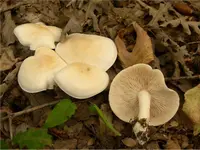
Russula cerolens is a wild gilled fungus, not a leafy houseplant. It produces firm, often pale to yellowish caps with brittle, white stems and crowded white gills. The flesh typically snaps cleanly, a common trait in Russula species.

This mushroom is usually found in forested areas, growing on soil in association with trees. It forms mycorrhizal relationships, meaning it trades nutrients with tree roots, so it cannot be cultivated like ordinary garden plants.

Because of this specialized lifestyle, it is not suitable for containers or home cultivation, and resources on how to care for Russula cerolens are very limited. It is best appreciated in its natural woodland habitat.

Main Plant Requirements

Care Difficulty

Hard Care

Light Preference

Partial Shade

Water Requirements

Keep Soil Moist

Temperature Preference

Cool Climate

Hardiness Zone

Unknown

Soil Texture

Loamy, Silty, Organic-rich

Soil pH

Strongly acidic (4.5–5.5), Acidic (5.5–6.5)

Soil Drainage

Moist but well-drained

Fertilization

Minimal (feed rarely)

Get Personalized Care Plan

Scan your plant to receive care tips personalized for your specific plant

Available on iOS and Android

How to Care for the Russula cerolens

This woodland fungus prefers dappled light that mimics a forest floor under trees.

  • Provide bright, filtered light such as open shade under deciduous trees, avoiding direct midday sun that can dry the substrate too quickly.
  • Aim for 2–4 hours of gentle morning or late-afternoon sun, with the rest of the day in partial shade or light shade.
  • In summer, increase shade cover if leaf litter dries and cracks; in spring and fall, slightly more light helps Russula cerolens fruit reliably.

This mycorrhizal fungus depends on consistently moist, not saturated, forest soil.

  • Maintain evenly moist leaf litter and upper soil, allowing only the top 1–2 cm to begin drying between natural rain events or supplemental watering.
  • Use well-drained, humus-rich soil so excess water moves through; standing water or anaerobic, swampy patches lead to rot and reduced fruiting.
  • In dry spells, water slowly at ground level, watching for caps becoming brittle or shriveling as a sign of underwatering, and for sour odor or slimy mycelium as overwatering warnings.

This species prefers cool to mild conditions similar to temperate woodland climates.

  • Support active growth and fruiting at 50–70°F (10–21°C), which matches typical spring and fall forest temperatures in many temperate regions.
  • Below about 40°F (4°C), growth slows greatly, though the mycelium in soil usually survives light frosts if insulated by leaf litter.
  • Sustained heat above 80°F (27°C) with dry air suppresses fruiting; provide thicker mulch and shade during hot spells to buffer temperature swings for Russula cerolens.

Humidity is not a meaningful care factor for Russula cerolens, which grows naturally in outdoor woodland conditions.

Russula cerolens is a woodland ectomycorrhizal fungus that relies on natural forest soil rather than prepared mixes.

  • Grows in light to medium-textured mineral soils with a surface layer of decaying leaves and needles that supply organic matter.
  • Prefers freely draining yet consistently moist ground; avoid compacted, waterlogged, or heavily disturbed sites that stay saturated after rain.
  • Typically associated with slightly acidic soils around pH 4.5–6.0, often under conifers or mixed woodland canopies.
  • To encourage fruiting, leave leaf litter, twigs, and old wood in place so fungal threads remain aerated and undamaged near tree roots.

This species is not suitable for container growing because it depends on living tree roots and complex forest soil conditions.

This ectomycorrhizal fungus relies on its tree partners for nutrients, so Russula cerolens needs no direct fertilization.

Russula cerolens does not require pruning, as individual mushrooms are short-lived fruiting bodies rather than persistent plant structures.

Transplanting focuses on the associated host tree and soil rather than the fungal body itself.

  • Recognize disturbance by poor tree vigor or soil compaction rather than any visible change in the fungus.
  • If moving a young host tree, keep a generous soil root ball intact to preserve the fine roots linked to the fungus.
  • Schedule any tree transplant in cool, moist seasons to limit root stress and support mycorrhizal survival.
  • Water the transplanted tree deeply and maintain an undisturbed leaf-litter layer to help fungal threads recover.

Practical propagation of Russula cerolens in home settings is unreliable and rarely attempted.

This wild ectomycorrhizal fungus is naturally cold hardy and needs no special winter care in the landscape.

Care Tips

Host tree mapping

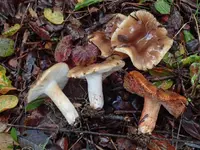
Record which tree species the mushrooms appear under and at what distance, then return to the same microspots each year since this ectomycorrhizal fungus fruits repeatedly with the same host trees.

Minimal soil disturbance

Avoid raking, digging, or compacting the soil and litter where fruiting bodies appear, since intact leaf litter and fine roots support the underground mycelium and promote repeat fruiting.

Targeted moisture buffering

Spread a thin, breathable layer of shredded leaf mulch around the fruiting zone (not directly on caps) to keep the upper soil profile evenly moist without waterlogging, which helps growing Russula cerolens in dry spells.

Hygienic harvesting

Cut or gently twist mushrooms at the base rather than pulling up clumps of soil and mycelium, and remove decaying caps from the surface to limit pathogen buildup in the fruiting area.

Seasonal monitoring routine

During the usual fruiting season, check known sites after significant rain events and note weather patterns and timing, which helps refine when and where to look and reduces unnecessary trampling of the habitat.

Common Pests and Diseases

Mycophagous insects

These insects feed directly on fruiting bodies, causing pits, tunnels, and rapid decay of caps and stems. Symptoms include soft, collapsing tissue and visible larvae inside mature mushrooms.

Solution

Remove and discard heavily infested mushrooms promptly to reduce breeding sites, and avoid disturbing nearby soil to limit spread of eggs and larvae. In natural settings, gentle harvesting practices and leaving only healthy, firm specimens in place is the most practical approach to caring for Russula cerolens without disrupting its ecological partners.

Slug and snail damage

These mollusks rasp the surface of caps and stems, leaving irregular holes, slime trails, and quickly disfigured fruiting bodies. This pest is especially active in damp, shaded habitats where mushrooms emerge.

Solution

Hand-remove slugs and snails during cool, moist periods and dispose of them away from the site. Physical barriers such as rough mulch rings or copper tape around small cultivation or observation areas can help limit direct access to mushrooms without altering soil chemistry.

Parasitic fungi (Hypomyces)

This disease manifests as a white to yellowish crust or felt-like growth over caps and gills, eventually deforming and hardening the mushroom surface. Symptoms include loss of typical russula coloration and a powdery or granular coating that replaces normal gill structure.

Solution

Collect and discard parasitized mushrooms to reduce local spore load and prevent further spread to nearby fruiting bodies. Avoid moving infected specimens around the site and minimize disturbance of the forest floor, which helps maintain a balanced community of fungi and their natural antagonists.

Fungal larvae (Diptera maggots)

These insect larvae tunnel through the interior of caps and stems, leaving brownish channels, spongy texture, and premature collapse of mushrooms. Symptoms include small entry holes and a waterlogged, crumbly interior when cut open.

Solution

Harvest mushrooms when young and firm to limit damage and remove any visibly infested specimens from the area. In observation or study plots, fine mesh covers placed just above emerging fruiting bodies can reduce egg-laying by adult flies while still allowing normal airflow and humidity.

Interesting Facts

Distinctive acrid taste

Russula cerolens is known among mycologists for its strongly acrid, burning taste in the raw flesh, which helps separate it from similar-looking, milder Russula species during field identification. Taste tests in professional practice use only a small amount and the sample is then spat out, never swallowed.

Association with conifers

This species forms ectomycorrhizal associations, a type of root symbiosis, primarily with coniferous trees such as pines and spruces. It helps its host trees obtain water and mineral nutrients from the soil in exchange for sugars produced by photosynthesis.

Waxy yellow coloration

Mature fruiting bodies often show pale to bright yellow tones, especially on the gills and stem, which contrasts with many red or green Russula species. The somewhat waxy look of the surfaces is one reason this species is placed within a yellow-colored complex of Russula taxa in European field guides.

Botan icon

Did you know?

Russula cerolens has been involved in taxonomic confusion and has historically been misapplied to similar yellow Russula species, so accurate identification typically relies on a combination of macroscopic traits, microscopic spore features, and confirmed host tree associations rather than cap color alone.

FAQs about Russula cerolens

This mushroom is generally regarded as inedible due to its acrid, unpleasant taste and possible gastrointestinal upset. It should not be collected for food, especially by beginners who may confuse it with similar toxic species.

Grow Healthy Plants with Botan Care

Keep your plants happy and healthy with plant identification, disease detection, and easy care guidance.

Botan plant care app — identify plants on mobile

Explore More Plants