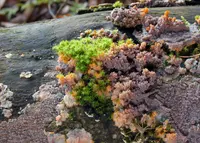
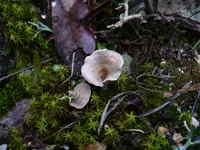
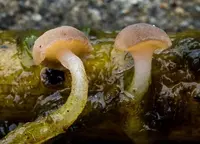
White Knight Care (Tricholoma album)

White Knight

About White Knight

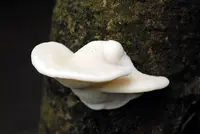
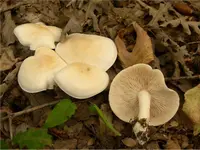
White Knight is a common name sometimes used for Tricholoma album, a wild gilled fungus rather than a typical houseplant or garden ornamental. It forms white to cream caps with closely spaced gills and a stout stem, usually appearing in groups on soil.

This species occurs mainly in woodland habitats, especially near broadleaf or conifer trees, where it forms mycorrhiza, a nutrient-sharing partnership with roots. Tricholoma album is not suitable for beginners to care for indoors, as it has specific ecological needs and relies on living trees rather than pots or containers, so attempts to care for White Knight at home are rarely successful.

Main Plant Requirements

Care Difficulty

Hard Care

Light Preference

Partial Shade

Water Requirements

Regular Water

Temperature Preference

Cool Climate

Hardiness Zone

Unknown

Soil Texture

Loamy, Sandy, Organic-rich

Soil pH

Acidic (5.5–6.5)

Soil Drainage

Moist but well-drained

Fertilization

Minimal (feed rarely)

Get Personalized Care Plan

Scan your plant to receive care tips personalized for your specific plant

Available on iOS and Android

How to Care for the White Knight

This woodland fungus prefers low, filtered light similar to a shaded forest floor rather than direct sun.

  • Site Tricholoma album under deciduous trees where it receives dappled or indirect light for most of the day and no direct midday sun.
  • Allow only brief early-morning or late-afternoon sun, ideally under 2–3 hours; stronger exposure can dry the substrate and damage delicate fruiting bodies.
  • In summer, choose north- or east-facing forest edges; in winter, slightly more open canopy is acceptable as long as direct sun is weak and short-lived.

This mycorrhizal fungus relies on consistently moist, well-drained forest soil rather than direct surface watering.

  • Maintain soil that feels slightly moist 2–5 cm below the surface, but never waterlogged; good drainage through leaf litter and loose humus is essential.
  • Increase moisture input during dry spells by gently irrigating surrounding trees so the soil stays evenly damp without standing water around the mycelium zone.
  • Reduce added water in cool seasons to prevent rot; signs of overwatering include sour, swampy odor, while deep cracks and powder-dry topsoil indicate underwatering.

This species favours cool to mild conditions typical of temperate woodlands and is sensitive to temperature extremes.

  • Optimal fruiting occurs around 50–65°F (10–18°C), with mycelial growth tolerating roughly 41–68°F (5–20°C) in moist, shaded soil.
  • Short dips to about 32°F (0°C) are usually tolerated in dormant stages, but prolonged hard frost without insulating leaf litter can damage the mycelium.
  • Sustained heat above 77°F (25°C), especially with dry soil, can halt development; maintain shade, soil moisture, and organic mulch to buffer summer temperature swings.

Humidity management is not a practical care factor for Tricholoma album, which is a wild ectomycorrhizal mushroom rather than a houseplant.

Tricholoma album is a mycorrhizal mushroom that relies on living tree roots, so it is not managed in conventional plant pots or mixes.

  • In nature it occurs in light, well-aerated forest soils, often sandy or loamy, that do not stay waterlogged.
  • The fungus associates with host tree roots, so suitable habitat depends more on compatible trees than on adjusting soil components.
  • Avoid compacted, heavily fertilized, or highly disturbed ground, which disrupts root-fungus contact and reduces fruiting.
  • Attempts at Tricholoma album plant care in containers or constructed beds are generally unreliable because the full forest soil ecosystem is hard to reproduce.

This ectomycorrhizal mushroom is not suitable for container culture, because it depends on complex interactions with living tree roots in open soil.

Tricholoma album is a mycorrhizal fungus that does not need direct fertilization, since it obtains nutrients via partner tree roots.

Tricholoma album does not require pruning, as the visible part is only the mushroom fruiting body, not a persistent plant structure.

Transplanting Tricholoma album focuses on moving its tree-associated mycelium, not repotting a typical houseplant.

  • Attempt moves only when relocating a young host tree, keeping as much native soil around the roots as possible.
  • Plan any transplant in cool, moist weather to reduce mycelium stress and drying.
  • Disturb the root zone minimally; avoid shaking off soil or washing roots clean.
  • Water the host tree well after transplanting and maintain even soil moisture while it re-establishes.

Propagation of Tricholoma album is technically complex and rarely successful for home growers, so it is not commonly attempted.

This fungus is naturally cold hardy in its native range and requires no special winter care beyond maintaining a healthy host tree.

Care Tips

Host tree selection

Establish the fungus in mixed woodland or near mature oak, beech, or birch, since compatible host trees are essential for forming mycorrhiza, which is the root–fungus partnership it needs to survive.

Minimal soil disturbance

Avoid digging, raking, or compacting the soil within 1–2 m of the host tree trunk so the fine mycelial network is not broken, which helps maintain stable fruiting over several seasons.

Leaf litter management

Leave a light, continuous layer of natural leaf litter around host trees and only remove thick, wet mats that cause waterlogging, since moderate litter supports nutrient cycling and mycelium protection.

Water quality choice

Use rainwater or low-mineral water when supplementally irrigating around the host tree during dry spells, as very hard or chlorinated water can gradually alter soil chemistry in ways that are unfavorable for this ectomycorrhizal species.

Long-term site monitoring

Mark and map fruiting spots with discreet labels or a simple sketch so you can return annually to observe changes in timing, quantity, and distribution of mushrooms, which helps refine site management and Tricholoma album care over time.

Common Pests and Diseases

maggot infestation

This pest feeds inside the mushroom cap and stem, leaving tunnels and soft, discolored tissue. Symptoms include small entry holes, spongy texture, and rapid decay of the fruiting body.

Solution

Harvest mushrooms promptly when young and discard any with visible holes or soft, tunneled tissue. To limit future issues when growing Tricholoma album, remove and destroy infested mushrooms and spent substrate so larvae cannot complete their life cycle near new fruiting bodies.

slug damage

This pest rasps away the surface of caps and stems, leaving irregular bites, slime trails, and exposed, drying tissue. Symptoms include shredded edges on caps and missing pieces of the fruiting body.

Solution

Hand-pick slugs during damp periods and remove leaf litter or debris that provides daytime hiding spots around the fruiting area. Physical barriers such as copper tape around beds or raised platforms can reduce access, and in outdoor settings iron phosphate slug baits can be used following label directions away from children and pets.

fungal parasitism

This disease occurs when other fungi colonize the fruiting bodies, leading to deformed, discolored, or quickly decomposing mushrooms. Symptoms include unusual surface growths, patches of different-colored mold, or rapid collapse of caps and stems.

Solution

Remove and discard any distorted or mold-covered mushrooms immediately to reduce spore spread. Improve spacing and air movement around the fruiting area, avoid overhead watering that wets caps, and keep the substrate clean from old, decaying mushrooms to lower the risk of parasitic fungi establishing.

Interesting Facts

Often mistaken as edible

This species has a plain white cap and gills that resemble several edible mushrooms, which has led to accidental consumption, yet it is now regarded as poisonous or at least strongly suspect and is not recommended for eating.

Association with oaks

It forms ectomycorrhizal relationships with broadleaf trees, especially oaks, exchanging mineral nutrients from the soil for sugars from the tree roots and playing a role in forest nutrient cycling.

Notable radish-like odor

Mature fruiting bodies often develop a distinct radish- or meal-like smell, which mycologists use as one of the key field characters to separate it from similar white Tricholoma species.

Botan icon

Did you know?

Historically, some European field guides treated this mushroom as edible, but mounting reports of gastrointestinal symptoms and possible longer-term toxicity have led modern mycologists and toxicology centers to classify it as a species to avoid entirely.

FAQs about White Knight

Brown leaf edges usually result from low humidity, underwatering, or salt buildup from fertilizer. Check soil moisture, flush the pot occasionally, and increase ambient humidity. Avoid hot or cold drafts that scorch delicate foliage.

Grow Healthy Plants with Botan Care

Keep your plants happy and healthy with plant identification, disease detection, and easy care guidance.

Botan plant care app — identify plants on mobile

Explore More Plants