

Preserve host roots
When foraging or observing, avoid disturbing the fine roots of nearby beech trees, since intact roots and leaf litter are essential for growing Beechwood Sickener through its mycorrhizal partnership.

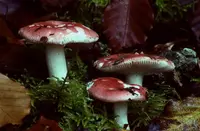
Beechwood sickener, Russula nobilis, is an ectomycorrhizal mushroom that forms a symbiotic relationship with the roots of beech trees. It is not a houseplant and cannot be grown in a regular pot. The fruiting bodies are small to medium, with a bright red cap, white gills, and a stout white stem, often appearing on leaf litter in beech woodlands. It naturally occurs in Europe, especially in temperate forests with well-drained, slightly acidic soils under beech. This species is considered difficult to cultivate because it depends on a living tree partner and specific forest conditions. For anyone exploring how to care for Beechwood Sickener, the focus is usually on conserving suitable woodland habitat rather than growing it indoors or in gardens.

Care Difficulty
Hard Care

Light Preference
Partial Shade

Water Requirements
Regular Water

Temperature Preference
Cool Climate

Hardiness Zone
Unknown

Soil Texture
Loamy, Silty, Organic-rich

Soil pH
Strongly acidic (4.5–5.5), Acidic (5.5–6.5)

Soil Drainage
Moist but well-drained

Fertilization
Minimal (feed rarely)
Scan your plant to receive care tips personalized for your specific plant
Available on iOS and Android
This woodland fungus prefers dappled forest light rather than direct, open sun.
This ectomycorrhizal fungus depends on consistently moist, not saturated, forest soil.
This species is adapted to mild, temperate woodland climates with cool to warm seasons.
Humidity is not a meaningful care factor for Russula nobilis, which is a wild ectomycorrhizal fungus rather than a cultivated houseplant.
This species grows as a mycorrhizal partner with beech trees, so soil preparation focuses on recreating a loose, humus-rich forest-floor environment.
This species is not suitable for container growing because it depends on complex root partnerships with living beech trees in undisturbed soil ecosystems.
Russula nobilis is a wild ectomycorrhizal fungus that does not require fertilization in normal woodland conditions.
Pruning is not applicable to Russula nobilis, as it is a mushroom-producing fungus rather than a woody or leafy plant.
Transplanting this mycorrhizal fungus is generally unsuccessful and not recommended, since it depends on specific tree root partnerships.
Propagation of this ectomycorrhizal mushroom is specialized and not a routine home practice, so direct methods are rarely used.
Beechwood Sickener is naturally cold hardy in its native range and needs no specific winter care from gardeners.

Plant Health Check
Not sure what's wrong with your plant? Check your plant's health inside the app.
This species forms ectomycorrhizal partnerships with beech trees, exchanging mineral nutrients from the soil for sugars produced by the tree’s photosynthesis, and is therefore strongly associated with beech-dominated woodlands in Europe.
Its bright, glossy red cap and white gills are thought to function as aposematic, or warning, coloration that signals its inedibility to animals, contrasting sharply with the more muted tones of many edible woodland fungi.
Although it is sometimes confused with edible red-capped brittlegills, this fungus contains gastrointestinal irritants that can cause nausea, vomiting, and diarrhea, which is why traditional field guides classify it as a poisonous species.

The common English name Beechwood Sickener developed because people who ate this fungus after collecting it under beech trees frequently experienced stomach upsets, and the name has persisted in modern field guides as a clear caution against consumption.
This mushroom is considered poisonous and should not be eaten, even in small amounts. It typically causes strong digestive upset, including nausea, vomiting, abdominal pain, and diarrhea. Identification mistakes with similar species further increase the health risk.
Keep your plants happy and healthy with plant identification, disease detection, and easy care guidance.

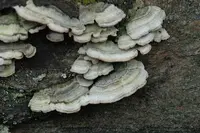
Purplepore Bracket
Trichaptum abietinum
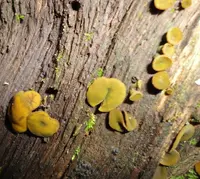
olive-brown cup
Chlorencoelia versiformis
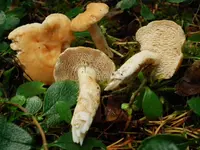
depressed hedgehog
Hydnum umbilicatum
Wrinkled Cortinaria
Cortinarius caperatus
witch's butter
Tremella mesenterica
Cortinarius anthracinus
Cortinarius anthracinus
blushing webcap
Cortinarius cyanites
Poor Man's Licorice
Bulgaria inquinans