Host tree matching
When surveying for fruiting, focus searches under compatible ectomycorrhizal trees such as birch, spruce, and pine, since this fungus depends on these hosts and rarely appears in isolation on open ground.

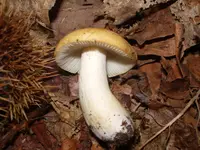
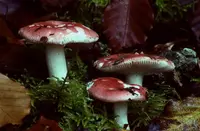
Ochre brittlegill, Russula ochroleuca, is a woodland mushroom rather than a typical garden plant. It forms mycorrhizal partnerships with tree roots, helping trees access nutrients while receiving sugars in return.
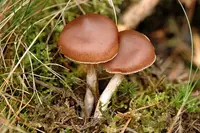
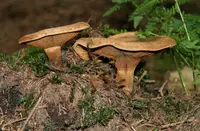
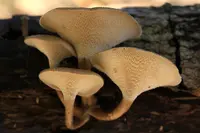
Caps are usually ochre to yellow-brown with pale, brittle gills and a sturdy white stem. It fruits most often in coniferous and mixed forests across Europe and parts of North America.
This species appears naturally where suitable host trees, undisturbed soil, and adequate moisture are present. It is not practical to care for Ochre Brittlegill like a potted plant, since its life cycle depends on complex soil and root relationships.
In managed landscapes, it may appear spontaneously in lightly shaded, undisturbed, humus-rich soil if compatible trees are present.

Care Difficulty
Moderate Care

Light Preference
Partial Shade

Water Requirements
Regular Water

Temperature Preference
Cool Climate

Hardiness Zone
Unknown

Soil Texture
Loamy, Sandy, Organic-rich

Soil pH
Acidic (5.5–6.5)

Soil Drainage
Moist but well-drained

Fertilization
Minimal (feed rarely)
Scan your plant to receive care tips personalized for your specific plant
Available on iOS and Android
This woodland fungus prefers dappled forest light rather than direct, open sun.
This mycorrhizal fungus depends on consistently moist, not waterlogged, soil around its host tree roots.
This species favors cool to mild conditions typical of temperate woodlands.
Humidity control is not a meaningful factor for this wild ectomycorrhizal mushroom species and does not apply in typical indoor or container settings.
This species grows as a wild ectomycorrhizal fungus and is not realistically cultivated in potting soil like a garden plant.
This fungus is not suitable for container growing, and practical home-scale container methods for reliable fruiting are not established.
Russula ochroleuca is a wild ectomycorrhizal fungus that gains nutrients via tree root partnerships rather than added fertilizer.
Russula ochroleuca does not benefit from pruning, as the visible mushroom is a short-lived fruiting body, not a woody plant structure.
As a forest-dwelling mycorrhizal fungus, this species is not suited to typical repotting and is rarely grown in containers.
Propagation focuses on encouraging natural spore dispersal and maintaining suitable woodland conditions rather than controlled methods like cuttings or division.
This fungus is naturally cold hardy in temperate forests and needs no specific winter care in the ground.

Plant Health Check
Not sure what's wrong with your plant? Check your plant's health inside the app.
This species is strongly associated with acidic, nutrient-poor soils and is frequent in heaths and coniferous forests where many other ectomycorrhizal fungi are less competitive.
It often fruits reliably from late summer into late autumn, even in cool and wet conditions when some other russulas have already disappeared, making it a common sight in temperate European forests.
Its white to cream, fairly brittle gills do not show strong color changes or bruising reactions, which helps separate it from some visually similar russulas that develop gray, yellow, or reddish discolorations with age or handling.
This species is generally classed as inedible or of very poor culinary value. It can be confused with toxic lookalikes, so it should not be collected for food unless identified with expert-level certainty.
Keep your plants happy and healthy with plant identification, disease detection, and easy care guidance.