Fine-leaved Sandwort Care (Sabulina tenuifolia)

About Fine-leaved Sandwort

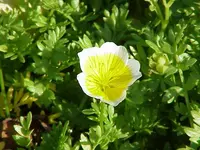
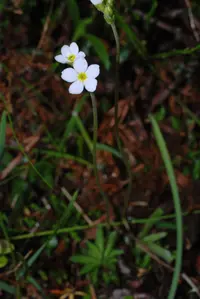
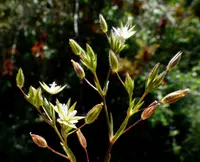
Fine-leaved sandwort, Sabulina tenuifolia, is a low, mat-forming perennial often used as a groundcover or between paving stones. It creates dense, bright green cushions that stay compact and neat. Small white star-shaped flowers appear in light flushes, giving a delicate, refined look.

This species is native to rocky, often alpine or subalpine habitats in Europe, so it prefers cool conditions and well-drained, sandy or gritty soil. It can be moderately demanding in hot, humid climates, mainly needing sharp drainage and protection from strong, drying sun. Gardeners who learn how to care for Fine-leaved Sandwort usually find it manageable and long-lived in suitable sites.

Main Plant Requirements

Care Difficulty

Moderate Care

Light Preference

Full Sun

Water Requirements

Moderate Water

Temperature Preference

Cold Hardy

Hardiness Zone

4–8

Soil Texture

Sandy, Loamy, Rocky

Soil pH

Acidic (5.5–6.5), Slightly acidic (6.5–7.0)

Soil Drainage

Well-drained

Fertilization

Minimal (feed rarely)

Get Personalized Care Plan

Scan your plant to receive care tips personalized for your specific plant

Available on iOS and Android

How to Care for the Fine-leaved Sandwort

This mat-forming alpine prefers bright, cool light conditions for dense, healthy growth.

  • Provide 4–6 hours of sun daily, ideally with morning sun and light afternoon shade, especially in hotter regions.
  • Tolerates partial shade, but in very low light the foliage opens up, becomes sparse, and flowering is reduced.
  • Avoid intense, reflected afternoon sun, which can scorch foliage and dry the soil too quickly; in summer, Fine-leaved Sandwort benefits from some dappled shade.

This plant prefers consistently moist, sharply drained soil rather than extremes of drought or saturation.

  • Water when the top 1–2 cm of soil feels dry, aiming for moisture that is even but not soggy around the root zone.
  • Ensure gritty, free-draining soil; water should pass through within seconds, as Sabulina tenuifolia is prone to root rot in standing water.
  • In hot, dry periods, watch for wilting or dull, shrinking foliage as a cue to water more often; yellowing, mushy stems indicate excess moisture.

This alpine groundcover performs best in cool to mild climates and dislikes extreme heat or deep, prolonged freezes.

  • Ideal growing temperatures are 55–70°F (13–21°C), with cooler nights promoting dense, compact foliage.
  • Mature plants generally tolerate down to about 0°F (−18°C) with good drainage, but repeated freeze–thaw in wet soil can damage roots.
  • Heat above 85°F (29°C), especially with full afternoon sun and dry winds, can stress plants, so provide shade and extra moisture buffering in summer.

This species handles a wide humidity range and usually does not need special humidity control outdoors.

  • Target 30–60% humidity; typical outdoor air in temperate regions is sufficient for Fine-leaved Sandwort.
  • Plants tolerate short dry indoor air spells but may brown at leaf tips if air stays below 30% for long periods.
  • Increase humidity slightly near containers by grouping plants or placing trays of damp gravel nearby, without submerging the pot base.

This mat-forming plant prefers sharply drained, sandy to gritty soil that never stays waterlogged.

  • Use a lean mix such as 40% coarse sand, 40% fine grit or perlite, and 20% low-nutrient compost to mimic alpine conditions.
  • Ensure drainage is rapid; water should pass through within seconds and the surface should dry quickly after rain or watering.
  • Aim for slightly acidic to neutral pH, roughly 6.0–7.0, which suits Sabulina tenuifolia and supports even nutrient uptake.
  • Avoid dense clay, peat-heavy, or constantly wet substrates, and improve aeration by increasing the proportion of mineral grit or coarse sand.

This species adapts well to container culture, especially in shallow, well-drained pots for rock garden or trough displays.

  • Choose a shallow, wide container that matches the plant’s spreading habit so stems can root lightly across the surface without crowding.
  • Use unglazed terracotta or similar porous materials to help excess moisture evaporate quickly in rainy or humid climates.
  • Raise the pot on feet or spacers so drainage holes stay clear and the thin root system is not exposed to standing water.

This low-growing mat plant needs only light feeding to maintain dense, healthy foliage.

  • Apply a balanced, diluted liquid fertilizer (for example 10-10-10 at 1/4–1/2 strength) once every 4–6 weeks in spring and early summer.
  • Alternatively, use a thin layer of fine compost around, not on top of, the foliage as a slow nutrient source.
  • Stop feeding Fine-leaved Sandwort by late summer and avoid fertilizer in fall and winter to prevent soft, frost-tender growth.

Light pruning keeps Sabulina tenuifolia compact and encourages fresh, even growth.

  • Best time is late spring after flowering, with minor touch-ups through summer as needed.
  • Shear lightly with clean scissors or hand shears to remove spent flowers and slightly overgrown, leggy patches.
  • Snip out dead, damaged, or thinned areas to improve air flow and reduce moss or algae buildup.
  • Avoid cutting back into bare, brown patches; leave some green tips on each stem for faster recovery.

This species is most often transplanted in the garden or rock crevices rather than kept in long-term containers.

  • Transplant in early spring or early fall when temperatures are mild and soil stays evenly moist.
  • Move plants when growth slows, mats thin in the center, or roots circle a small plug or container.
  • Lift gently with a trowel, keeping roots and attached soil intact, and replant at the same depth in well-drained soil.
  • Water thoroughly after planting, then keep evenly moist for 1–2 weeks to limit root stress and improve establishment.

Sabulina tenuifolia is commonly propagated by division or seed to expand low mats in rock or gravel areas.

  • Divide established clumps in early spring or early fall, separating small rooted sections with a hand fork.
  • Replant divisions immediately in gritty, well-drained soil, firm gently, and water to settle soil around roots.
  • Sow fine seed on the surface of a sterile, sandy mix in spring; do not cover heavily, as light aids germination.
  • Maintain cool conditions (55–65°F) and lightly moist substrate until seedlings establish, then gradually acclimate outdoors.

This groundcover is generally cold hardy in temperate climates and needs minimal winter care in the ground.

  • In regions with freeze–thaw cycles, apply a thin, gritty mulch around but not on top of foliage to stabilize soil temperature.
  • Container-grown plants are more exposed; move pots into a sheltered, unheated space once hard frosts begin.
  • Avoid heavy winter watering; keep soil just barely moist so roots do not rot in cold, saturated conditions.

Care Tips

Edge Containment

Install shallow plastic or metal edging 3–5 cm deep around beds to prevent this mat-forming plant from creeping into adjacent gravel, lawn, or paths while still allowing good surface drainage.

Joint-Friendly Footpaths

If using it between pavers, set stones level with or slightly above the soil surface and limit traffic during wet weather to avoid compacting the root zone and tearing the fine foliage.

Summer Stress Checks

In hot, dry spells, lightly lift the mat in a few spots every 1–2 weeks to check for hidden dry pockets or browning stems beneath the surface and spot-treat with targeted watering or thinning.

Periodic Mat Renewal

Every 2–3 years, lift and divide older, thinned patches in early spring, replant the most vigorous outer sections, and discard woody centers to keep the groundcover dense and uniform.

Weed Suppression Strategy

Before planting, clear perennial weeds thoroughly and apply a thin, sharp-grit mineral mulch between plugs so the dense mat can close gaps faster and reduce later hand-weeding when growing Fine-leaved Sandwort.

Common Pests and Diseases

Moss invasion

Symptoms include dense green cushions of moss forming within the mat, causing thinning and yellowing of the fine foliage. This problem is common in Sabulina tenuifolia grown in very moist, compacted, or shaded rock garden pockets.

Solution

Reduce constant moisture by improving drainage with grit or sand, and avoid overhead watering that keeps the surface wet. Gently tease out moss by hand, then top-dress with a gritty, low-organic mix and provide a bit more light and airflow to help the groundcover reestablish; this is a key aspect of Sabulina tenuifolia care in damp rock gardens.

Crown dieback

This disease causes brown, collapsing patches starting from the center of the cushion, often where water sits around the crown. Symptoms include dry brown foliage with a sharp boundary between healthy and dead areas.

Solution

Cut out dead patches down to healthy tissue and lift any sunken or waterlogged sections to replant into sharper-draining, gritty soil. Reduce watering, avoid heavy mulches around the crown, and ensure the plant sits slightly raised so water drains quickly away from the center of the clump.

Leaf spot

This disease produces small brown or dark olive spots on the fine leaves, which may merge into larger patches and cause localized thinning in humid or poorly ventilated sites. This is more frequent in cool, wet conditions or with frequent overhead watering.

Solution

Remove and discard affected foliage to reduce fungal spores, and water at the base early in the day so the foliage dries quickly. Improve air circulation by lightly thinning surrounding plants, and if the problem persists in wet seasons, apply a labeled ornamental fungicide according to instructions, focusing on preventive sprays before long wet periods.

Aphids

These insects cluster on tender stems and new growth, sucking sap and causing distortion, yellowing, and sticky honeydew on the fine foliage. Ant activity on the mat often indicates an aphid presence.

Solution

Rinse colonies off with a firm stream of water and repeat every few days until numbers drop. For persistent infestations, treat the foliage with insecticidal soap or a light horticultural oil, applied in cool hours and repeated as directed, while also controlling nearby ant nests that protect and farm the aphids.

Slugs and snails

This pest issue results in irregular chewing damage and missing tufts in the cushion, especially in damp, shaded rock crevices. Symptoms include slime trails across stones and bare, ragged patches where foliage has been eaten overnight.

Solution

Hand-pick slugs and snails at dusk or early morning and use barriers such as copper tape or sharp grit around the planting area. In wetter climates, combine these methods with iron phosphate slug bait placed around, not within, the mat, and reduce hiding places such as thick mulch and debris near the plant.

Interesting Facts

Natural moss mimic

This species forms very low, dense mats of tiny, needle-like leaves that visually resemble moss but it is actually a flowering Caryophyllaceae (pink family) plant, not a bryophyte. The mossy look comes from its extremely fine foliage and very short internodes, which keep the stems tightly packed.

Alpine-origin ground layer

Sabulina tenuifolia is naturally associated with cool, rocky, often lime-poor mountain habitats in parts of Europe, where it occupies the ground layer between stones and in crevices. Its shallow, fibrous roots allow it to anchor in thin, gritty soils where many broad-leaved perennials cannot persist.

Tiny but complete flowers

The plant produces very small, white, star-like flowers with the typical five-petaled structure of the pink family, despite its moss-like foliage. These flowers attract small pollinating insects in suitable outdoor conditions, contributing to local pollinator resources on a miniature scale.

FAQs about Fine-leaved Sandwort

This species forms a low, slowly spreading mat through short stems rather than runners. It usually stays tidy and controlled, especially in lean, well-drained sites, and rarely becomes a problem in managed garden settings.

Grow Healthy Plants with Botan Care

Keep your plants happy and healthy with plant identification, disease detection, and easy care guidance.

Botan plant care app — identify plants on mobile

Explore More Plants