Largeleaf Sage Care (Salvia macrophylla)

Also known as: Peru Blue
Largeleaf Sage

About Largeleaf Sage

Largeleaf sage, Salvia macrophylla, is a perennial shrub grown mainly for its bold foliage and ornamental blue flowers. It typically forms a bushy clump with large, softly textured leaves and upright flowering stems. Native to parts of South America, it prefers mild, frost-free climates and is usually grown outdoors in beds or large containers. The plant is considered moderately easy to grow if its basic needs are met. It favors bright light, evenly moist but well-drained soil, and some protection from harsh, drying winds. Gardeners who understand how to care for Largeleaf Sage often use it as a striking accent in mixed borders or pollinator-friendly plantings.

Main Plant Requirements

Care Difficulty

Moderate Care

Light Preference

Partial Sun

Water Requirements

Moderate Water

Temperature Preference

Tropical / Frost Sensitive

Hardiness Zone

10–11

Soil Texture

Loamy, Sandy, Organic-rich

Soil pH

Acidic (5.5–6.5), Slightly acidic (6.5–7.0)

Soil Drainage

Moist but well-drained

Fertilization

Light (every 4–6 weeks)

Get Personalized Care Plan

Scan your plant to receive care tips personalized for your specific plant

Available on iOS and Android

How to Care for the Largeleaf Sage

This species prefers bright exposure with some protection from harsh midday conditions.

  • Provide 4–6 hours of direct morning sun with light afternoon shade; dappled light under high, open trees suits Largeleaf Sage well.
  • In hot summers, shield from intense sun between 12–4 p.m. to prevent leaf scorch and excessive wilting.
  • In cooler seasons or coastal climates, the plant tolerates full sun; in cloudy or shaded sites, flowering and growth decline noticeably.

This plant prefers evenly moist but not saturated soil during active growth.

  • Water when the top 3–5 cm of soil feel dry, allowing deeper soil to stay slightly moist but never waterlogged.
  • During hot, dry weather, increase frequency, watching for drooping leaves and dry, crumbly soil as signs to water; in cool or rainy periods, extend intervals.
  • Ensure free-draining soil to prevent root rot; yellowing lower leaves, soft stems, or a sour soil smell indicate overwatering in Salvia macrophylla.

This species grows best in mild, frost-free conditions with moderate summer heat.

  • Aim for 65–80°F (18–27°C) for strongest growth and flowering, especially in spring and early summer.
  • Protect plants when temperatures approach 32°F (0°C); foliage is damaged by light frost, and hard freezes below 28°F (−2°C) can kill stems or roots.
  • In hot climates, brief spikes to 90–95°F (32–35°C) are tolerated if soil moisture is stable and the plant has partial afternoon shade.

This species prefers moderate humidity but usually adapts well to typical indoor and outdoor ranges.

  • Aim for 40–60% humidity to reduce leaf edge browning and support steady growth in Largeleaf Sage.
  • It tolerates short spells of dry air, but prolonged very low humidity can cause curling, crispy leaf margins, and slower growth.
  • Increase humidity locally by grouping plants, placing trays with water and pebbles nearby, or using a room humidifier in very dry conditions.

Salvia macrophylla grows best in loose, well-aerated, sharply drained soil that still holds some moisture.

  • Use a loamy mix with 40–60% compost or aged bark plus coarse sand or perlite to keep structure open and airy.
  • Aim for slightly acidic to neutral pH around 6.0–7.0, avoiding strongly alkaline or salty substrates that restrict nutrient uptake.
  • Ensure excess water runs through quickly; heavy clay or compacted ground should be improved with organic matter and coarse grit before planting.
  • Avoid waterlogged sites or dense peat-only mixes, which reduce oxygen around roots and increase risk of root rot and fungal problems.

This species is suitable for container growing when the pot is chosen to balance root space, drainage, and top growth.

  • Select a pot at least 25–30 cm wide and deep so roots can spread enough to support tall, leafy stems without drying out too fast.
  • Choose a heavier clay or ceramic container in windy spots to reduce tipping as the plant develops a bushy or top-heavy canopy.
  • Raise the pot on small feet or bricks so drainage holes stay free and excess water exits quickly after rain or irrigation.

This fast-growing ornamental benefits from modest, consistent feeding during the warm growing season.

  • Use a balanced NPK fertilizer (such as 10-10-10) at half strength every 4–6 weeks in spring and summer for Largeleaf Sage.
  • Apply a thin layer of compost around the root zone in early spring to improve soil structure and slow nutrient release.
  • In containers, incorporate a slow-release fertilizer into fresh potting mix at the start of the season.
  • Stop feeding in late fall and avoid winter fertilization to prevent soft, frost-prone growth.

Thoughtful pruning helps keep Salvia macrophylla compact, healthy, and flowering well.

  • In late winter or early spring, remove dead, damaged, or weak stems back to healthy tissue using clean, sharp pruners.
  • After each main flowering flush, deadhead spent flower spikes to encourage new blooms and denser branching.
  • Thin out crowded interior stems to improve air flow and reduce disease risk, maintaining a balanced, open shape.
  • Cut back excessively tall or leggy stems by up to one-third to control height and support sturdier new growth.

This salvia is more often grown in garden beds than in long-term containers, so focus on timely transplanting.

  • Transplant Salvia macrophylla in spring after frost, when nursery plants show roots at drainage holes or circle the pot but are not pot-bound.
  • In gardens, move or divide clumps every 3–4 years if growth stalls, flowering declines, or the center dies out.
  • Prepare a new site with well-drained soil, water the plant beforehand, and disturb roots as little as possible when lifting and replanting.
  • After transplanting, water thoroughly, shade from intense sun for a few days, and keep soil evenly moist to limit transplant shock.

New plants are most often produced from softwood cuttings or seed under warm, bright conditions.

  • Take 7–10 cm softwood cuttings in late spring or early summer from non-flowering shoots of Salvia macrophylla.
  • Remove lower leaves, dip the cut end in rooting hormone, and place in a free-draining mix kept slightly moist and around 70–75°F.
  • Provide bright, indirect light and high humidity, using a vented cover to reduce water loss while allowing air movement.
  • Sow fresh seed in spring on the surface of moist seed mix, keep warm and lightly covered, and transplant seedlings once roots fill small cells.

This species is frost-tender and needs protection in regions with cold winters.

  • In mild climates, apply a 5–8 cm mulch layer around the root zone in late fall to buffer temperature swings.
  • Where hard frost occurs, grow in containers and move indoors or into a frost-free greenhouse before temperatures drop below 40°F.
  • Indoors, provide bright light, reduce watering, and avoid feeding so the plant rests without rotting.
  • In the ground, cut back blackened stems after freezing weather has fully passed, not immediately after the first frost.

Care Tips

Pinch For Bushiness

Pinch out the soft shoot tips when plants are 15–20 cm tall to encourage dense, branching growth and more flowering stems rather than tall, lanky shoots.

Timed Hard Cutback

In mild-winter areas, cut stems back by about one-third in late winter or very early spring to refresh growth and keep plants compact while protecting older basal shoots.

Airflow Spacing

Space plants generously and thin congested stems so that foliage dries quickly after rain, which helps limit foliar diseases in humid climates when growing Largeleaf Sage.

Mulch Root Zone

Apply a 5–8 cm layer of organic mulch around, but not touching, the stems to stabilize soil moisture and temperature and to protect the shallow root system from summer heat.

Monitor For Root Disturbance

Check periodically for evidence of soil heaving, animal tunneling, or heavy foot traffic near the crown, and gently firm soil or add mulch if roots become exposed or loosened.

Common Pests and Diseases

Aphids

These insects cluster on soft shoot tips and flower stalks, sucking sap and causing distortion, sticky honeydew, and sooty mold on large leaves.

Solution

Dislodge colonies with a firm stream of water, then treat remaining insects with insecticidal soap or a light horticultural oil, repeating every 5–7 days until controlled; encourage natural predators by avoiding broad-spectrum chemicals as part of Salvia macrophylla plant care.

Whiteflies

These insects form small, white, moth-like clouds when the plant is disturbed and weaken plants by feeding on leaf undersides and producing honeydew.

Solution

Vacuum or shake adults off early in the morning, then target nymphs on the leaf undersides with insecticidal soap or yellow sticky traps and reduce plant crowding to improve airflow and reduce population pressure.

Botrytis blight

This disease causes soft, water-soaked spots on leaves and flowers that quickly develop into gray, fuzzy mold, especially in cool, damp conditions around dense foliage.

Solution

Remove and dispose of all affected tissues, improve air circulation around the plant, keep foliage as dry as possible, and use a fungicide labeled for Botrytis on ornamentals if humidity cannot be reduced.

Powdery mildew

This disease produces white, powdery patches on the broad leaves, leading to yellowing, leaf distortion, and reduced flowering under warm days and cool, humid nights.

Solution

Prune overcrowded stems to improve airflow, avoid overhead watering, remove heavily infected leaves, and apply a sulfur or potassium bicarbonate-based fungicide at first signs to protect new growth.

Spider mites

These pests are tiny, often reddish or yellowish mites that cause fine stippling, bronzing, and delicate webbing on the large leaves during hot, dry weather.

Solution

Rinse foliage thoroughly, focusing on leaf undersides, raise ambient humidity slightly, and use insecticidal soap or a miticide labeled for ornamentals in repeated applications to break the life cycle.

Interesting Facts

Unusual blue corolla

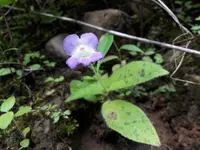
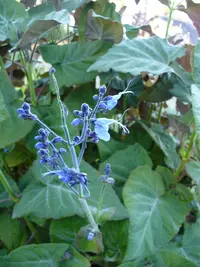
This species produces large, intense blue flowers with a contrasting green calyx, a color combination that is relatively uncommon among salvias and makes it easy to distinguish from closely related species in the field.

Colombian cloud-forest native

It is native to humid, high-elevation cloud forests in Colombia, where it typically grows along forest edges and clearings rather than in fully open, exposed sites.

Distinctive large foliage

The species name macrophylla means large-leaved, referring to its broad, softly textured leaves that can be much larger than those of many other ornamental salvias, giving the plant a more lush, shrubby appearance.

Botan icon

Did you know?

In its native Andean range, this species can behave as a short-lived perennial subshrub, regenerating from its woody base after damage from wind, animals, or light disturbance, which helps it persist in dynamic cloud-forest edge habitats.

FAQs about Largeleaf Sage

Poor flowering often comes from insufficient light, excess nitrogen fertilizer, or lack of pruning. Check that the plant gets enough sun, avoid heavy feeding, and lightly trim after a flush of blooms to encourage new flowering shoots.

Grow Healthy Plants with Botan Care

Keep your plants happy and healthy with plant identification, disease detection, and easy care guidance.

Botan plant care app — identify plants on mobile

Explore More Plants