Airflow optimization
Space plants at least 45–60 cm apart and remove congested interior stems so air can move freely through the canopy, which reduces foliar disease and keeps stems sturdier in wind-prone sites.

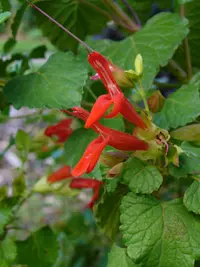
Mountain sage, Salvia regla, is a woody perennial shrub in the mint family valued for its bright tubular flowers and strong drought tolerance. It typically forms an airy, upright clump with arching stems, soft green leaves, and vivid red to orange blooms that attract hummingbirds. In nature it occurs on rocky slopes and canyons in Mexico and parts of the southwestern United States, so it adapts well to dry, well-drained garden sites. This background makes it relatively easy to grow for those who care for mountain sage, especially in warm regions. It generally prefers full sun, moderate watering, and lean, well-draining soil.

Care Difficulty
Easy Care

Light Preference
Full Sun

Water Requirements
Low Water

Temperature Preference
Warm Climate

Hardiness Zone
7–10

Soil Texture
Sandy, Loamy, Rocky

Soil pH
Slightly acidic (6.5–7.0), Neutral (7.0)

Soil Drainage
Well-drained

Fertilization
Minimal (feed rarely)
Scan your plant to receive care tips personalized for your specific plant
Available on iOS and Android
Salvia regla thrives in bright outdoor conditions with plenty of direct sun each day.
This shrub sage prefers deep, infrequent watering once established, with time for the soil to dry between soakings.
This species performs best in warm, mild climates and dislikes hard frost or prolonged freezing.
This species handles dry air well and usually needs no special humidity control.
This shrub prefers sharply drained, slightly lean soil that mimics rocky slopes.
This species can adapt to container growing if the pot is prepared for fast drainage and stability.
This drought-adapted shrub needs modest feeding, so focus on light, consistent nutrition during active growth.
Pruning helps Salvia regla maintain a tidy form and strong flowering wood.
This species is most often grown in the ground, with transplanting more common than repotting.
Salvia regla is commonly propagated from cuttings and seeds under warm, bright conditions.
This shrub is moderately cold hardy but benefits from some winter attention in cooler regions.

Plant Health Check
Not sure what's wrong with your plant? Check your plant's health inside the app.
This species produces long, tubular, bright orange-red flowers that are specifically shaped for hummingbird pollination, and in its native Mexican canyons it is a key nectar source for migrating hummingbirds in late summer and fall.
It is naturally found on limestone cliffs, rocky slopes, and canyon walls in the Sierra Madre Oriental of Mexico, where it experiences strong light, sharp drainage, and cooler nights than many other salvias.
Despite being native to montane habitats of Mexico, it shows unusual cold tolerance for an autumn-blooming salvia and can survive light freezes when established and grown in well-drained soil.

Botanist George Bentham formally described this species in the 19th century from plants collected in the mountains of Mexico, and it later became a notable subject in discussions of hummingbird-driven flower evolution because of its highly specialized floral shape and color.
Lack of blooms often comes from too much shade, excess nitrogen fertilizer, or heavy pruning at the wrong time. Ensure strong light, avoid rich high‑nitrogen feeds, and prune lightly right after flowering, not in early spring.
Keep your plants happy and healthy with plant identification, disease detection, and easy care guidance.