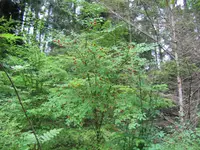
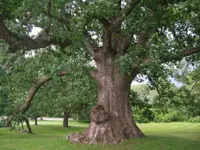

Elder Identification (Sambucus nigra)

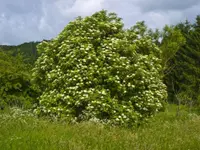
Recognize Sambucus nigra by its opposite, pinnate leaves with 5 to 7 leaflets, flat-topped flower clusters, and multi-stemmed shrub or small tree form, often 10 to 20 feet (3 to 6 m) tall.

The leaflets are oval to lance-shaped with pointed tips and toothed edges, set in opposite pairs along the stems.

Sambucus nigra Identification

Is This Elder?

Upload a clear image to check whether your plant ID is correct.

Clear images work best. Avoid photos taken too close or too far away

Check the overall shape first, then the leaves, flowers, and fruit.

  • Usually a large shrub or small tree with several stems and a broad, rounded crown.
  • Leaves are opposite on the stem and compound, usually with 5-7 pointed leaflets.
  • Each leaf is often about 8-12 inches (20-30 cm) long, giving the foliage a layered look.
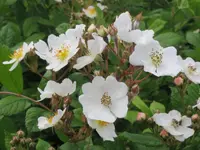
  • Flowers form broad, flat-topped clusters of many small creamy-white blooms held near branch tips.
  • Fruit hangs in dense drooping clusters of small round berries that ripen to glossy black.

If flowers or fruit are present, they are often the fastest visual confirmation.

Sambucus nigra shows clear visual shifts from early shoots to fruiting branches.

  • Young plant: Young plants are mostly upright with green stems and opposite compound leaves, often carrying 5-7 leaflets before strong woody branching develops.
  • Mature plant: Mature plants become a broad, many-stemmed shrub or small tree, often 6-20 feet (1.8-6 m) tall, with gray-brown bark and a denser branching framework.
  • Flowering stage: Flowering branches end in broad, flat-topped clusters of many small creamy-white flowers, making the crown look layered and more horizontally spread than nonflowering shoots.
  • Fruiting stage: After flowering, those flat clusters turn into drooping heads of many small dark berries, adding visible weight and a more pendant outline to branch tips.

Elder has several named forms that are easy to separate by leaf color and shape.

  • 'Black Lace': Deep purple-black, finely cut leaves give a lacy look, unlike the typical green, broader leaflets.
  • 'Aurea': Leaves emerge golden yellow to chartreuse instead of medium green, often keeping a bright yellow cast through the season.
  • 'Marginata': Leaflets are edged creamy white, creating clear variegation around the normal green centers.
  • 'Laciniata': Leaves are deeply divided into narrow segments, making the whole shrub look feathery rather than coarse-textured.

In spring, Sambucus nigra leafs out with opposite, divided leaves. By early summer, broad, flat clusters of small creamy white flowers stand out clearly against the foliage. Later, the flower clusters give way to hanging bunches of dark purple-black fruit. After leaf drop in fall, the plant is easier to recognize by its bare, opposite branching and gray-brown stems.

A few shrubs and small trees are regularly mistaken for Elder at a quick glance.

red elderberry(Sambucus racemosa)

Often confused because both have opposite, pinnate leaves and flat-topped flower clusters. Red elderberry usually has cone-like flower and fruit clusters, not broad flat ones, and ripe berries are red rather than black-purple.

devil's walkingstick(Aralia spinosa)

Confusion comes from large compound leaves and broad clusters of small pale flowers. It differs by stout prickly stems and alternate leaves, while Sambucus nigra has unarmed stems and opposite leaves.

Sambucus nigra is native across most of Europe, western Asia, and parts of North Africa. Its range helps separate it from similar elder species in North America, where plants with the same overall look may be different species. In the wild, it is typical of hedgerows, woodland edges, scrub, streambanks, and other disturbed places with reliable moisture. Finding a black elder in these lowland habitats is a useful identification clue.

  • Toxic plant parts: Leaves, stems, roots, and seeds contain cyanogenic compounds. This is an ingestion risk for humans and pets.
  • Raw fruit concern: Unripe berries and large amounts of raw ripe berries can cause stomach upset if eaten. The risk is from ingestion by humans and pets.
  • Hazardous look-alike: When collecting flowers or fruit, avoid confusion with poison hemlock (Conium maculatum). Sambucus nigra is a woody shrub or small tree; poison hemlock is a smooth, herbaceous plant with purple-blotched stems.

Check Your Plant ID

Use Botan to identify or confirm a plant from a photo when you want a quicker, more confident answer.

FAQ

The quickest clue is the broad, flat clusters of small creamy-white flowers, followed later by drooping clusters of dark berries. Opposite, pinnate leaves with 5 to 7 leaflets also help with Elder identification.

More Plant Identification Guides

Identify Your Plant and Learn More

Identify it from a photo with Botan, then get species-specific care information, safety notes, and common problems.

Botan app identifying a plant from a photo
Banana Peel Water for Plants: 5 Things to Know Before Trying It

5 min read · 9 Jul 2026

Banana Peel Water for Plants: 5 Things to Know Before Trying It

Banana water can provide potassium and some nutrients that may support plant growth, but it is not a universal fix. Use it carefully and only when the plant actually shows signs of nutrient deficiency rather than as a routine treatment.

Plant Care
Banana Peel Water for Plants: 5 Things to Know Before Trying It
How to Winterize Your Garden in 6 Steps

5 min read · 28 Sept 2026

How to Winterize Your Garden in 6 Steps

Learn how to prepare your garden for winter with a practical six-step checklist covering cleanup, tender plant care, watering, mulching, winter protection, and winterizing equipment and containers.

Plant Care
How to Winterize Your Garden in 6 Steps
Best Water for Plants – How to Choose the Right Type

7 min read · 13 Aug 2026

Best Water for Plants – How to Choose the Right Type

Rainwater, filtered, distilled, and tap water affect plants differently. Learn which types support healthy growth and which cause slow damage. Match each to your plants and discover how to easily improve tap water quality.

Plant Care
Best Water for Plants – How to Choose the Right Type