Renewal through division
Every 3–4 years, lift and split congested clumps in early spring, replanting only the youngest, outer portions to keep plants compact and long-lived when growing holy flax.

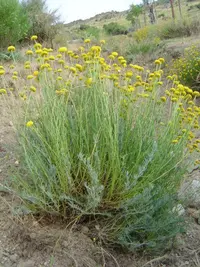
Holy flax, Santolina rosmarinifolia, is a compact, evergreen shrub from the Mediterranean region. It forms low mounds of finely divided, aromatic foliage with small, rounded yellow flower heads in summer. The plant has a naturally tidy, cushion-like growth habit that suits borders, rock gardens, and low informal hedges. Its foliage texture and scent also make it useful in sensory or herb-style plantings. Santolina rosmarinifolia thrives in sunny, dry, well-drained sites and dislikes heavy, waterlogged soils. Its drought tolerance and modest nutrient needs make it relatively simple to care for holy flax, provided it receives enough light and is not overwatered.

Care Difficulty
Easy Care

Light Preference
Full Sun

Water Requirements
Low Water

Temperature Preference
Cold Hardy

Hardiness Zone
6–9

Soil Texture
Sandy, Loamy, Rocky

Soil pH
Slightly acidic (6.5–7.0), Slightly alkaline (7.0–7.5)

Soil Drainage
Well-drained

Fertilization
Minimal (feed rarely)
Scan your plant to receive care tips personalized for your specific plant
Available on iOS and Android
Santolina rosmarinifolia thrives in bright, open sites with plenty of direct sun.
This Mediterranean shrub prefers dry to slightly moist conditions and is highly drought tolerant once established.
This small shrub favors warm, dry climates and copes better with heat than with prolonged cold.
Humidity is rarely limiting for this drought-adapted shrub in home or outdoor conditions.
This Mediterranean shrub needs very free-draining, mineral-based soil to prevent root rot.
This species adapts well to container growing, especially in sunny, dry locations.
This drought-tolerant subshrub needs only light feeding to stay compact and healthy.
Thoughtful pruning keeps Santolina rosmarinifolia dense, rounded, and long-lived.
This shrub is usually grown in the ground but can adapt to containers when transplanted thoughtfully.
New plants are commonly produced from cuttings, with division and layering as secondary options.
In many regions this species is moderately cold hardy but benefits from simple winter care in harsher climates.

Plant Health Check
Not sure what's wrong with your plant? Check your plant's health inside the app.
This species is native to dry, rocky regions of the western Mediterranean, where it survives on minimal rainfall and intense sun, making it particularly adapted to hot, exposed garden sites in cultivation.
The finely dissected leaves contain aromatic essential oils that give a strong resinous scent when crushed, which helps deter many herbivores and can slightly repel some insect pests in mixed plantings.
Although often treated as a small perennial in gardens, it is botanically a woody subshrub that can form low, dome-shaped cushions for many years if regularly trimmed to prevent the center from becoming bare.

In traditional Mediterranean landscapes, this plant has been used as a low, evergreen edging along paths and parterres, and historic herb gardens sometimes relied on such clipped Santolina borders to create permanent structure even in very dry climates.
This species is generally evergreen in mild climates, keeping its fine, gray-green foliage year-round. In colder regions, some dieback can occur, but plants usually reshoot from woody bases in spring if roots are not frozen.
Keep your plants happy and healthy with plant identification, disease detection, and easy care guidance.