Curly Grass Fern Care (Schizaea pectinata)

Also known as: Toothbrush Fern, Cockscomb Fern
Curly Grass Fern

About Curly Grass Fern

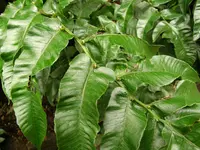
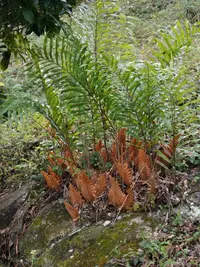
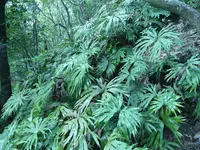
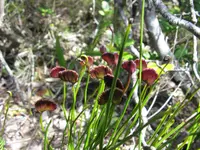
Curly grass fern, Schizaea pectinata, is a small, unusual fern with thin, wiry fronds that resemble tufts of curly grass. It forms low, delicate clumps rather than broad, leafy fronds.

This species is native to regions with sandy, nutrient-poor soils, including parts of Australia, South Africa, and the Americas. It typically grows in open, well-drained sites rather than dense forest shade.

The plant is considered somewhat challenging in cultivation because it dislikes root disturbance and needs consistently moist but sharply drained, airy substrate. Light, even moisture, and careful handling are key if you want to care for Curly Grass Fern indoors or in a controlled environment.

Main Plant Requirements

Care Difficulty

Hard Care

Light Preference

Partial Shade

Water Requirements

Keep Soil Moist

Temperature Preference

Tropical / Frost Sensitive

Hardiness Zone

10–11

Soil Texture

Sandy, Loamy, Organic-rich

Soil pH

Acidic (5.5–6.5)

Soil Drainage

Moist but well-drained

Fertilization

Minimal (feed rarely)

Get Personalized Care Plan

Scan your plant to receive care tips personalized for your specific plant

Available on iOS and Android

How to Care for the Curly Grass Fern

This fern prefers soft, filtered light similar to bright forest shade.

  • Provide bright shade or dappled light with 2–4 hours of gentle morning sun, avoiding harsh midday exposure.
  • Curly Grass Fern tolerates partial shade but fronds become sparse and elongated if light is too low for many weeks.
  • In hot summers, shift to deeper shade or use 30–50% shade cloth; in cooler months, allow more morning or late-afternoon sun.

This species needs steadily moist but not waterlogged soil around its fine roots.

  • Water when the top 1–2 cm of soil feels barely moist, not dry and not soggy, using slow, thorough watering to moisten the full root zone.
  • In spring and summer growth, expect more frequent watering, while in cooler months allow the surface to stay lightly moist for longer between waterings.
  • Watch for crisp, browning tips as a sign of underwatering and for yellowing, limp fronds or sour-smelling soil as signs of overwatering and poor drainage.

This fern favors mild, frost-free conditions year-round.

  • Aim for 60–77°F (16–25°C) for best growth; short spikes to 80–86°F (27–30°C) are tolerated if humidity and soil moisture stay stable.
  • Protect from frost, as damage occurs around 32°F (0°C); prolonged exposure below 28°F (-2°C) can kill fronds and rhizomes.
  • In hot summers above 86°F (30°C), provide extra shade, mulch the soil to moderate roots, and avoid hot, drying winds near Schizaea pectinata.

This fern needs consistently high humidity to maintain healthy, fine foliage.

  • Aim for 60–80% humidity around Curly Grass Fern using grouped plants or a humidifier.
  • Dry indoor air causes browning tips, folding fronds, and stalled new growth.
  • Place the pot on a pebble tray with water below the pot base to boost humidity without waterlogging the roots.

This species prefers a moist, airy, organic-rich medium that mimics acidic woodland or bog margins.

  • Use a mix of fine pine bark, peat or coco coir, and coarse sand in roughly equal parts for structure and moisture retention.
  • Ensure rapid drainage while staying evenly moist; water should pass through in seconds without pooling on the surface.
  • Keep pH slightly acidic, around 5.5–6.5, which matches the natural habitat of Schizaea pectinata.
  • Avoid heavy clay, pure sand, or compacted mixes that stay waterlogged or dry to a hard crust, which damages the fine roots.

This fern can be grown in containers if moisture and root aeration are carefully managed.

  • Choose a relatively deep but narrow pot to support the fibrous root system while limiting excess wet substrate.
  • Use a lightweight, breathable pot material such as unglazed terracotta to help prevent chronic sogginess in dense mixes.
  • Elevate the container slightly on pot feet or mesh to keep drainage holes clear and allow excess water to escape freely.

This fern is sensitive to excess nutrients, so Schizaea pectinata benefits only from very light, infrequent feeding.

  • Use a balanced liquid fertilizer at 1/4 strength or a very small amount of fine compost in early spring.
  • Feed once every 6–8 weeks during active growth if foliage looks pale or growth is weak.
  • Avoid slow-release pellets, which can burn the fine roots in small pots or shallow soil.
  • Stop feeding in late fall and withhold fertilizer entirely during winter dormancy.

Pruning needs are minimal for Schizaea pectinata and focus on hygiene rather than shaping.

  • Trim only dead, brown, or damaged fronds at the base, using clean, sharp scissors.
  • Carry out light cleanup in late winter or early spring before new growth emerges.
  • Avoid cutting healthy green fronds, as this reduces photosynthesis and weakens the plant.
  • Remove crowded or crossing fronds only if air circulation around the clump is very poor.

This fern dislikes root disturbance, so repotting or transplanting Schizaea pectinata should be infrequent and gentle.

  • Check for roots circling the container, drying out very fast, or stalled growth as signs it needs more space.
  • Plan moves for early spring, when new growth is just starting and recovery is quickest.
  • Repot only every 2–3 years, stepping up 2–3 cm in pot diameter into a loose, acidic, well-drained mix.
  • Handle the root ball carefully, keeping it intact, and water well, then keep in shaded, wind-sheltered conditions for 1–2 weeks.

Sexual propagation via spores is possible but specialized, so home propagation of Schizaea pectinata is rarely attempted.

Curly Grass Fern prefers mild, frost-free conditions and needs protection in regions with cold winters.

  • In the ground, add a 5–8 cm mulch layer around the root zone in late fall, keeping mulch off the crowns.
  • In zones with hard frosts, grow in containers that can be moved to a cool, bright, frost-free space.
  • Maintain soil slightly moist but never waterlogged through winter, as cold wet media increase rot risk.

Care Tips

Shallow Rhizome Setting

Position the plant so the wiry rhizomes sit just below the substrate surface, then top-dress lightly with fine sand or fern-grade bark to keep them evenly moist but not buried too deep, which helps prevent rot and encourages new frond production.

Fine-Texture Mulch

Apply a 0.5–1 cm layer of washed sand mixed with fine leaf mold around the plant to stabilize moisture at the surface where active roots sit and to reduce algae or moss that can smother young fronds.

Tray-Culture Management

When growing in shallow trays, keep water depth low (2–5 mm above substrate level) and flush the tray with clean, low-mineral water every 2–3 weeks to avoid salt buildup that can scorch the delicate fronds.

Soft Air Movement

Provide very gentle, indirect air movement using a low-speed fan several feet away to reduce fungal issues on dense clumps without letting the surface dry out rapidly.

Controlled Division Timing

Divide mature clumps only in early spring, separating into small sections with several intact rhizome tips each, then shade and enclose them in a clear humidity dome or plastic tent for 1–2 weeks to improve establishment and survival.

Common Pests and Diseases

Scale insects

This pest tends to settle along the wiry stems and at the base of the fronds, feeding on sap and causing yellowing and gradual decline of the fine foliage. Symptoms include small, dome-shaped brown or tan bumps that feel hard to the touch.

Solution

Remove affected fronds if heavily infested, then gently wipe or dab remaining stems with cotton swabs dipped in isopropyl alcohol, taking care not to crush the delicate fronds. Improve airflow and avoid excess fertilizer, and if needed use a low-dose horticultural oil spray directed mainly at stems, testing first on a small section of the plant.

Fern aphids

These insects may cluster on the soft new fronds, distorting the finely divided foliage and leaving sticky honeydew that encourages sooty mold. Symptoms include curled or deformed emerging fronds and presence of tiny green, black, or brown soft-bodied insects.

Solution

Rinse the plant under a gentle stream of lukewarm water to dislodge most aphids without damaging the fronds, repeating every few days as needed. For persistent infestations, apply an insecticidal soap labeled for ferns at low concentration, ensuring thorough coverage of new growth and undersides of fronds while avoiding application in direct sun.

Rhizoctonia blight

This disease affects the dense tufted crown in moist, warm conditions, causing brown, collapsing bases of fronds and thinning clumps over time. Symptoms include sudden wilting of fine fronds despite adequate moisture, with dark, sunken lesions at the soil line.

Solution

Remove and discard affected fronds and any soft, discolored crown tissue, then allow the surface layer of the substrate to dry slightly between waterings while keeping overall moisture moderate. Improve air movement around the plant, avoid overhead watering, and if decline continues consider repotting into a fresh, well-drained but moisture-retentive mix and applying a fungicide labeled for Rhizoctonia on ferns according to label directions.

Pythium crown rot

This disease can develop in constantly wet, poorly drained media, attacking the shallow crown where the wiry fronds emerge and leading to rapid collapse of entire sections of the plant. Symptoms include mushy, darkened crown tissue with a sour odor and fronds that yellow and fall over with a slight tug.

Solution

Discard severely affected plants, as recovery is limited once the crown is extensively rotted. For early cases, remove all soft, dark crown parts, replant healthy divisions in a loose, well-drained, slightly acidic medium, reduce watering so the crown is moist but never waterlogged, and keep temperatures stable while monitoring closely for any recurring rot.

Fungal leaf spots

This disease appears on the narrow fronds as tiny brown, tan, or black specks that may merge into irregular patches, often after prolonged leaf wetness in humid, stagnant air. Symptoms include cosmetic spotting and occasional premature browning of heavily affected fronds.

Solution

Trim and discard badly spotted fronds to reduce spore levels, and water at the substrate level so foliage dries quickly. Increase air circulation, avoid crowding plants, and if spotting spreads use a mild fungicide labeled for ferns, applying lightly and only as often as the product instructions allow.

Interesting Facts

Comb-like frond shape

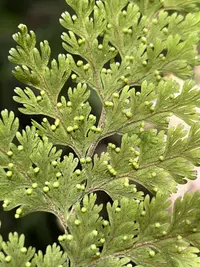
This species has narrow, upright fertile fronds with tiny, comb-like side lobes that hold the sporangia, giving it a distinctive grass- or wire-like appearance compared with typical fern fronds.

Fire-prone habitat specialist

In parts of Australia and South Africa it commonly grows in nutrient-poor, sandy soils in heathlands and open woodland that are periodically shaped by fire, often appearing in open, low-competition sites after disturbance.

Southern hemisphere distribution

It has a natural range centered in the southern hemisphere, occurring in regions such as eastern and southwestern Australia, New Zealand, and parts of southern Africa, usually in acidic, well-drained soils.

Botan icon

Did you know?

This fern belongs to Schizaeaceae, one of the more evolutionarily distinctive fern families, and its highly reduced, grass-like morphology has been used by botanists as an example of how fern leaf architecture can diverge dramatically from the familiar broad, pinnate fronds of most species.

FAQs about Curly Grass Fern

Yellowing fronds usually result from excess moisture around the roots, poor drainage, or natural aging of older fronds. Check that the substrate drains well, reduce watering slightly, and trim the oldest, fully yellow fronds at the base.

Grow Healthy Plants with Botan Care

Keep your plants happy and healthy with plant identification, disease detection, and easy care guidance.

Botan plant care app — identify plants on mobile

Explore More Plants