

Rotate Container Regularly
Turn the pot 90° every 2–3 weeks so the fronds develop evenly and the rhizome does not lean strongly toward the light source, which helps maintain a balanced, compact crown.

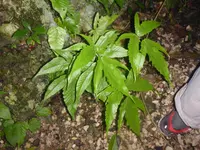
Broad halberd fern, Tectaria heracleifolia, is a tropical terrestrial fern known for its large, deeply lobed fronds that resemble a halberd blade. It forms bold, spreading clumps that give a lush, almost architectural look.
In nature it grows on the forest floor of humid tropical regions in Central and South America, often in shaded, sheltered sites. Its preference for steady moisture, high humidity, and stable warmth means it can be moderately challenging indoors without controlled conditions.
It suits growers who enjoy monitoring moisture and airflow and want a statement foliage plant rather than a compact tabletop fern. Understanding how to care for broad halberd fern helps prevent stress from drying out, low humidity, or harsh light.

Care Difficulty
Moderate Care

Light Preference
Partial Shade

Water Requirements
Keep Soil Moist

Temperature Preference
Tropical / Frost Sensitive

Hardiness Zone
10–11

Soil Texture
Loamy, Peaty, Organic-rich

Soil pH
Acidic (5.5–6.5), Slightly acidic (6.5–7.0)

Soil Drainage
Moist but well-drained

Fertilization
Light (every 4–6 weeks)
Scan your plant to receive care tips personalized for your specific plant
Available on iOS and Android
This fern prefers bright, filtered light that mimics a shaded forest understory.
This species needs consistently moist but not waterlogged soil to stay healthy.
This fern thrives in warm, stable temperatures similar to a tropical forest floor.
This fern prefers consistently high humidity to maintain lush, unblemished fronds.
This species prefers a loose, moisture-retentive but airy mix that mimics a forest floor.
This fern adapts well to container culture when the pot supports its spreading root system and moisture needs.
This fern responds well to light, consistent feeding during active growth from spring to early fall.
Pruning for Tectaria heracleifolia focuses on hygiene and maintaining a neat, open clump.
Tectaria heracleifolia benefits from occasional repotting or division when it becomes rootbound or overcrowded.
New plants are usually produced by division, as spore propagation of Tectaria heracleifolia is slow and technical.
This tropical fern is frost-sensitive and needs protection in regions with cold winters.

Plant Health Check
Not sure what's wrong with your plant? Check your plant's health inside the app.
Mature plants develop two distinct leaf types on the same rhizome: sterile leaves that are large and shallowly lobed, and fertile leaves that are narrower with deeper lobes and sori arranged in neat rows on the underside.
This species often grows on limestone or other rocky substrates in humid tropical forests from Mexico through Central America, anchoring its creeping rhizomes in rock crevices and leaf litter rather than deep soil.
In its native range it shows a preference for stable, warm, short-day tropical conditions, with frond production linked to consistently shaded understories rather than open, seasonally variable light environments.

In parts of Mesoamerica, very large, deeply lobed fronds of this species have been traditionally used as natural wrappings and temporary covers, taking advantage of their broad surface area and durability when fresh.
This species suits indoor decoration if given stable warmth, high humidity, and indirect light. Its large, lobed fronds create a bold, tropical look, especially in bright bathrooms, shaded sunrooms, or grouped with other foliage plants.
Keep your plants happy and healthy with plant identification, disease detection, and easy care guidance.

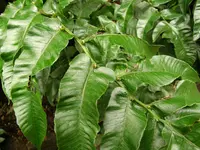
Diplazium proliferum
Diplazium proliferum
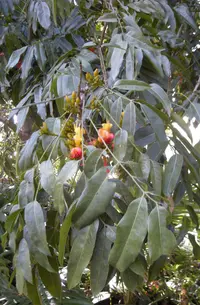
Blackbean
Castanospermum australe
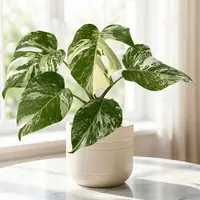
White Variegated Monstera
Monstera deliciosa 'Albovariegata'
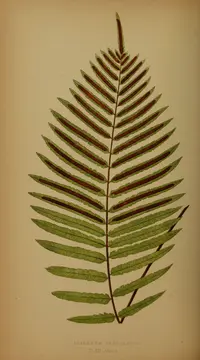
toothed midsorus fern
Telmatoblechnum serrulatum
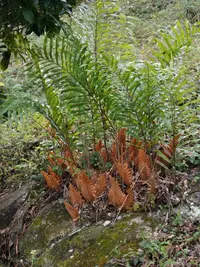
Drynaria rigidula
Drynaria rigidula
Rhipsalis micrantha
Rhipsalis micrantha
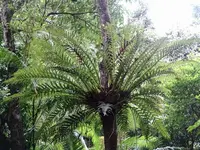
Rock-ginger Fern
Drynaria coronans
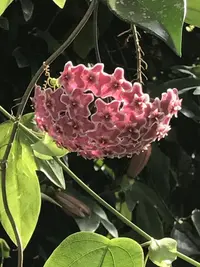
Wax Plant
Hoya pubicalyx 'Pink Silver'