



Thanksgiving Cactus (Schlumbergera truncata) Light Needs

Thanksgiving Cactus grows best in bright, indirect light with brief gentle morning sun and protection from harsh afternoon rays.

Light Preference

Bright Indirect Light

Schlumbergera truncata Light Requirements

In its native humid forests of southeastern Brazil, Schlumbergera truncata grows on trees or rocks where overhead growth filters the sun. It receives bright, dappled light rather than open desert sun, with some seasonal shifts in day length and intensity. This background explains why indoor plants usually flower and grow best near bright windows, not in harsh direct exposure. Preferred light is bright indirect or filtered light.

  • Ideal exposure:

    Schlumbergera truncata needs about 6–8 hours of bright indirect or filtered light daily, including up to 1–2 hours of gentle direct morning sun.

  • Direct sun:

    Short morning sun is tolerated, but strong midday or afternoon sun can scorch the flattened stem segments.

  • Lower light:

    Shade is tolerated better than full sun, but dim rooms often reduce growth and flowering.

  • Seasonal intensity:

    Winter sun is usually gentler, while summer glass can intensify heat and increase burn risk.

Indoor placement should provide bright light without long exposure to hot direct sun.

NConditional
North-facing window:

A north-facing window can maintain the plant if the view is open and the plant stays close to the glass, but flowering may be lighter.

EBest
East-facing window:

Place it within 1–3 ft of an east-facing window where it receives gentle morning sun and bright indirect light for the rest of the day.

SSuitable
South-facing window:

Keep it 2–4 ft from unobstructed south-facing glass or use a sheer curtain to prevent midday sun from hitting the stems directly.

WConditional
West-facing window:

Use a sheer curtain or set it several feet back from a west-facing window because late-day sun can be too intense.

Adjust the position if the stems change color, lean strongly, or stop setting buds in an otherwise healthy plant.

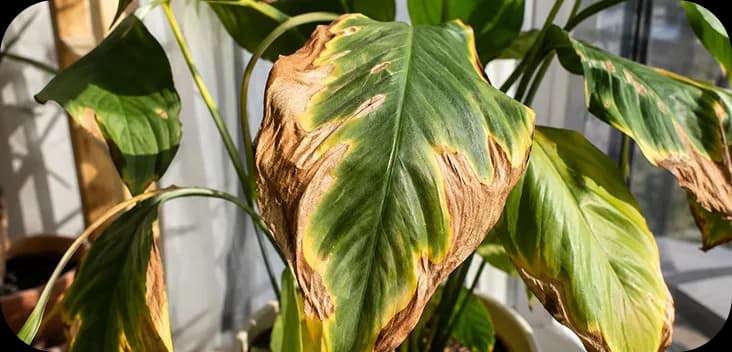
Strong direct sun can stress the segmented stems.

Red or purple cast:

A reddish tint often appears after sudden exposure to stronger sun, especially on the side facing the glass.

Bleached patches:

Pale tan or whitish areas can develop where direct rays hit the same segments repeatedly.

Dry scorch marks:

Rough brown patches may remain after sunburn, and damaged tissue usually does not turn green again.

Heat droop:

Segments may look limp during hot afternoon exposure even when the potting mix is not dry.

Move the plant out of direct afternoon sun right away. Use a sheer curtain or increase the distance from the window before returning it to brighter light.

Weak light usually shows as gradual changes rather than sudden damage.

  • Stretched segments:

    New stem sections may grow longer and narrower as the plant reaches toward stronger light.

  • Leaning growth:

    The plant may angle toward the nearest bright area instead of growing evenly around the pot.

  • Fewer buds:

    Low light often leads to weak bud formation or fewer flowers during the normal bloom season.

  • Small new growth:

    New segments may stay smaller and appear less sturdy during the active growing season.

Move the plant to brighter indirect light, preferably closer to a suitable window. Increase light gradually if it has been in a dim spot for a long time.

If ideal light is not available, choose the brightest spot that avoids hot afternoon rays; a slightly dimmer bright area is safer than sudden full sun.

Move the pot a small distance every few days when increasing light, and rotate it monthly to keep growth even around the pot.

Avoid a dark interior shelf because it usually lacks enough light for compact growth and reliable bud formation.

Get Personalized Care Plan

Scan your plant to receive care tips personalized for your specific plant

FAQ

Thanksgiving Cactus light requirements are best met with bright indirect or filtered light for most of the day. A little gentle morning sun is useful, but harsh afternoon sun is not ideal.

Everything About Thanksgiving Cactus

More Plant Light Guides

Get the Botan App

Discover how to care for your plants with Botan.

Botan app identifying a plant with a phone camera
Top 15 Plants That Don’t Need Sunlight

8 min read · 17 Sept 2026

Top 15 Plants That Don’t Need Sunlight

Some plants thrive in dim rooms, shaded corners, and places with indirect light. In this guide, you’ll explore the top 15 species best suited to low-light conditions and how to care for them.

Plant Recommendations
Top 15 Plants That Don’t Need Sunlight
Thorny Plants: A Comprehensive Guide

10 min read · 25 Aug 2026

Thorny Plants: A Comprehensive Guide

Many plants defend themselves with sharp thorns. This guide explores over 20 examples among flowers, shrubs, trees, and vines. You'll learn what each plant looks like, why it grows thorns, and how to quickly identify them.

Plant Recommendations
Thorny Plants: A Comprehensive Guide
15 Best Scary Halloween Plants and Fungi for a Spooky Garden

8 min read · 9 Oct 2026

15 Best Scary Halloween Plants and Fungi for a Spooky Garden

Want a garden that looks eerie in October? Here are 15 Halloween plants and fungi, from carnivorous traps to bleeding mushrooms. For each species, we cover its appearance, care requirements, and potential uses in your landscape.

Plant Recommendations
15 Best Scary Halloween Plants and Fungi for a Spooky Garden