common club-rush Care (Schoenoplectus lacustris)

Also known as: lakeshore bulrush, great club-rush, Lakeshore Club-rush
common club-rush

About common club-rush

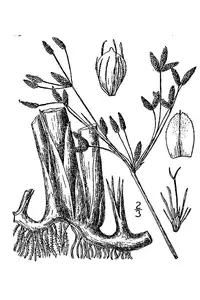
Common club-rush, Schoenoplectus lacustris, is an aquatic sedge often found along the edges of lakes, ponds, and slow-moving rivers. It forms dense stands of upright, leafless green stems with rounded tips.

This species is native to Europe, parts of Asia, and North Africa, and is sometimes used in naturalistic water gardens and wetland restoration. Its strong rhizomes help stabilize muddy banks and provide habitat for aquatic wildlife.

The plant thrives in shallow water or very wet soil, in full sun to light shade. For those who want to care for common club-rush, its main requirement is consistently saturated conditions rather than complex maintenance tasks.

Main Plant Requirements

Care Difficulty

Moderate Care

Light Preference

Full Sun

Water Requirements

Aquatic

Temperature Preference

Cold Hardy

Hardiness Zone

4–9

Soil Texture

Loamy, Silty, Organic-rich

Soil pH

Slightly acidic (6.5–7.0), Neutral (7.0)

Soil Drainage

Waterlogged tolerant

Fertilization

Minimal (feed rarely)

Get Personalized Care Plan

Scan your plant to receive care tips personalized for your specific plant

Available on iOS and Android

How to Care for the common club-rush

This wetland species thrives with strong light and benefits from long daily exposure.

  • Provide 6–10 hours of direct sun, ideally with morning sun and some light afternoon shade in hot summers, to support dense, upright growth in common club-rush.
  • Site plants in open, unshaded positions; they tolerate light partial shade (2–4 hours less sun) but stems may grow thinner and lean toward brighter areas.
  • In very bright, hot climates, use nearby taller plants or reeds as filtered shade to reduce leaf scorch and desiccation during peak midday sun in midsummer.

This emergent aquatic plant prefers consistently saturated conditions rather than fluctuating moisture.

  • Grow Schoenoplectus lacustris in shallow water 5–30 cm deep, or in soil kept constantly saturated; the substrate should never dry out to more than the top 1–2 cm.
  • In garden ponds, keep rhizomes submerged year-round; for marginal beds, irrigate whenever the surface film begins to lose its sheen or cracks appear.
  • Watch for underwatering signs (browning, crisp stem tips, shrinking clumps) and for stressed plants in stagnant, foul-smelling water, which indicates poor oxygenation rather than simple overwatering.

This species is hardy in temperate climates but responds best to mild growing-season temperatures.

  • Active growth is strongest at 60–77°F (16–25°C), with stable water levels helping buffer short air temperature fluctuations.
  • Mature clumps tolerate winter down to about 5–20°F (-15 to -7°C) if rhizomes remain underwater or mulched; repeated freeze–thaw on exposed crowns increases damage risk.
  • In hot regions where summer exceeds 90°F (32°C), maintain cooler water depth and provide some afternoon shade to reduce heat stress and prevent premature stem dieback.

This wetland species needs very high ambient moisture and constant water contact rather than typical indoor humidity management.

  • Aim for 70–90% humidity, ideally by placing the pot in a water-filled outer container that keeps the root zone saturated.
  • Plant tolerates brief dips in humidity but suffers in heated, dry indoor air where stems brown from the tips downward.
  • Low humidity stress appears as crisping stem edges and dull color; use trays of water and groupings of aquatic plants rather than misting to raise ambient moisture.

This rhizomatous rush thrives in permanently wet, heavy, organic-rich substrate rather than standard potting soil.

  • Use a dense mix such as 2 parts loam, 1 part clay or clay subsoil, and 1 part well-rotted compost to mimic natural pond margins for Schoenoplectus lacustris.
  • Choose soil that holds water with almost no drainage, allowing water to sit above the soil surface by 2–5 cm in containers or pond edges.
  • Target a slightly acidic to neutral pH around 6.0–7.5, avoiding strongly alkaline mixes that can limit nutrient uptake and weaken growth.
  • Do not use very sandy or highly aerated mixes with lots of perlite, which dry too fast and prevent the constant saturation this species requires.

This species is suitable for container growing when the pot is managed as a mini-bog or shallow aquatic feature.

  • Select a wide, heavy container to counterbalance tall, reed-like stems and reduce the risk of tipping in wind.
  • Use a pot with minimal or sealed drainage and stand it inside a larger, watertight outer vessel kept filled to maintain a stable water level.
  • Choose dark, non-porous materials like glazed ceramic or plastic to slow water loss and help keep the root zone consistently submerged.

Schoenoplectus lacustris grown in nutrient-poor containers benefits from modest feeding, while established pond plantings often need little extra input.

  • Use a balanced liquid fertilizer (for example 10-10-10) at 1/4–1/2 strength for container-grown common club-rush.
  • Apply every 4–6 weeks during the active growing season, once water temperatures are consistently mild.
  • Avoid fertilizing in late fall and winter, when growth slows or stops.
  • Rinse any fertilizer spills from foliage and keep products out of natural waterways.

Pruning helps keep Schoenoplectus lacustris stands tidy, healthy, and within bounds, especially in managed ponds or containers.

  • Cut back dead, broken, or diseased stems at the base whenever noticed, using clean, sharp shears.
  • In late winter or early spring, remove most old brown stems to encourage fresh, upright growth.
  • Thin overcrowded clumps by removing selected stems to maintain airflow and reduce rot risk.
  • Avoid cutting green, vigorous stems too low, which can weaken the root system over time.

This species is usually grown in ponds or water gardens, so focus on dividing and transplanting dense clumps rather than frequent repotting.

  • Look for crowded rhizomes, reduced stem height, or slow spread as signs that Schoenoplectus lacustris needs division or a larger planting area.
  • Carry out transplanting in early spring before strong new growth, typically every 3–5 years.
  • Lift clumps gently, rinse off mud, and divide rhizomes into sections with healthy buds and roots.
  • Replant divisions at the same depth, keep roots continuously wet, and shade briefly to reduce stress.

Schoenoplectus lacustris is commonly propagated by division, with seed propagation used mainly for restoration or large-scale projects.

  • Divide mature clumps in early spring, when water is cool and new shoots are just emerging.
  • Use a sharp knife or spade to cut rhizomes into firm sections, each with several buds and roots.
  • Plant divisions into shallow, silty or loamy substrates and keep them submerged at appropriate water depth.
  • For seed, sow on wet soil surfaces, maintain constant moisture, and allow access to light for germination.

This hardy pond species tolerates typical temperate winters with minimal intervention when planted at appropriate water depth.

  • In cold regions, leave hardy clumps submerged below the ice line so crowns do not freeze solid.
  • Remove or cut back dead stems in late fall or early spring to reduce debris in the water.
  • For container-grown plants, sink pots deeper in the pond or move them to a frost-free but cool water tank.

Care Tips

Submerged Container Method

Grow plants in wide, heavy containers filled with loam and sink them into ponds or tubs so the soil stays put while the crown sits 5–20 cm below the water surface, which allows easy relocation and prevents uncontrolled spreading by rhizomes.

Rhizome Containment

Install a vertical root barrier or use buried pond baskets along natural shorelines to limit rhizome spread and keep stands dense but manageable for maintenance and access.

Wind And Ice Management

In exposed or icy sites, group plants in clumps and use discreet stakes or a low mesh support ring around the outer stems to reduce lodging and breakage from strong wind or winter ice movement.

Nutrient Load Control

Periodically thin and remove older stems at the edge of dense stands and compost them away from the waterbody to export excess nutrients and maintain vigorous, upright new growth.

Wildlife-Friendly Mowing

If managing large banks, cut only a portion of the stand at any one time and leave some mature stems in place so wildlife retains cover while you are caring for common club-rush as a landscape feature.

Common Pests and Diseases

Aphids

These insects feed on young stems and inflorescences, sucking sap and causing distortion and sticky honeydew on common club-rush. This pest is often more noticeable on plants growing in nutrient-rich, slow-moving or stagnant water.

Solution

Physically wash colonies off emerging shoots with a firm stream of water, repeating as needed. In larger stands, encourage natural predators such as lady beetles, or use a targeted insecticidal soap, making sure runoff does not harm aquatic life.

Spider mites

These insects thrive on stressed or partially dried plants, causing fine stippling, bronzing, and occasional webbing on emergent stems. Symptoms include dull, yellowed foliage on plants that are not kept adequately wet or are exposed to hot, dry wind.

Solution

Increase humidity around emergent growth, keep the root zone consistently wet, and rinse stems thoroughly with water to remove mites. For persistent infestations, apply horticultural oil at label rates during cooler parts of the day, avoiding direct overspray into ponds with fish or invertebrates.

Rust

This disease causes orange to brown pustules or spots on stems and leaf-like culms, more often in dense plantings with poor air movement. Symptoms include weakened, yellowing shoots that decline earlier than healthy ones.

Solution

Remove and destroy heavily infected stems to reduce spore spread, and thin dense clumps to improve airflow. Avoid overhead watering in container culture and, where necessary, use a labeled fungicide suitable for aquatic or marginal plants, following all water-body safety restrictions.

Leaf spot

This disease produces small tan, brown, or purplish lesions that can merge and cause sections of stems to die back, especially in nutrient-rich, stagnant water or crowded stands. Symptoms include patchy discoloration and premature senescence of affected shoots.

Solution

Cut and remove affected stems at the base to reduce inoculum, and avoid excessive nitrogen that promotes soft, disease-prone growth. In nursery or container situations, improve spacing and water circulation, and consider a targeted fungicide if cultural measures do not limit spread.

Interesting Facts

Ancient lake‑edge dominant

This species has dominated temperate European and western Asian lake margins since at least early Holocene times, as shown by fossilized stem impressions and pollen in sediment cores.

Oxygen‑pumping stems

The tall cylindrical stems contain air spaces that move oxygen from the atmosphere down to the submerged rhizomes, allowing the plant to tolerate waterlogged, low‑oxygen muds.

Natural wave buffer

Dense stands along shorelines measurably reduce wave energy and shoreline erosion, which is why it is frequently used in constructed wetlands and bank stabilization projects.

Botan icon

Did you know?

Traditional thatching in parts of central and northern Europe historically relied on this species, whose long, tough, and relatively rot‑resistant culms were harvested, dried, and bundled to roof houses and farm buildings, with some roofs lasting several decades when properly maintained.

FAQs about common club-rush

This rhizomatous sedge spreads steadily by underground stems and self-seeding in shallow water or wet soil. In ponds or wetlands it can form dense stands, so edging, containment barriers, or regular thinning may be needed in small gardens.

Grow Healthy Plants with Botan Care

Keep your plants happy and healthy with plant identification, disease detection, and easy care guidance.

Botan plant care app — identify plants on mobile

Explore More Plants