

Manage Water Depth
In ponds or tubs, keep the crown just below the water surface (0–5 cm) during active growth, then lower or raise containers slightly if stems flop or yellow to fine-tune vigor and stand density.

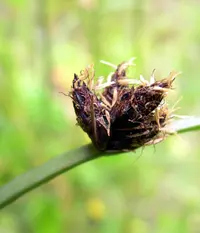
Common threesquare (Schoenoplectus pungens) is a rhizomatous wetland sedge often found along shorelines, marshes, and ditches. It forms dense clumps of stiff, triangular stems with reduced or absent true leaves. The stems are usually green to blue-green and can create uniform stands that stabilize soil and provide habitat for wildlife.
This species naturally occurs across much of North America in freshwater to slightly brackish conditions. It is generally hardy and resilient if kept consistently moist, which makes it useful in rain gardens, ponds, and restoration plantings.
For those learning how to care for common threesquare, the key traits are its strong preference for saturated soils, full sun, and its tolerance of fluctuating water levels.

Care Difficulty
Moderate Care

Light Preference
Full Sun

Water Requirements
Aquatic

Temperature Preference
Cold Hardy

Hardiness Zone
3–9

Soil Texture
Sandy, Loamy, Silty

Soil pH
Acidic (5.5–6.5), Slightly acidic (6.5–7.0)

Soil Drainage
Waterlogged tolerant

Fertilization
Minimal (feed rarely)
Scan your plant to receive care tips personalized for your specific plant
Available on iOS and Android
This wetland sedge thrives in bright, open exposures and is adapted to full sun conditions.
This species is adapted to saturated soils and even shallow standing water throughout the growing season.
This wetland plant is cold hardy yet grows most actively in moderate warm conditions.
This wetland sedge prefers very high humidity and saturated conditions rather than typical indoor air levels.
This species thrives in permanently wet, heavy, organic-rich substrates rather than standard potting soil.
This sedge is suitable for containers when those containers can safely hold saturated, heavy growing media.
This wetland sedge needs minimal feeding, as common threesquare is adapted to low-nutrient sites.
Pruning Schoenoplectus pungens is mainly about hygiene and managing clump density.
Management focuses on dividing and transplanting clumps rather than frequent repotting.
Schoenoplectus pungens is commonly propagated by division and, less often, by seed.
This species is generally cold hardy and needs little special winter attention in most climates.

Plant Health Check
Not sure what's wrong with your plant? Check your plant's health inside the app.
This species naturally dominates brackish and saline shorelines across North America, showing high tolerance to salt and periodic flooding that would stress or kill many other freshwater wetland plants.
It spreads extensively through tough underground rhizomes that knit together dense stands, stabilizing shorelines and trapping sediments in dynamic coastal and lakeside environments.
The sharply triangular, pith-filled stems resist bending and wave damage while allowing gas exchange, which helps the plant maintain structure and internal aeration in shallow, turbulent water.

Common threesquare is frequently used in living shoreline and wetland restoration projects because its dense rhizome network and salt tolerance make it effective at reducing erosion and buffering coastal areas against storm impacts.
Brown tips or stems usually come from low moisture around the roots, high salinity, or fertilizer burn. Check that the root zone stays consistently wet, avoid hard or salty water, and reduce or stop fertilizing until new healthy growth appears.
Keep your plants happy and healthy with plant identification, disease detection, and easy care guidance.

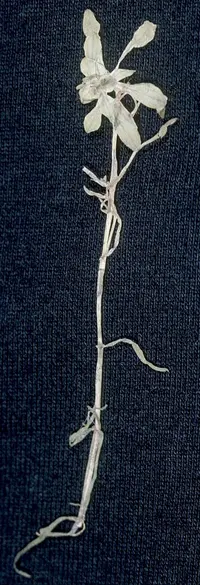
twoheaded water-starwort
Callitriche heterophylla
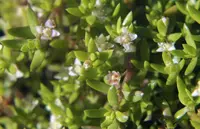
swamp stonecrop
Crassula helmsii
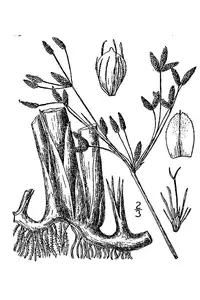
common club-rush
Schoenoplectus lacustris
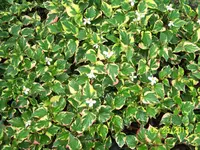
Fishwort
Houttuynia cordata 'Chameleon'
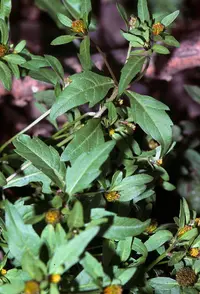
purplestem beggarticks
Bidens connata
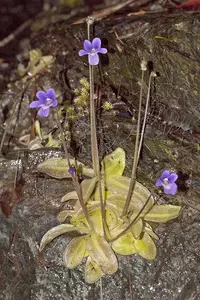
California butterwort
Pinguicula macroceras
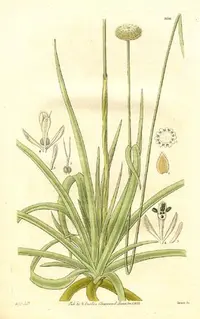
tenangle pipewort
Eriocaulon decangulare
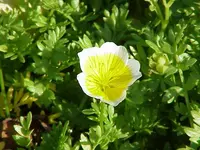
Douglas' meadowfoam
Limnanthes douglasii