


Guide With Hooks
Use small adhesive hooks or clear clips along a wall or shelf edge to gently guide vines horizontally, which encourages denser leaf spacing and a fuller-looking plant.

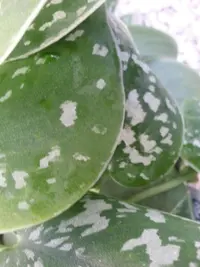
Satin pothos, Scindapsus pictus 'Argyraeus', is a tropical vining aroid grown mainly as an indoor foliage plant. It is valued for its matte green leaves with silver spots and a softly trailing or climbing habit.
In the wild, it occurs in parts of Southeast Asia, where it grows as an understory climber on trees. The plant adapts well to containers and hanging baskets and usually stays compact indoors.
It is considered a relatively forgiving plant, as it tolerates moderate light, occasional missed waterings, and average indoor humidity. Understanding how to care for Satin Pothos focuses mainly on providing stable warmth, indirect light, and well-drained soil.

Care Difficulty
Easy Care

Light Preference
Bright Indirect Light

Water Requirements
Moderate Water

Temperature Preference
Tropical / Frost Sensitive

Hardiness Zone
11–12

Soil Texture
Loamy, Peaty, Organic-rich

Soil pH
Acidic (5.5–6.5), Slightly acidic (6.5–7.0)

Soil Drainage
Moist but well-drained

Fertilization
Light (every 4–6 weeks)
Scan your plant to receive care tips personalized for your specific plant
Available on iOS and Android
This plant prefers bright, indirect light that mimics dappled forest shade.
Watering should balance even moisture with good air around the roots.
Stable, warm temperatures support healthy foliage and steady growth.
This plant prefers moderately humid air but copes with typical indoor levels if kept stable.
Scindapsus pictus 'Argyraeus' grows best in a loose, airy, organic-rich mix that drains quickly but does not dry out instantly.
This species is very suitable for container growing due to its compact root system and trailing habit.
Scindapsus pictus 'Argyraeus' benefits from light, consistent feeding during active growth for steady foliage production.
Pruning Scindapsus pictus 'Argyraeus' helps control length and encourages fuller, bushier vines.
This vine prefers slightly snug pots but benefits from periodic repotting to refresh soil and support healthy roots.
Scindapsus pictus 'Argyraeus' is most commonly propagated from stem cuttings taken during active growth.
This tropical vine is frost sensitive and must be grown indoors or in warm conditions during winter in most climates.

Plant Health Check
Not sure what's wrong with your plant? Check your plant's health inside the app.
The silver spotting pattern on the leaves is genetically stable rather than caused by a virus or damage, so new leaves reliably repeat the same speckled and edged pattern when light conditions are adequate.
In the wild, this plant often grows as an epiphyte on tree trunks, using its roots mainly for anchoring rather than for drawing water and nutrients from soil, which explains its tolerance of relatively loose, airy potting mixes.
The metallic-looking silver patches develop where the upper leaf tissue lacks chlorophyll, exposing a spongy internal layer that reflects light and gives the characteristic matte silver appearance rather than a glossy variegation.
Brown, crispy edges usually come from low humidity, underwatering, or exposure to hot or cold drafts. Occasionally, fertilizer salts or chlorinated tap water contribute. Trim damaged parts and correct the environmental cause to prevent further browning.
Keep your plants happy and healthy with plant identification, disease detection, and easy care guidance.

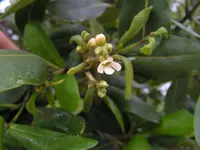
Avicennia schaueriana
Avicennia schaueriana

Satin Pothos
Scindapsus pictus 'Silvery Ann'
 POPULAR
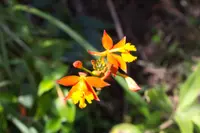
Fire-star orchid
Epidendrum radicans
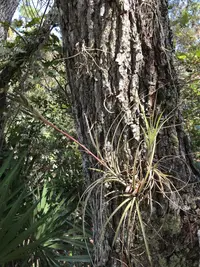
Manatee River airplant
Tillandsia simulata
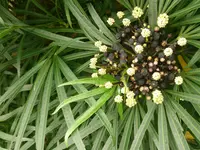
miagos bush
Osmoxylon lineare
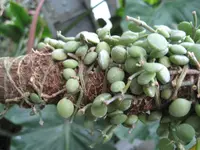
String of Nickels
Dischidia nummularia
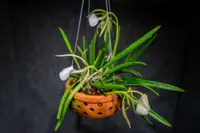 POPULAR
Lady of the Night Orchid
Brassavola nodosa
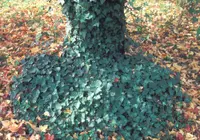 POPULAR
English Ivy
Hedera helix