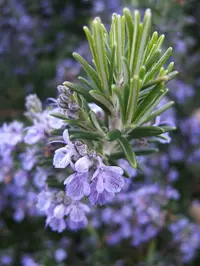
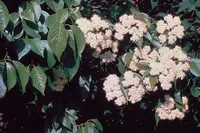
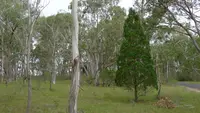
Karree Care (Searsia lancea)

Also known as: Bastard Willoa, Karoo Tree, african sumac, Karee-rhus, Common Karee, Common Karee Tree, Karee Tree, Kareeboom, Willow Crowberry, Willow Rhus
Karree

About Karree

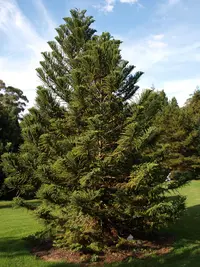
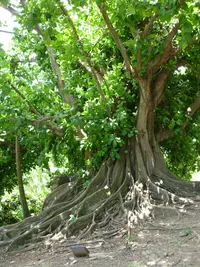
Karree, Searsia lancea, is a small evergreen tree or large shrub often used in dry gardens and urban landscapes. It forms a rounded canopy with fine, narrow leaflets that give it a soft, feathery look.

This species is native to southern Africa, where it grows in semi-arid regions and along watercourses. It is valued for its drought tolerance, strong wind resistance, and general toughness, which makes it suitable for low-maintenance planting.

In mild climates, it adapts well to poor soils, prefers full sun, and once established needs little supplemental water. These traits make it relatively straightforward to care for Karree in suitable outdoor conditions.

Main Plant Requirements

Care Difficulty

Easy Care

Light Preference

Full Sun

Water Requirements

Low Water

Temperature Preference

Warm Climate

Hardiness Zone

9–11

Soil Texture

Sandy, Loamy, Clay

Soil pH

Slightly acidic (6.5–7.0), Slightly alkaline (7.0–7.5)

Soil Drainage

Well-drained

Fertilization

Minimal (feed rarely)

Get Personalized Care Plan

Scan your plant to receive care tips personalized for your specific plant

Available on iOS and Android

How to Care for the Karree

This drought-tolerant shrub thrives in full sun but adapts to light shade in many landscapes.

  • Provide 6–8 hours of direct sun daily; morning and midday sun encourage dense branching and smaller, tougher leaves.
  • Allow light or high open shade in very hot regions; Karree handles bright, reflected light but may scorch in exposed, wind‑swept sites above 100°F (38°C).
  • In partial shade, expect looser growth and reduced autumn color; avoid deep shade where stems elongate and lower branches thin out.

This species is highly drought tolerant once established and prefers infrequent, deep watering.

  • In the ground, irrigate only when the top 5–8 cm of soil are completely dry; soak deeply, then allow full drainage before the next watering.
  • Reduce irrigation in cool seasons, often to rainfall only; increase slightly during prolonged summer heat or extreme drought for healthier Searsia lancea foliage.
  • Watch for yellowing, soft leaves and persistent wet soil as signs of overwatering, and for crisp leaf tips and early leaf drop as underwatering indicators.

This hardy shrub tolerates a wide temperature range in dry, open sites.

  • Best growth occurs around 65–85°F (18–29°C), with steady warm conditions supporting dense branching and healthy foliage.
  • Mature plants endure down to about 20°F (−6°C); brief drops slightly below this can cause leaf burn but stems often resprout in spring.
  • Handles dry heat above 100°F (38°C) if soil is not waterlogged; extended freezing, especially in saturated soil, greatly increases root and branch damage risk.

This drought-adapted shrub tolerates a wide humidity range and usually needs no special adjustments indoors or outdoors.

  • Target 30–50% humidity, which matches typical indoor air and semi-arid outdoor conditions for Karree.
  • Tolerates very dry air, but prolonged exposure below 25% can cause leaf tip browning and fine leaf drop.
  • If air is extremely dry and warm, group plants together or place near a tray of water and stones to slightly raise local humidity.

Searsia lancea prefers lean, fast-draining soil that mimics semi-arid, sandy or gravelly native habitats.

  • Use a gritty mix such as 50–60% sandy or loamy soil with 40–50% mineral amendments like coarse sand, fine gravel, or perlite for rapid drainage.
  • Keep pH slightly acidic to neutral, around 6.0–7.5, as this range supports nutrient uptake without encouraging excessive foliage at the expense of roots.
  • Limit rich organic matter to a thin compost layer or small proportion in the mix, so growth stays strong but not weak and overly lush.
  • Avoid compacted, clay-heavy, or waterlogged substrates, which reduce aeration around the roots and significantly increase risk of root rot.

This species can be grown in containers for patios or small spaces if given a stable, deep pot.

  • Choose a heavy, wide-based container to counterbalance the woody, spreading canopy and prevent tipping in strong winds.
  • Select a pot at least 40–50 cm deep so the long taproot and woody lateral roots can anchor and develop properly.
  • Use a mineral-rich, fast-draining mix and raise the pot slightly off the ground so drainage holes clear water quickly after rain or irrigation.

This drought-tolerant tree needs only light feeding in most garden soils, so focus on moderate, infrequent inputs when establishing or container-growing Karree.

  • Use a balanced slow-release fertilizer (around 10-10-10) or well-rotted compost at the start of spring growth.
  • Feed young or container plants every 6–8 weeks during the growing season; established in-ground trees often need no added fertilizer.
  • Apply at half the label strength for container plants to limit salt buildup and root burn.
  • Stop feeding in late summer to allow wood to harden before winter and avoid soft, frost-prone growth.

Pruning Searsia lancea is mainly used to maintain structure, clearance, and plant health rather than to control vigor.

  • Carry out structural pruning in late winter or early spring before strong new growth begins.
  • Remove dead, diseased, damaged, or crossing branches first, then thin crowded interior shoots to improve light and airflow.
  • Shorten or remove low branches to raise the canopy if a small shade tree form is desired.
  • Use clean, sharp bypass pruners or a pruning saw, making smooth cuts just outside the branch collar to support proper healing.

This species is more often grown in the ground, so transplanting young trees at the right stage is more important than frequent repotting.

  • Shift container-grown plants when roots circle the pot, drainage slows, or growth stalls despite correct care.
  • Plan outdoor transplanting for late winter to early spring, when soil is workable and before strong heat, to encourage rapid establishment.
  • Transplant every 2–3 years while young, then avoid moving mature trees due to deeper, more extensive root systems.
  • Water deeply before and after moving, keep the original soil level at the same height, and mulch 5–8 cm to limit root stress and moisture loss.

New Searsia lancea plants are usually raised from seed, with semi-hardwood cuttings also possible under controlled conditions.

  • Collect ripe berries in late summer to autumn, clean the seeds, and sow in a free-draining mix kept slightly moist.
  • Provide warm conditions around 70–77°F and bright indirect light to encourage germination, which may be slow and uneven.
  • For semi-hardwood cuttings, take 10–15 cm pieces in late summer, remove lower leaves, and dip bases in rooting hormone.
  • Place cuttings in a humid, well-aerated medium such as sand-perlite, and cover loosely to maintain high humidity until roots form.

Mature Searsia lancea trees are fairly hardy in mild-winter regions and typically need minimal winter care once established.

  • In climates with occasional light frost, a 5–8 cm mulch layer around the root zone helps buffer soil temperature and moisture.
  • Young or newly planted trees benefit from extra mulch and reduced watering in cold, wet periods to limit root stress.
  • Container-grown plants in colder areas can be moved into a sheltered, unheated space where temperatures stay above hard freeze levels.

Care Tips

Deep root training

In the first 2–3 years, water less frequently but for a longer duration to encourage deep root development that will later make the tree more drought tolerant and wind stable.

Single-leader selection

During early growth, choose one strong central stem and remove competing upright shoots to build a stable, well-structured canopy that is less prone to storm damage and breakage.

Windward staking method

If staking is necessary in exposed sites, place 1–2 sturdy stakes on the windward side with flexible ties, and remove them after 1–2 years so the trunk can strengthen through natural movement.

Root zone protection

Keep a 60–90 cm wide mulch ring free of turf and foot traffic around the trunk to protect surface feeder roots, reduce soil compaction, and minimize mechanical damage from lawn tools.

Canopy thinning for airflow

Every few years, selectively thin crowded interior twigs rather than shortening branch tips to improve airflow and light penetration, which reduces fungal issues and supports long-term structure when caring for Karree.

Common Pests and Diseases

Scale insects

This pest feeds on sap along stems and leaves, often appearing as small, brown or gray bumps that cause yellowing and weak growth. Symptoms include sticky honeydew and sometimes sooty black coating on leaves.

Solution

Remove light infestations by gently scraping with a fingernail or cloth and pruning heavily affected twigs. For larger populations, use repeated applications of horticultural oil or insecticidal soap, ensuring thorough coverage of branch crotches and the undersides of leaves during mild weather.

Aphids

These insects cluster on young shoots and leaf undersides, sucking sap and causing distorted new growth and sticky honeydew. Ant activity on branches is often associated with aphid colonies.

Solution

Dislodge colonies with a firm stream of water and prune heavily infested shoot tips. If needed, apply insecticidal soap or horticultural oil to tender growth, and manage nearby ant populations so natural predators can help control aphids as part of Searsia lancea plant care.

Leaf spot

This disease causes scattered brown to dark purple spots on leaves, sometimes with a pale halo and premature leaf drop under stress conditions. Symptoms include a patchy, thinned canopy rather than uniform yellowing.

Solution

Prune and dispose of affected leaves and twigs to reduce inoculum, and avoid overhead watering to keep foliage as dry as possible. Improve air circulation around the canopy and, in persistent cases, consider a labeled copper or broad-spectrum fungicide during wet periods, following product directions carefully.

Powdery mildew

This disease appears as a white to gray powdery film on leaves and young shoots, which may curl or become stunted. Symptoms include reduced vigor and a dull, dusty look to affected foliage, especially in areas with warm days and cool nights.

Solution

Thin crowded branches to increase airflow and avoid overhead irrigation that keeps foliage damp for long periods. Remove and discard heavily affected leaves, and if the problem recurs, use a labeled sulfur or potassium bicarbonate product on new growth during high-risk weather conditions.

Armillaria root disease

This disease, caused by Armillaria fungi in the soil, leads to gradual decline, canopy thinning, and dieback, often in previously stressed or waterlogged sites. Symptoms include poor new growth, excessive leaf drop, and sometimes white fungal sheets beneath bark near the root collar.

Solution

Remove severely affected trees, including as much of the main root system as practical, and avoid replanting susceptible woody species in the same spot. For trees in early decline, reduce watering, improve drainage, and avoid trunk injuries to limit additional stress, although chemical control is not effective for this disease.

Interesting Facts

Desert river specialist

This small tree naturally occurs along seasonal rivers and drainage lines in arid parts of southern Africa, where its deep root system allows it to tap subsurface moisture and tolerate long dry periods.

Key bird food source

Its small, fleshy, 1-seeded drupes are produced in dense clusters and are an important winter food source for many southern African fruit‑eating birds, which in turn disperse the seeds.

Fine needle-like foliage

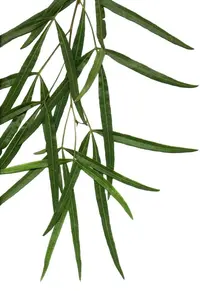
The crown is made of narrow, trifoliate leaflets that give the tree a fine, almost needle-like texture, an adaptation that reduces leaf surface area and helps limit water loss in hot, dry climates.

Botan icon

Did you know?

Searsia lancea is naturally very long-lived and can form part of stable riverine woodland for many decades, becoming a structural framework species that helps stabilize banks, create shade, and facilitate the establishment of other plants in otherwise harsh semi-arid landscapes.

FAQs about Karree

This species is evergreen in mild climates, keeping foliage throughout the year. In very cold or drought-stressed conditions it may shed some leaves but usually maintains a dense canopy, which makes it useful for screening and year-round structure.

Grow Healthy Plants with Botan Care

Keep your plants happy and healthy with plant identification, disease detection, and easy care guidance.

Botan plant care app — identify plants on mobile

Explore More Plants