Encourage Compact Growth
Pinch back the longest stems after flowering to keep the mat dense and prevent the plant from becoming leggy or opening in the center.

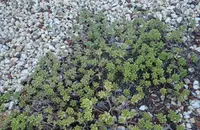
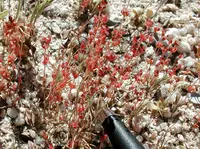
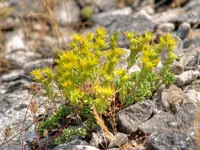
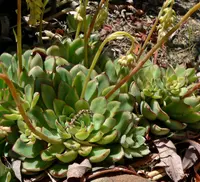
Sedum gypsicola is a small, mat-forming succulent native to rocky, gypsum-rich slopes in parts of Spain. It forms low cushions of fine, needle-like leaves that often take on pinkish or reddish tones in strong light. In summer, it produces clusters of star-shaped white to pale pink flowers held above the foliage.
This species grows slowly and stays compact, which makes it suitable for rock gardens, troughs, and small containers. Its drought tolerance and preference for gritty, fast-draining soil mean that care for Sedum gypsicola is generally straightforward for those who avoid overwatering and provide plenty of light.

Care Difficulty
Easy Care

Light Preference
Full Sun

Water Requirements
Low Water

Temperature Preference
Cold Hardy

Hardiness Zone
5–9

Soil Texture
Sandy, Loamy, Rocky

Soil pH
Slightly acidic (6.5–7.0), Neutral (7.0)

Soil Drainage
Well-drained

Fertilization
Minimal (feed rarely)
Scan your plant to receive care tips personalized for your specific plant
Available on iOS and Android
This compact succulent prefers strong light and copes well with exposed, dry sites.
This species is drought tolerant and needs infrequent, careful watering once established.
This rock-dwelling succulent prefers temperate conditions but tolerates a fair amount of cold and heat.
This species tolerates dry indoor air well, so humidity is rarely a concern for Sedum gypsicola.
Sedum gypsicola prefers very lean, sharply drained, mineral-based soil to prevent root rot.
This species is well suited to container growing outdoors in sunny, dry locations.
This gypsum-loving succulent needs only light feeding in lean, well-drained soil.
This plant needs minimal pruning, mainly to keep mats tidy and healthy.
This compact sedum dislikes disturbance, so repot or transplant only when clearly necessary.
This species is commonly multiplied from cuttings and division to expand low mats.
This rock-garden sedum is generally cold hardy and needs little winter attention in the ground.

Plant Health Check
Not sure what's wrong with your plant? Check your plant's health inside the app.
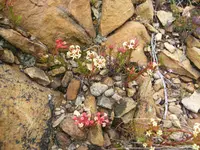
This species is naturally restricted to gypsum-rich rocky slopes in eastern Spain, where few other plants tolerate the high calcium sulfate content and shallow, nutrient-poor soils.
It forms dense cushions of tiny, cylindrical leaf rosettes that flush pinkish to reddish under strong light or cold, creating a compact mat that helps shade and cool the root zone.
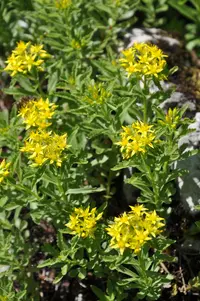
In early to mid-summer it produces loose clusters of small, white to pale pink, star-shaped flowers that rise slightly above the foliage and are visited by various small pollinating insects.

Sedum gypsicola is considered a narrow Iberian endemic, with wild populations confined to a limited area of eastern Spain, which makes its natural habitats of particular interest for conservation and for studying plant adaptation to gypsum substrates.
This species performs best outdoors in full sun and well-drained, lean soil. Indoors it often grows weak and sparse due to lower light and poor air movement, so Sedum gypsicola indoor care is generally more challenging.
Keep your plants happy and healthy with plant identification, disease detection, and easy care guidance.