Sedum kimnachii Care

Sedum kimnachii

About Sedum kimnachii

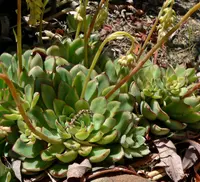
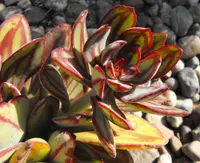
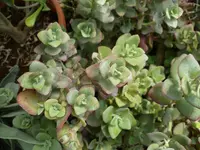
Sedum kimnachii is a small, mat-forming succulent from Mexico, valued for its dense clusters of fleshy leaves and low, spreading growth. It often forms bright, textured groundcover and can trail nicely over pot edges or rock walls.

The plant typically shows green to yellowish leaves and seasonal clusters of small star-shaped flowers that attract pollinators. Its compact size and drought tolerance make it suitable for containers, rock gardens, and sunny indoor spots.

This species prefers bright light, very well-drained soil, and infrequent watering, which makes it relatively forgiving for beginners. Understanding how to care for Sedum kimnachii mainly involves avoiding overwatering and providing strong light.

Main Plant Requirements

Care Difficulty

Easy Care

Light Preference

Full Sun

Water Requirements

Low Water

Temperature Preference

Warm Climate

Hardiness Zone

9–11

Soil Texture

Sandy, Loamy, Rocky

Soil pH

Slightly acidic (6.5–7.0), Neutral (7.0)

Soil Drainage

Well-drained

Fertilization

Minimal (feed rarely)

Get Personalized Care Plan

Scan your plant to receive care tips personalized for your specific plant

Available on iOS and Android

How to Care for the Sedum kimnachii

This succulent needs bright, mostly direct sun to stay compact and colorful.

  • Provide 6–8 hours of sun daily, with at least 4–6 hours of direct morning or late-afternoon sun to support dense growth.
  • Allow light afternoon shade in very hot, dry climates to reduce leaf scorch, especially on exposed patios or gravel beds.
  • If Sedum kimnachii stretches, pales, or leans toward windows or open areas, it is receiving insufficient light and needs a sunnier position.

This drought-tolerant succulent prefers deep, infrequent watering in fast-draining soil.

  • Water only when the top 3–5 cm of soil are completely dry; in most warm seasons this means thorough soaking, then no water until the soil fully dries again.
  • Reduce watering sharply in cool or dormant periods, sometimes to only occasional light watering if the soil stays dry for many weeks.
  • Watch for overwatering signs such as mushy, translucent leaves and stem collapse; wrinkled, soft, folding leaves indicate the plant needs water soon, especially for Sedum kimnachii in poor, rocky soils.

This species prefers mild, dry conditions and tolerates a broad outdoor temperature range.

  • Aim for active growth in 65–80°F (18–27°C), with dry air and good airflow to limit fungal problems.
  • Protect from hard frost; short dips to 25–30°F (-4 to -1°C) may be survived if soil is dry, but repeated freezes damage stems and foliage.
  • In heat above 90°F (32°C), provide afternoon shade and avoid watering during the hottest hours to prevent root stress and sudden leaf drop.

This species tolerates a wide humidity range and rarely needs special humidity management indoors.

  • Target 30–50% humidity, similar to average indoor air, to keep foliage and stems firm.
  • Leaves shriveling from the tips with no watering issue present can indicate extended very dry air plus heat stress.
  • Soft, overly turgid leaves or unexplained rot usually relate more to excess moisture at the roots than to air humidity.
  • If air is extremely dry and hot, move the plant away from heaters or vents rather than using misting.

Sedum kimnachii grows best in a very well‑draining, mineral‑rich, gritty substrate.

  • Use a cactus/succulent mix amended 30–40% with coarse materials such as pumice, perlite, or 3–5 mm gravel for better drainage.
  • Aim for a sandy or gritty, crumbly texture that breaks apart easily and never compacts around the roots.
  • Keep pH slightly acidic to neutral, around 6.0–7.0, avoiding peat‑heavy mixes that stay wet for long periods.
  • Avoid dense loam, clay, or mixes high in unbroken compost or manure, which trap water and reduce root aeration.

This species is well suited to container growing on sunny patios, balconies, or rock-style planters.

  • Choose a wide, shallow pot that gives room for spreading stems while keeping the root zone close to the warm surface.
  • Use a pot material such as unglazed terracotta if extra evaporation is needed in rainy or humid climates.
  • Raise the container slightly on feet or pot risers so drainage holes clear quickly and runoff never pools under the base.

This succulent needs modest feeding, as Sedum kimnachii stores nutrients efficiently in its fleshy tissues.

  • Use a balanced liquid fertilizer (around 10-10-10 or 20-20-20) diluted to 25–50% strength.
  • Feed every 4–6 weeks during spring and summer only, when growth is active.
  • Skip fertilizer in fall and winter to avoid soft, weak growth.
  • On outdoor plants, a light top-dressing of compost in spring is usually sufficient.

Pruning Sedum kimnachii is simple and mainly helps maintain a compact, tidy mat of foliage.

  • Best time is late winter to early spring, before strong new growth begins.
  • Use clean, sharp scissors or snips to remove dead, damaged, or leggy stems.
  • Shortening long stems encourages denser branching and improves overall shape.
  • After flowering, trim spent flower stalks to direct energy back into vegetative growth.

Container-grown plants benefit from occasional transplanting to keep Sedum kimnachii healthy and well-rooted.

  • Repot or transplant every 2–3 years, or when roots circle the pot and growth slows.
  • Aim for spring, using a shallow, wide container with fast-draining cactus or succulent mix.
  • Lift the plant gently, loosen circling roots, and remove old, compacted soil from the root ball.
  • Water lightly after moving and keep in bright, indirect light for 5–7 days to reduce transplant stress.

This species is commonly multiplied from cuttings and small divisions taken from mature Sedum kimnachii clumps.

  • Take short stem cuttings or pull off rosettes with roots in late spring or early summer.
  • Allow cut surfaces to dry and callus for 1–2 days before planting in gritty, well-drained mix.
  • Keep in bright, indirect light at 65–80°F and water very sparingly until roots form.
  • Seeds are possible but slower; sow onto the surface of a barely moist, sandy mix.

Mature outdoor plants are fairly cold tolerant and usually need minimal winter attention in mild climates.

  • In areas with freezes below about 20°F, add a thin gravel or bark mulch to insulate the root zone.
  • Ensure soil drains well; avoid waterlogged conditions that promote root rot in winter.
  • Move containers under cover or indoors to a bright, cool spot when hard frost is expected.
  • Reduce watering significantly so the soil dries almost completely between light sips.

Care Tips

Encourage Compact Growth

Pinch back soft stem tips in early spring to promote branching and a denser mat, and use the cuttings as propagation material rather than discarding them.

Smart Propagation Trays

When propagating, lay several stem cuttings on a wide, shallow tray of gritty mix, lightly cover the nodes, and keep the tray in bright shade for 7–10 days to root many new plants at once.

Protect From Heavy Rains

In climates with intense seasonal rain, place containers under a clear awning or move them to a sheltered spot to prevent stems from rotting or breaking under excess moisture and splashing soil.

Edge Control In Beds

In ground, install a low edging strip or stone border where you want growth to stop, then gently lift and replant or compost any stems that spill past this boundary once or twice a year.

Routine Pest Scouting

Every few weeks, inspect stem joints and the underside of leaves for mealybugs or aphids, then treat early with a cotton swab dipped in isopropyl alcohol or a directed spray of insecticidal soap as part of caring for Sedum kimnachii.

Common Pests and Diseases

Mealybugs

This pest often hides in leaf axils and along stems, sucking sap and causing stunted growth and distorted new leaves. Symptoms include white, cottony clusters and sticky honeydew on nearby surfaces.

Solution

Isolate the plant, then dab visible insects with cotton swabs dipped in 70% isopropyl alcohol and repeat weekly until gone. Increase air movement, avoid overfertilizing, and, for larger infestations outdoors, use a strong water spray followed by an application of insecticidal soap or neem oil, ensuring good coverage of stem joints and undersides of leaves.

Aphids

These insects cluster on tender shoot tips and flower stems, where they feed on sap and cause curling or yellowing of new growth. Symptoms include sticky honeydew, sooty mold on leaves, and distorted flowers.

Solution

Rinse colonies off with a firm stream of water, focusing on growing tips and undersides of leaves, and repeat every few days as needed. For persistent aphids, apply insecticidal soap or a light neem oil spray in the early morning or evening and limit high-nitrogen fertilizer that encourages soft, aphid-prone growth.

Spider mites

This pest becomes more common in hot, dry conditions, leading to pale, speckled foliage and fine webbing between leaves and stems. Symptoms include dull, dusty-looking leaves and slowed growth, especially on indoor or sheltered plants.

Solution

Shower the plant thoroughly to wash off mites and webs, then increase humidity slightly around the plant and improve airflow to reduce stress. If populations remain, use repeated applications of insecticidal soap or a miticide labeled for ornamentals, making sure to treat the undersides of leaves and crevices where mites hide.

Powdery mildew

This disease appears as white, powdery patches on leaves and young stems, which can lead to yellowing and leaf drop in crowded, humid conditions. Symptoms include a dusty coating that spreads across the plant surface but usually does not affect roots.

Solution

Improve air circulation by spacing plants and trimming overly dense stems, and avoid frequent overhead watering that keeps foliage damp. Remove heavily affected parts and, if needed, apply a sulfur or potassium bicarbonate fungicide labeled for ornamentals, following instructions closely and treating during cooler parts of the day.

Bacterial soft rot

This disease causes water-soaked, mushy, foul-smelling stems or leaf bases, often starting where mechanical injury or prolonged moisture occurred. Symptoms include collapsing stems and rapidly spreading decay at the soil line or in dense, low-growing mats.

Solution

Promptly cut out and discard all affected tissue, including any adjoining soft sections, and improve drainage by using a gritty succulent mix and a pot with drainage holes. Reduce watering frequency, keep foliage and stems dry, and avoid splashing soil onto leaves; in outdoor beds, thin crowded patches so surfaces dry quickly after rain, which is essential for effective Sedum kimnachii care instructions.

Interesting Facts

Trailing groundcover habit

This species naturally forms dense, mat-like carpets of stems that trail and root along the soil surface, making it an effective living groundcover in mild, dry climates where it is frost free or only lightly frosted.

Bright seasonal color shift

Its tiny, fleshy leaves can shift from fresh green to yellowish or reddish tones under strong sun and mild drought stress, as pigments such as anthocyanins increase to protect tissues from excess light and water loss.

Clustered yellow blooms

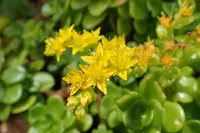
In suitable conditions it produces clusters of small, star-shaped yellow flowers that attract pollinating insects, especially small bees and flies, adding ecological value to rock gardens and dry borders.

FAQs about Sedum kimnachii

Lack of blooms usually results from insufficient light, excessive nitrogen fertilizer, or very young plants not yet mature. Ensure strong sun, avoid high-nitrogen feeds, and allow a natural cool, dry rest period to stimulate flowering.

Grow Healthy Plants with Botan Care

Keep your plants happy and healthy with plant identification, disease detection, and easy care guidance.

Botan plant care app — identify plants on mobile

Explore More Plants