Carpet Sedum Care (Sedum lineare 'Variegatum')

Carpet Sedum

About Carpet Sedum

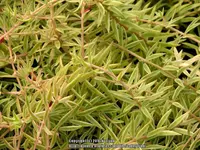
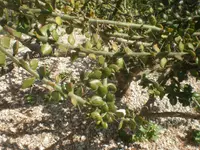
Carpet sedum (Sedum lineare 'Variegatum') is a low-growing, mat-forming succulent often used as a groundcover or trailing plant in containers and rock gardens. It produces narrow, pointed leaves with creamy white margins that create a soft, patterned effect.

This species originates from East Asia and is adapted to bright, open sites with well-drained, often rocky soils. Its drought tolerance, modest nutrient needs, and relatively slow, controlled spread make it easy to grow and simple to care for Carpet Sedum.

It prefers plenty of light, infrequent watering, and gritty, free-draining soil, which helps prevent rot and keeps the foliage compact and colorful.

Main Plant Requirements

Care Difficulty

Easy Care

Light Preference

Full Sun

Water Requirements

Low Water

Temperature Preference

Warm Climate

Hardiness Zone

6–9

Soil Texture

Sandy, Loamy, Rocky

Soil pH

Slightly acidic (6.5–7.0), Slightly alkaline (7.0–7.5)

Soil Drainage

Well-drained

Fertilization

Minimal (feed rarely)

Get Personalized Care Plan

Scan your plant to receive care tips personalized for your specific plant

Available on iOS and Android

How to Care for the Carpet Sedum

This low-growing succulent prefers bright conditions to keep its variegated leaves compact and colorful.

  • Provide 4–6 hours of direct morning sun with light afternoon shade; in hot summers, protect from harsh sun after 2–3 pm to prevent leaf scorch.
  • Tolerates partial shade, but stems may stretch and variegation may fade if it receives less than 3–4 hours of direct or strong filtered light.
  • In winter, ensure the site stays open and unobstructed so Carpet Sedum still receives as much low-angle sun as possible.

This succulent stores moisture in its leaves and needs infrequent but thorough watering.

  • Water only when the top 3–5 cm of soil are completely dry; in most outdoor beds this means deeper, less frequent soakings rather than light splashes.
  • Use sharply drained, gritty soil so excess water runs off quickly; prolonged soggy soil leads to root rot and mushy, yellowing stems.
  • In active growth, watch for slight leaf wrinkling as a sign to water; in cool or rainy seasons, Sedum lineare 'Variegatum' may need almost no supplemental irrigation.

This hardy groundcover tolerates a wide temperature range but grows best in mild conditions.

  • Optimal growth occurs around 60–80°F (16–27°C), where stems spread quickly and foliage stays dense and healthy.
  • Plants usually survive down to about 0°F (−18°C) once established, though foliage may burn or thin after repeated hard freezes.
  • In hot summers above 90°F (32°C), provide afternoon shade and avoid reflected heat from pavement or walls to reduce stress and leaf scorch.

This sedum thrives in relatively dry air and usually does not need humidity adjustment indoors.

  • Aim for 30–50% humidity, similar to most heated or air-conditioned homes.
  • Dry air rarely harms Carpet Sedum, but prolonged damp, stagnant air can promote rot at the stems and roots.
  • If air feels very stale, use a small fan for gentle air movement instead of a humidifier.

Sedum lineare 'Variegatum' needs very fast-draining, lean soil to prevent root rot.

  • Use a gritty mix such as 50–60% cactus/succulent mix blended with coarse sand or 3–5 mm grit and perlite for structure and aeration.
  • Aim for slightly acidic to neutral pH, around 6.0–7.0, which suits most commercial succulent blends.
  • Avoid dense, peat-heavy, or clay-based soil that stays wet longer than 1–2 days after watering.
  • If using garden soil, lighten it with at least 50% mineral materials (perlite, pumice, grit) to improve drainage and oxygen around roots.

This species is very suitable for container growing, including shallow bowls and balcony planters.

  • Choose a wide, shallow pot that matches its spreading habit, so stems can trail without crowding the center.
  • Select unglazed terracotta or similarly porous material when extra evaporation is needed in rainy or humid climates.
  • In windy spots, use a heavier container or add top-dressing gravel to stabilize the plant as stems spread outward.

Sedum lineare 'Variegatum' is a light feeder that benefits from modest nutrition in active growth.

  • Use a balanced, low-strength liquid fertilizer (such as 10-10-10) diluted to 25–50% in spring and early summer.
  • Feed every 4–6 weeks during the main growing season if growth appears weak or foliage pale.
  • Avoid fertilizing in fall and winter, when growth slows or stops.
  • For Carpet Sedum in poor soils, a thin top-dressing of finished compost in spring is usually enough.

Sedum lineare 'Variegatum' responds well to light pruning to maintain a dense, tidy mat.

  • Best time is late winter to early spring, before strong new growth begins.
  • Use clean scissors or hand pruners to remove dead, damaged, or leggy stems.
  • Shear or pinch back long runners to keep edges neat and encourage fuller side branching.
  • After flowering, trim spent flower stems to improve appearance and reduce self-seeding.

This low-growing sedum tolerates being root-bound and usually needs infrequent repotting or transplanting.

  • Consider moving or dividing clumps every 3–4 years, ideally in spring or early fall, when weather is mild.
  • Repot containers when roots circle the pot, drainage slows, or growth becomes sparse despite good light.
  • Use a shallow container with fast-draining cactus or succulent mix to limit waterlogging stress.
  • Water lightly after transplanting, keep in bright shade for 3–5 days, then return gradually to full sun.

Sedum lineare 'Variegatum' is commonly multiplied through short stem cuttings and division.

  • Take 5–8 cm non-flowering stem cuttings in late spring or early summer and remove lower leaves.
  • Allow cut ends to dry for several hours, then place on or just in a gritty, well-draining mix.
  • Keep in bright indirect light and maintain barely moist conditions until roots form in 1–3 weeks.
  • For quick expansion, lift and divide dense mats in spring, replanting sections at the same depth.

This sedum is generally cold hardy in many temperate climates and often needs minimal winter care outdoors.

  • In-ground plants tolerate light to moderate frost if soil drains well and is not waterlogged.
  • Apply a thin gravel or coarse sand mulch around crowns to keep foliage off wet winter soil.
  • Move small containers under cover or indoors in regions below about 0°F, using a cool, bright spot.

Care Tips

Edge Containment

Install a shallow plastic or metal edging strip 5–8 cm deep around beds or between pavers to keep this fast spreader from rooting into lawns or neighboring planting areas.

Rooting New Mats

To quickly fill gaps, cut healthy stems, lay them flat on the soil surface, pin them lightly with bent wire, and top-dress with a thin 0.5–1 cm layer of gritty mix to encourage fast rooting.

Winter Drainage Check

Before prolonged winter rain, clear debris from around the crowns and gently top up with coarse grit or small gravel so water sheds away from stems and does not lead to rot.

Traffic Tolerance Management

Limit foot traffic over the mat to light, occasional use, and place stepping stones in high-traffic zones so stems are not repeatedly crushed and can maintain dense coverage when growing Carpet Sedum.

Container Rejuvenation

Every 2–3 years in containers, lift the mat in sections, discard old woody centers, and replant only the freshest outer stems into new gritty substrate to keep growth compact and variegation bright.

Common Pests and Diseases

Aphids

This pest often clusters on tender new growth and flower shoots, sucking sap and causing distorted, sticky foliage. Symptoms include curling tips, reduced vigor, and honeydew that can lead to sooty mold on dense mats of foliage.

Solution

Rinse colonies off the stems with a firm stream of water, repeating every few days until numbers drop. For heavier infestations, spot-treat stems with a ready-to-use insecticidal soap or neem oil, applied in the early morning and kept off flowers to protect pollinators, and avoid excess nitrogen fertilizer that encourages soft, aphid-prone growth.

Mealybugs

These insects hide in stem joints and under leaves, appearing as white, cottony clumps that weaken the plant as they feed. Symptoms include stunted patches in the mat, sticky residue, and yellowing or thinning sections of foliage.

Solution

Isolate the plant if possible and dab visible clusters with cotton swabs dipped in 70% isopropyl alcohol, then rinse the foliage after treatment. For recurring problems, use insecticidal soap or horticultural oil directed into crevices, improve air circulation over the groundcover, and avoid overwatering, which supports mealybug population growth.

Spider mites

This pest thrives on sun-exposed, dry foliage, causing tiny pale speckles on leaves and fine webbing in dense areas. Symptoms include dull, bronzed foliage and thinning or dry-looking patches, especially during hot, dry periods.

Solution

Increase humidity around container-grown plants by grouping them together and lightly hosing the foliage to physically remove mites, focusing on leaf undersides. If damage continues, apply insecticidal soap or a light horticultural oil, repeating at the interval on the label, and avoid prolonged drought stress, which favors mite outbreaks when growing Carpet Sedum.

Powdery mildew

This disease appears as white to gray, powdery patches on leaves and stems, more often in humid conditions with poor air movement. Symptoms include dull, mottled foliage and gradual thinning in shaded or crowded areas of the planting.

Solution

Remove and discard the most affected stems to reduce spore load, then thin overcrowded patches to increase airflow and light penetration. Water at soil level instead of overhead and, if needed, apply a sulfur or potassium bicarbonate fungicide labeled for ornamentals, following label directions and treating early at the first signs of infection.

Crown and stem rot

This disease is caused mainly by soilborne fungi in conditions that stay wet for extended periods, leading to blackened, mushy stems at the base. Symptoms include collapsing patches that detach easily from the soil and a foul odor around the crowns.

Solution

Remove and discard all affected sections, including any soft stems and roots, and improve drainage by amending heavy soil with grit or planting on a slight slope or raised area. Reduce watering frequency, avoid letting containers sit in saucers of water, and replant only healthy cuttings into fresh, well-draining succulent mix to prevent reinfection.

Interesting Facts

Naturally variegated foliage

This cultivar is selected from the species Sedum lineare for its stable cream-edged leaves, a form of variegation caused by reduced chlorophyll in the outer leaf tissue, which gives the plant its distinct striped look while the green center continues photosynthesis.

Mat-forming growth habit

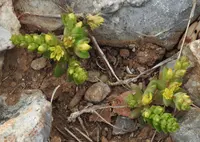
It forms a low, carpet-like mat through short, rooting stems that spread horizontally, making it effective as a living groundcover that can stabilize shallow, well-drained soils between rocks or in crevices.

Tiny star-shaped flowers

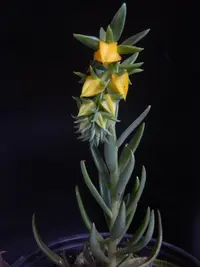
In suitable conditions this plant produces small, yellow, star-shaped flowers clustered at the tips of shoots, which can attract small pollinators such as solitary bees in its flowering period.

FAQs about Carpet Sedum

This species spreads steadily by creeping stems but is usually not invasive in typical garden settings. It forms a dense mat over time, especially in open, sunny spots, and may need edging to keep it within boundaries.

Grow Healthy Plants with Botan Care

Keep your plants happy and healthy with plant identification, disease detection, and easy care guidance.

Botan plant care app — identify plants on mobile

Explore More Plants