Rock-crevice planting
Tuck stems into gaps between rocks or pavers filled with gritty mix so roots anchor quickly and mats stay low, dense, and protected from foot traffic when growing Sedum monregalense.

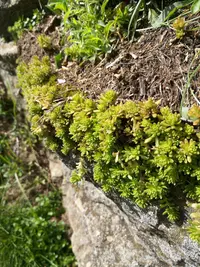
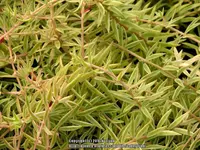
Sedum monregalense is a low-growing, mat-forming succulent often used as a groundcover or in rock gardens. It forms dense carpets of small, fleshy leaves that store water. In its native European habitats, it typically grows in rocky, well-drained sites with plenty of sun. The plant is adapted to dry conditions and poor soils, which makes it relatively forgiving for beginners. Growth is compact, and it spreads slowly by rooting along its stems. For those learning how to care for Sedum monregalense, its main needs are bright light, sharp drainage, and avoidance of constant wetness.

Care Difficulty
Easy Care

Light Preference
Full Sun

Water Requirements
Low Water

Temperature Preference
Cold Hardy

Hardiness Zone
4–9

Soil Texture
Sandy, Loamy, Rocky

Soil pH
Slightly acidic (6.5–7.0), Neutral (7.0)

Soil Drainage
Well-drained

Fertilization
Minimal (feed rarely)
Scan your plant to receive care tips personalized for your specific plant
Available on iOS and Android
This low-growing alpine stonecrop thrives in bright, open conditions and resists strong light when established.
This succulent prefers infrequent, deep watering and very fast-draining soil to prevent root problems.
This hardy stonecrop tolerates a wide temperature range but has clear limits for both cold and heat.
This species tolerates a wide humidity range and usually does not need special humidity management.
Sedum monregalense needs very fast-draining, mineral-based soil to prevent root rot.
This species is well suited to container growing, including shallow dishes and troughs.
This drought-tolerant succulent usually needs only light feeding in poor soils.
Pruning keeps Sedum monregalense compact and prevents older mats from becoming patchy.
This creeping sedum rarely needs frequent repotting but responds well to careful transplanting.
Sedum monregalense is commonly multiplied from small stem segments and divisions.
This species is generally cold hardy and needs minimal winter attention in the ground.

Plant Health Check
Not sure what's wrong with your plant? Check your plant's health inside the app.
This species originates from rocky alpine and subalpine habitats in the southwestern Alps of Italy and France, where it forms low, dense mats that anchor into shallow crevices and thin, mineral-rich soils.
Unlike many succulents from arid warm regions, this plant tolerates freezing alpine winters and snow cover, surviving as tight rosettes that hug the ground and reduce exposure to cold, dry winds.
Its small leaves often turn red to burgundy under high light and cool temperatures due to increased anthocyanin pigments, which help protect leaf tissues from excess solar radiation and cold stress.
This species spreads as a low, mat-forming ground cover but is not usually aggressive. It slowly enlarges via short stems and rooting nodes, staying relatively contained compared with invasive groundcovers, especially in well-drained, low-fertility sites.
Keep your plants happy and healthy with plant identification, disease detection, and easy care guidance.