Doederlein's Spikemoss Care (Selaginella doederleinii)

Doederlein's Spikemoss

About Doederlein's Spikemoss

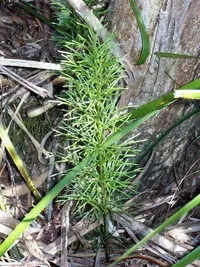
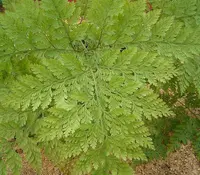
Doederlein's spikemoss (Selaginella doederleinii) is a small, primitive vascular plant related to ferns and clubmosses rather than true mosses. It forms low, creeping mats with many branching, overlapping stems.

Foliage is fine and scale-like, giving a soft, feathery look that stays attractive year-round in suitable conditions. In nature it grows in humid, shaded forest floors and rocky slopes in parts of East and Southeast Asia.

This species prefers consistent moisture, good humidity, and protection from strong direct sun, which makes it better suited to terrariums or carefully managed indoor spots. Those conditions can be challenging, so understanding how to care for Doederlein's Spikemoss makes long-term success more likely.

Main Plant Requirements

Care Difficulty

Moderate Care

Light Preference

Partial Shade

Water Requirements

Keep Soil Moist

Temperature Preference

Tropical / Frost Sensitive

Hardiness Zone

10–11

Soil Texture

Loamy, Peaty, Organic-rich

Soil pH

Acidic (5.5–6.5), Slightly acidic (6.5–7.0)

Soil Drainage

Moist but well-drained

Fertilization

Light (every 4–6 weeks)

Get Personalized Care Plan

Scan your plant to receive care tips personalized for your specific plant

Available on iOS and Android

How to Care for the Doederlein's Spikemoss

This species prefers soft, forest-like light rather than direct, intense sun.

  • Provide bright, filtered light or light dappled shade, such as under taller plants or shade cloth, with 2–3 hours of gentle morning sun and no harsh midday or afternoon sun.
  • In deep shade with less than 2 hours of indirect light, stems may stretch, turn sparse, and lose vigor, so move Doederlein's Spikemoss to a slightly brighter, protected position.
  • In summer, shield from direct sun to prevent leaf scorching and crispy tips, while in winter allow brighter exposure through windows or bare branches to compensate for weaker light.

This plant needs consistently moist conditions without becoming waterlogged.

  • Maintain soil that feels evenly damp at 2–3 cm depth; do not let it dry completely, as fronds may curl, dull, or crisp at the edges when too dry.
  • Use loose, organic-rich soil with good drainage so excess water can drain away, reducing risk of root rot, sulfurous odor, or blackened, mushy stems from overwatering.
  • In warm, active growth periods, water whenever the surface begins to lose its sheen, while in cooler seasons let the top 1–2 cm approach just-barely-damp before watering again.

This species responds best to mild, stable temperatures with high humidity.

  • Aim for 65–80°F (18–27°C) for active growth; below 60°F (16°C) growth slows, and prolonged exposure near 50°F (10°C) can cause tissue damage.
  • Protect from frost, as freezing temperatures quickly kill fronds; in regions with cold winters, grow Selaginella doederleinii in sheltered, frost-free spots or bring containers under cover.
  • In hot spells above 85°F (29°C), increase shade and humidity and avoid hot, drying wind or heaters, since combined heat and low moisture cause rapid wilting and browning.

This species needs consistently high humidity to maintain dense, green foliage.

  • Aim for 70–90% humidity; it declines in appearance if kept below about 60%.
  • Dry air causes crisped tips, dull color, and fronds that curl or stop extending.
  • Use a closed terrarium, humidity dome, or room humidifier rather than misting alone to raise humidity effectively for Doederlein's Spikemoss.

Selaginella doederleinii prefers a moist, airy, organic-rich substrate that never fully dries out.

  • Use a loose mix such as 50% peat or coco coir, 30% fine bark, and 20% perlite for both moisture retention and aeration.
  • Ensure the mix drains freely; water should pass through quickly while the substrate remains evenly damp, not waterlogged.
  • Keep pH slightly acidic to neutral, around 5.5–6.8, avoiding strongly alkaline mixes based on large amounts of garden lime.
  • Avoid heavy, compacted, or clay-based soils; if the mix feels dense, increase perlite or fine bark to improve structure and oxygen at the roots.

This species is well-suited to container and terrarium growing because of its shallow, spreading root system.

  • Choose a wide, shallow pot that lets the stems creep over the surface rather than a deep, narrow container.
  • Select plastic or glazed ceramic to slow evaporation and keep the root zone evenly moist between waterings.
  • Stabilize the container on a flat tray so its spreading foliage is not disturbed when watering or adjusting position.

This species benefits from light, steady feeding rather than heavy fertilization.

  • Use a balanced liquid fertilizer (around 10-10-10 or 20-20-20) diluted to 1/4–1/2 strength for Doederlein's Spikemoss.
  • Apply every 4–6 weeks during spring and summer when growth is active.
  • Skip or reduce feeding to 1 light application in fall and none in midwinter dormancy.
  • Avoid compost-heavy mixes or slow-release pellets that can keep soil too rich or salty for fine roots.

Pruning Selaginella doederleinii is mainly hygienic and shaping, not structural.

  • Carry out light pruning in spring or early summer when new growth begins.
  • Pinch or clip back dead, browned, or damaged fronds to maintain a dense, healthy mat.
  • Thin crowded or overly long stems at the tips to control spread and improve air flow.
  • Use clean, sharp scissors and make shallow cuts above healthy nodes to reduce fraying.

Container-grown plants appreciate careful, infrequent repotting to avoid disturbing delicate roots.

  • Look for roots circling the pot, drying out fast, or stalled growth as signs it needs more space.
  • Plan to move up 1 pot size every 2–3 years, ideally in spring when active growth resumes.
  • Gently slide the root ball out, loosen only the outermost roots, and keep as much original soil as possible.
  • Replant into a shallow, wide container with moist, airy mix and keep shaded, evenly damp, and unstressed for 1–2 weeks.

Propagation is commonly done from divisions and stem sections taken from healthy, actively growing plants.

  • Best time is spring to early summer, when humidity is higher and growth is strongest.
  • Gently divide clumps, ensuring each piece has roots and several vigorous stems attached.
  • For stem sections, lay short, leafy pieces on moist, sterile mix so nodes touch the surface and lightly press in.
  • Maintain high humidity, bright shade, and consistently moist (not waterlogged) substrate until new roots and side shoots form.

Winter care depends on climate, as this species is cold sensitive and prefers mild, frost-free conditions.

  • In regions with frost, grow in containers and move indoors before temperatures drop below 45°F.
  • Indoors, keep in bright shade at 55–70°F and maintain evenly moist, not soggy, soil.
  • Outdoors in mild climates, apply a light mulch around the root zone to buffer brief cool spells.

Care Tips

Shallow, Wide Potting

Use a shallow, wide container rather than a deep pot so the creeping stems can spread horizontally and quickly root into the surface, creating a denser, more stable mat.

Encourage Layering

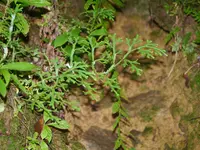
Gently pin longer shoots to the soil surface with small, rust-proof plant clips or bent wire so they form new roots along the stem and fill in bare patches faster.

Moss-Compatible Topdressing

Topdress the soil with a thin layer of fine, rinsed orchid bark or horticultural grit to keep the surface evenly moist without becoming muddy, which helps prevent delicate stems from rotting at the base.

Sectional Rejuvenation

If older centers thin out, cut and replant the healthiest, still-vigorous edge sections into fresh substrate, treating them like divisions to renew the planting every 1–2 years.

Consistent Microclimate Setup

Place the pot in a stable microclimate such as inside a terrarium, plant cabinet, or under a clear humidity dome with side vents, which reduces stress from drafts and room air fluctuations when caring for Doederlein's Spikemoss.

Common Pests and Diseases

Spider mites

This pest thrives in the warm, dry air that often stresses Selaginella and feeds on tender foliage, causing pale, stippled fronds and fine webbing. Symptoms include slowed growth, bronzing, and eventual frond dieback if populations are high.

Solution

Rinse foliage thoroughly under lukewarm water, including the undersides of fronds, then raise humidity to 60–80% while avoiding direct heat. If needed, repeat washes and apply an insecticidal soap or horticultural oil labeled for mites, ensuring good coverage and improving overall Selaginella doederleinii care conditions to reduce future outbreaks.

Fungus gnats

These insects are attracted to the constantly moist substrates used for Selaginella and their larvae feed on algae, decaying matter, and fine roots. Symptoms include tiny black flies around the pot, surface mold, and weakened, yellowing stems in severe infestations.

Solution

Allow only the top 0.5–1 cm of the substrate to dry slightly between waterings while keeping the deeper layer evenly moist, and remove any decaying plant debris from the pot surface. Use yellow sticky traps to catch adults and, if needed, drench the substrate with a biological control such as Bacillus thuringiensis israelensis (BTI) following label directions.

Botrytis blight

This disease develops easily on dense, moisture-loving mats of foliage when air is stagnant and humidity is high, leading to soft, brown lesions and gray fuzzy mold on stems and leaves. Symptoms include collapsing fronds, especially in the center of the clump, and rapid spread in cool, damp conditions.

Solution

Promptly remove and discard all affected fronds, then increase air movement around the plant without exposing it to drafts and avoid wetting foliage when watering. Reduce overcrowding in the pot, clean away fallen debris, and if conditions remain favorable for the disease, apply a suitable fungicide labeled for botrytis according to directions.

Rhizoctonia stem rot

This disease attacks stems at or just above the soil line in very wet, poorly aerated substrates, causing brown, constricted lesions and sudden wilting or collapse of shoots. Symptoms include thinning mats of growth, blackened stem bases, and a musty odor from the potting mix.

Solution

Cut out and discard affected shoots, then improve drainage by using a fine but well-aerated substrate and avoiding waterlogged conditions. Water lightly but frequently to keep the mix evenly moist rather than saturated, and in severe cases repot into fresh sterile mix and treat with an appropriate fungicide drench if available.

Scale insects

These insects attach to stems and sometimes leaf bases, sucking sap and excreting sticky honeydew that can lead to sooty mold. Symptoms include small brown or off-white bumps on stems, localized yellowing, and general loss of vigor in dense or older plantings.

Solution

Gently scrape or wipe off visible scales with a cotton swab dipped in isopropyl alcohol, taking care not to tear the delicate stems. Repeat spot treatments weekly and, for larger infestations, use insecticidal soap or horticultural oil with thorough coverage, while maintaining stable humidity and avoiding plant stress to support recovery.

Interesting Facts

Creeping cliff specialist

This species naturally grows on shaded cliffs, rocks, and vertical surfaces in humid forests of East and Southeast Asia, forming dense trailing mats that can hang down over stone faces.

Dimorphic leaf pattern

Its small scale-like leaves are arranged in two distinct lateral rows and a different set on the upper side of the stem, a dimorphic pattern typical of some spikemosses that gives the shoots a flattened, fern-like look.

Ancient lineage survivor

As a lycophyte, this plant belongs to one of the oldest vascular plant lineages, with ancestors that were part of Earth’s forests long before flowering plants evolved, making Selaginella doederleinii plant care a window into very early plant evolution.

FAQs about Doederlein's Spikemoss

This species grows well both indoors and outdoors if humidity and moisture stay consistently high. Indoors it prefers a terrarium-like environment. Outdoors it suits shaded, frost-free, sheltered spots with evenly moist soil and protection from drying winds.

Grow Healthy Plants with Botan Care

Keep your plants happy and healthy with plant identification, disease detection, and easy care guidance.

Botan plant care app — identify plants on mobile

Explore More Plants