Substrate Pre‑Roughening
Before planting, lightly score or roughen hard surfaces like rock, brick, or compacted wood so the moss rhizoids can anchor more securely and form a stable carpet.

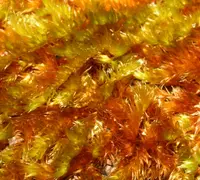
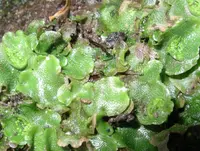
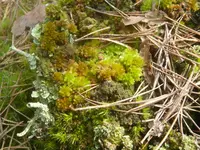
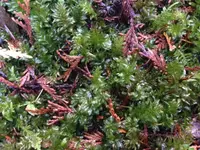
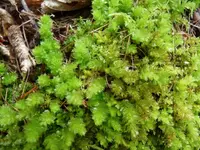
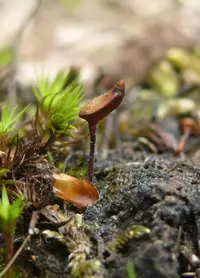
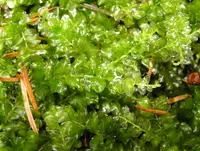
Bronze moss (Sematophyllum homomallum) is a creeping moss that forms soft, low mats with fine, bronze-green to yellowish stems and leaves. It often gives rocks, logs, and soil a warm, metallic sheen.
This species is commonly found in temperate forests, growing on shaded, moist surfaces such as tree bases, rotting wood, and humus-rich soil. It spreads by short stems that root as they go, creating dense, cushion-like patches.
Bronze moss is generally considered adaptable and not demanding, which makes it suitable for terrariums, shaded dish gardens, and naturalistic vivarium setups. Those who want to care for Bronze Moss should provide steady moisture, soft light, and a stable, cool to mild environment.

Care Difficulty
Moderate Care

Light Preference
Shade

Water Requirements
Keep Soil Moist

Temperature Preference
Cool Climate

Hardiness Zone
Unknown

Soil Texture
Loamy, Silty, Organic-rich

Soil pH
Strongly acidic (4.5–5.5), Acidic (5.5–6.5)

Soil Drainage
Moist but well-drained

Fertilization
Minimal (feed rarely)
Scan your plant to receive care tips personalized for your specific plant
Available on iOS and Android
This moss prefers low to moderate, forest-like light that mimics its natural habitat on shaded rocks and logs.
This moss thrives in consistently moist conditions but suffers if kept either waterlogged or bone dry.
This species prefers cool to mild conditions that resemble a shaded woodland floor.
This moss prefers consistently moist air and benefits from elevated humidity.
This moss thrives on moist, airy, organic-rich substrates rather than dense mineral soils.
This species can adapt to container culture when moisture and stability are carefully managed.
This moss has low nutrient demands and usually grows well without supplemental fertilizer in outdoor, soil-based settings.
Sematophyllum homomallum needs only light, corrective pruning to keep mats even and healthy.
Transplanting is mainly needed when colonies outgrow a display surface or when growth becomes patchy.
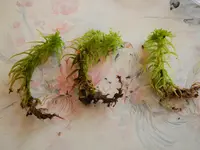
Propagation of this moss is straightforward and usually done by vegetative division rather than spores.
This moss is generally cold hardy in temperate climates and needs little specific winter care outdoors.

Plant Health Check
Not sure what's wrong with your plant? Check your plant's health inside the app.
This species often forms loose, glossy mats on decaying logs and shaded soil in temperate forests, helping to stabilize the forest floor and retain surface moisture around tree roots and seedlings.
Sematophyllum homomallum is one of the mosses most frequently reported from shaded brick, stone, and concrete in cities, showing a strong tolerance for slightly elevated pollution and human disturbance compared to many more sensitive mosses.
Its creeping stems anchor with many small rhizoids, allowing the moss to cling to rough, vertical substrates like tree bark and masonry while still spreading laterally to exploit new moist microhabitats.
Growth is slow to moderate. New patches usually expand a few cm per year, faster in consistently moist, cool conditions. On rocks or compacted soil it spreads more slowly because anchoring and nutrient uptake are more limited.
Keep your plants happy and healthy with plant identification, disease detection, and easy care guidance.