Moss-like Mounting
Grow small mats on rough lava rock, cork, or porous bricks placed in shallow trays so the creeping shoots can anchor firmly and form an even, cushion-like cover that stays evenly moist without waterlogging.

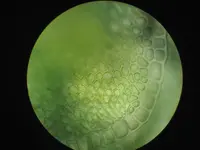
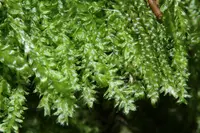
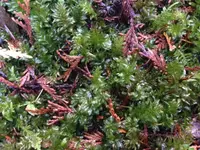
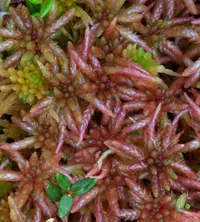
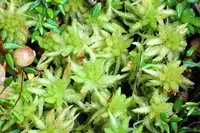
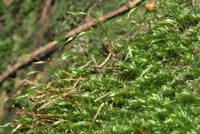
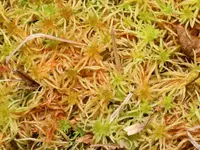
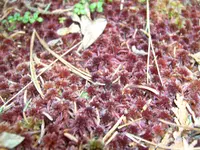
Crenulated flapwort (Solenostoma gracillimum) is a tiny leafy liverwort, a non-vascular plant that forms soft, low cushions or mats on damp surfaces. Its delicate, overlapping shoots create a fine, moss-like texture close to the ground.
In nature, it occurs in cool, moist habitats, often on wet soil, rock, or rotting wood in shaded woodlands and along streams. It prefers stable humidity and is sensitive to drying out, which can make it challenging for beginners.
For those learning how to care for Crenulated Flapwort, it generally favors low to medium light, constant moisture, and a loose, neutral to slightly acidic substrate with good aeration.

Care Difficulty
Hard Care

Light Preference
Shade

Water Requirements
Keep Soil Moist

Temperature Preference
Cool Climate

Hardiness Zone
Unknown

Soil Texture
Silty, Peaty, Organic-rich

Soil pH
Strongly acidic (4.5–5.5)

Soil Drainage
Waterlogged tolerant

Fertilization
Minimal (feed rarely)
Scan your plant to receive care tips personalized for your specific plant
Available on iOS and Android
This small liverwort prefers low to moderate light similar to a shaded forest floor.
This moisture-loving liverwort needs a consistently damp but not stagnant substrate.
This species prefers cool, stable conditions typical of shaded, moist woodland or streamside habitats.
This small liverwort needs consistently high humidity to thrive indoors and in terraria.
Solenostoma gracillimum grows best on constantly moist, fine-textured, organic-rich substrates rather than typical potting soil.
This species is well suited to shallow trays, terraria, and dish-style containers rather than deep pots.
This small liverwort has very low nutrient demand, so fertilizing Solenostoma gracillimum must be done sparingly to avoid damage.
Pruning Solenostoma gracillimum is minimal and mainly supports clean, compact mats of growth.
This liverwort is usually grown as a ground or substrate cover, so management focuses on careful transplanting rather than frequent repotting.
Propagation of Solenostoma gracillimum is straightforward using small vegetative pieces rather than seed.
In mild to cool temperate climates this liverwort is fairly cold tolerant and usually needs little explicit winter care.

Plant Health Check
Not sure what's wrong with your plant? Check your plant's health inside the app.
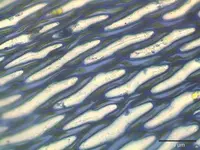
This species is a very small leafy liverwort typically forming thin, prostrate mats made of delicate, flat shoots only a few millimeters wide, which can be hard to distinguish from algae or mosses without close inspection.
It often grows on constantly damp, shaded rock faces, soil banks, and streamside surfaces, where it can tolerate intermittent water flow and film-like moisture that many mosses and vascular plants cannot endure.
The species relies on spores produced in tiny, often slightly curved capsules that develop close to the substrate, a growth form that helps protect reproductive structures from being dislodged by flowing water and surface wash on wet rocks.
This liverwort usually forms small, creeping mats and spreads slowly by short shoots and fragments. In cultivation it rarely becomes aggressive and is easy to keep in bounds with occasional trimming or by limiting the area of moist substrate.
Keep your plants happy and healthy with plant identification, disease detection, and easy care guidance.