Offset management
Gently twist off well-rooted offsets in late spring and replant them slightly apart to prevent overcrowding and maintain good air flow through the mat of rosettes.

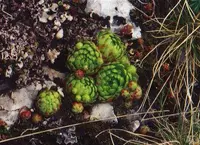
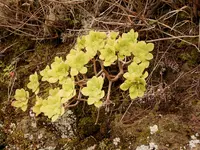
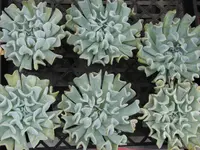
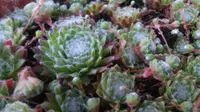
Rolling Hen-and-chicks (Sempervivum globiferum) is a hardy, evergreen succulent from mountainous regions of central and southern Europe. It forms tight rosettes that produce many small, marble-like offsets that roll away from the mother plant. The plant stays low and compact, often used in rock gardens, troughs, and shallow containers, where it creates dense, sculptural mats over time. Thick, water-storing leaves and a strong tolerance of poor, shallow soils make it a low-maintenance choice. It generally prefers bright light, good drainage, and dry to slightly moist conditions. Beginners often find it easy to care for Rolling Hen-and-chicks once it is placed in a sunny, well-drained spot.

Care Difficulty
Easy Care

Light Preference
Full Sun

Water Requirements
Low Water

Temperature Preference
Cold Hardy

Hardiness Zone
4–9

Soil Texture
Sandy, Loamy, Rocky

Soil pH
Slightly acidic (6.5–7.0), Neutral (7.0)

Soil Drainage
Well-drained

Fertilization
Minimal (feed rarely)
Scan your plant to receive care tips personalized for your specific plant
Available on iOS and Android
This alpine succulent prefers bright outdoor conditions with several hours of direct sun daily.
This species is drought-tolerant and prefers infrequent, deep watering in fast-draining soil.
This hardy succulent tolerates wide temperature swings but grows best in cool to mild conditions.
Humidity is rarely a concern, as this succulent prefers dry air similar to outdoor conditions.
This alpine succulent needs very fast-draining, mineral-rich soil to prevent root and crown rot.
This species is very suitable for container growing, especially in shallow, well-drained bowls or troughs.
Sempervivum globiferum thrives in lean soil and needs very little feeding for healthy growth.
Pruning needs are minimal, mainly focused on cleanliness and maintaining compact rosettes in Sempervivum globiferum.
This hardy succulent rarely needs frequent repotting but benefits from division and transplanting when mats become crowded.
This species is most commonly multiplied by offsets, making caring for Rolling Hen-and-chicks straightforward for home gardeners.
Sempervivum globiferum is cold hardy and usually requires minimal winter care in the ground.

Plant Health Check
Not sure what's wrong with your plant? Check your plant's health inside the app.
This species forms numerous small offset rosettes that detach and roll away from the mother plant, a clonal spread strategy that helps it quickly colonize bare, stony ground in its native European mountain habitats.
Natural populations often grow on sunny, rocky slopes and limestone outcrops in subalpine and alpine zones, where they tolerate high UV radiation, large daily temperature swings, and thin, nutrient-poor soils.
Each rosette is monocarpic, meaning it flowers once and then dies, but it usually produces many offsets beforehand, so the colony persists even though individual rosettes are short-lived.

In some European mountain regions, different color forms and micro-populations of Sempervivum globiferum show strong local adaptation to very specific rock types and exposures, so distinct-looking cushions can occur only a few meters apart yet remain genetically and ecologically specialized to their particular niche.
This species spreads steadily by producing many small offsets that roll away from the mother rosette. It forms dense mats over time but is shallow-rooted and easy to lift or redirect, so it is not difficult to control.
Keep your plants happy and healthy with plant identification, disease detection, and easy care guidance.