

Encourage Tight Rosettes
Plant offsets slightly crowded on lean, gravelly topdressing so the rosettes stay compact and form a dense mat instead of stretching apart.

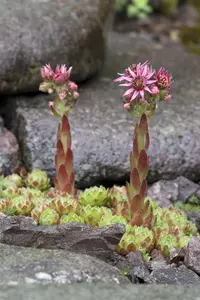
Sempervivum minutum is a small, rosette-forming succulent in the stonecrop family, often called a houseleek or hens-and-chicks type plant. It forms tight clusters of tiny, fleshy leaves that can show green, red, or bronze tones depending on light and temperature.
This species is native to rocky, mountainous habitats in parts of Europe, where it grows in shallow, well-drained crevices. Its compact form and drought tolerance make it a low-maintenance choice for rock gardens, troughs, and small containers.
Because it handles poor soils, sun, and short dry spells, it is considered easy to grow for beginners. Understanding how to care for Sempervivum minutum mainly involves providing strong light, very free-draining soil, and avoiding constant moisture around the roots.

Care Difficulty
Easy Care

Light Preference
Full Sun

Water Requirements
Low Water

Temperature Preference
Cold Hardy

Hardiness Zone
4–9

Soil Texture
Sandy, Loamy, Rocky

Soil pH
Slightly acidic (6.5–7.0), Neutral (7.0)

Soil Drainage
Well-drained

Fertilization
Minimal (feed rarely)
Scan your plant to receive care tips personalized for your specific plant
Available on iOS and Android
This alpine succulent thrives with bright, direct light and copes well with outdoor conditions in full sun.
This drought-tolerant succulent prefers infrequent, deep watering and fast-drying soil.
This hardy species tolerates a wide temperature range but grows best in cool to mild conditions.
This alpine succulent prefers dry air and does not need extra humidity.
This species needs very fast-draining, mineral-based soil to prevent root and crown rot.
This species is very suitable for container growing, especially in shallow, wide pots and troughs.
This alpine succulent needs minimal feeding, as Sempervivum minutum is adapted to poor, rocky soils.
Pruning needs are low, mainly to keep rosettes clean and healthy.
This species suits shallow, gritty containers or rock gardens and dislikes frequent disturbance.
New plants are most often produced from offsets rather than seed, making increase straightforward.
This hardy succulent tolerates significant frost and usually needs little special winter care outdoors.

Plant Health Check
Not sure what's wrong with your plant? Check your plant's health inside the app.
This species forms very small, tight rosettes, often only about 1 cm across, adapted to fit into narrow rock crevices in its native European mountain habitats.
Its roots grow into fine cracks of siliceous rocks, where freeze–thaw cycles and root expansion can gradually widen fissures and contribute to slow rock breakdown.
Each rosette is monocarpic, meaning it dies after flowering, but in this species the mother rosette usually produces dense clusters of small offsets beforehand that quickly fill the gap it leaves.
This species spreads slowly by producing small offsets around the mother rosette. It forms a tight mat over time but is not considered aggressive. Regularly removing excess offsets controls spread in small rock gardens or containers.
Keep your plants happy and healthy with plant identification, disease detection, and easy care guidance.

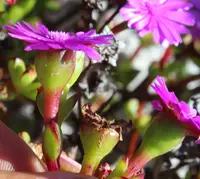
Satin Spoonfig
Erepsia inclaudens
Crassula natalensis
Crassula natalensis
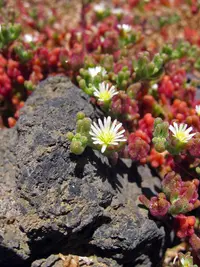
slenderleaf iceplant
Mesembryanthemum nodiflorum
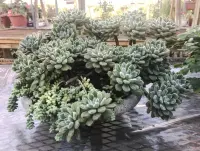
Mexican Firecracker
Echeveria setosa
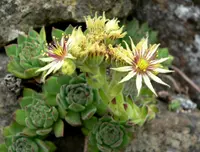
yellow-flowered houseleek
Sempervivum grandiflorum
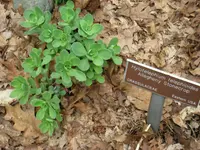
Allegheny stonecrop
Hylotelephium telephioides

Apple Cactus
Cereus repandus
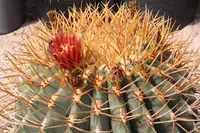
Santa Catalina barrel cactus
Ferocactus diguetii