

Offset management
Lift and gently twist off well-rooted offsets in late spring, then replant them slightly apart to maintain rosette size, airflow, and a dense but not overcrowded mat.

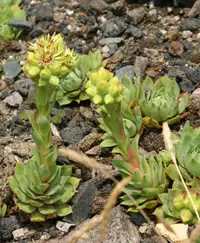
Yellow houseleek (Sempervivum wulfenii) is a compact, evergreen succulent forming tight rosettes of fleshy, often green to yellow‑tinted leaves. It produces short flower stalks with star-shaped yellow blooms that attract pollinators and add seasonal interest.
This species is native to rocky, mountainous areas of central and southeastern Europe, where it grows in crevices with excellent drainage and high light. Its natural adaptation to poor, dry soils makes it a low-maintenance choice for rock gardens, containers, and green roofs.
Understanding how to care for yellow houseleek mainly involves providing strong light, gritty, free-draining soil, and avoiding prolonged excess moisture around the roots.

Care Difficulty
Easy Care

Light Preference
Full Sun

Water Requirements
Low Water

Temperature Preference
Cold Hardy

Hardiness Zone
4–9

Soil Texture
Sandy, Loamy, Rocky

Soil pH
Slightly acidic (6.5–7.0), Slightly alkaline (7.0–7.5)

Soil Drainage
Well-drained

Fertilization
Minimal (feed rarely)
Scan your plant to receive care tips personalized for your specific plant
Available on iOS and Android
This hardy succulent needs strong light to maintain compact rosettes and healthy color.
This species prefers infrequent, deep watering with very fast-draining soil.
This cold-hardy succulent tolerates wide temperature swings once established.
This species prefers dry air and does not need added humidity beyond typical indoor levels.
This plant needs very fast-draining, mineral-rich soil to prevent root and crown rot.
This species is very suitable for container growing outdoors.
Sempervivum wulfenii grows well in lean soil and needs only minimal feeding for container culture.
Pruning needs for Sempervivum wulfenii are minimal and focus on hygiene rather than shaping.
Yellow houseleek is slow-growing and rarely needs frequent repotting, but occasional transplanting can refresh its environment.
Sempervivum wulfenii is commonly propagated by offsets rather than seed for quicker, reliable results.
This hardy succulent tolerates typical outdoor winters in many temperate regions with minimal intervention.

Plant Health Check
Not sure what's wrong with your plant? Check your plant's health inside the app.
This species is naturally restricted to limestone and dolomitic rock outcrops in the southeastern Alps, where it forms tight cushions in very shallow, mineral soils with high calcium content.
Unlike many related houseleeks that stay mostly green or reddish, this plant develops noticeably yellow-green rosettes, especially in strong sun, which helps distinguish it from other alpine Sempervivum species.
Its natural distribution is limited to parts of Austria, Slovenia, and neighboring regions, which makes wild populations sensitive to habitat disturbance and collection pressure.
This species usually flowers only after rosettes mature, which can take several years. Lack of strong light, very nutrient-rich soil, or excessive watering can delay flowering. After blooming, the flowering rosette naturally dies while offsets continue growing.
Keep your plants happy and healthy with plant identification, disease detection, and easy care guidance.

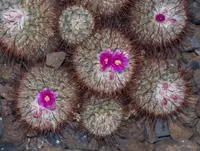
Silken Pincushion Cactus
Mammillaria bombycina
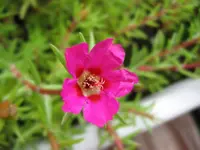
Moss Rose
Portulaca grandiflora
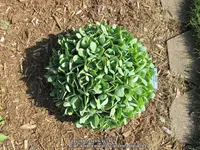
Sedum
Hylotelephium spectabile 'Neon'
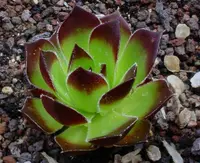
hen and chickens
Sempervivum heuffelii
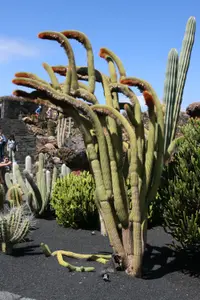
Vatricania
Vatricania guentheri
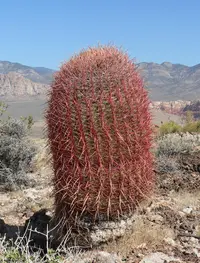
California barrel cactus
Ferocactus cylindraceus
Mesembryanthemum resurgens
Mesembryanthemum resurgens
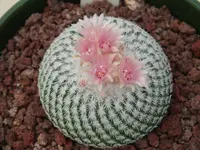
pingpong-ball cactus
Epithelantha micromeris