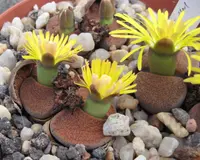
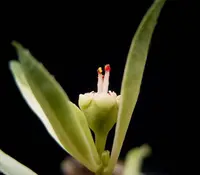
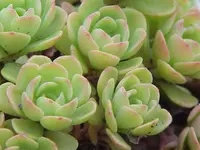
Hairy-legs groundsel Care (Senecio esleri)

Hairy-legs groundsel

About Hairy-legs groundsel

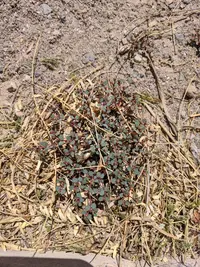
Hairy-legs groundsel (Senecio esleri) is a small, clumping perennial from South Africa, valued mainly as an unusual foliage plant. It typically forms compact mounds of finely divided, hairy leaves that give it a soft, silvery appearance.

In its natural habitat, it grows in sunny, open sites with well-drained, often rocky soils. These traits make it generally suited to dry, bright conditions and container culture. When learning how to care for Hairy-legs groundsel, the key points are good light, free-draining soil, and protection from prolonged wet or cold conditions.

Main Plant Requirements

Care Difficulty

Moderate Care

Light Preference

Partial Sun

Water Requirements

Low Water

Temperature Preference

Warm Climate

Hardiness Zone

10–11

Soil Texture

Sandy, Loamy, Rocky

Soil pH

Slightly acidic (6.5–7.0), Neutral (7.0)

Soil Drainage

Well-drained

Fertilization

Minimal (feed rarely)

Get Personalized Care Plan

Scan your plant to receive care tips personalized for your specific plant

Available on iOS and Android

How to Care for the Hairy-legs groundsel

This succulent prefers bright, direct to lightly filtered sun for compact, healthy growth.

  • Provide 4–6 hours of direct morning sun, then bright filtered or dappled light for the rest of the day to prevent leaf scorch.
  • Tolerates light afternoon sun in cooler coastal climates, but in hotter regions give shade after 11 a.m. to avoid bleaching and shriveling.
  • Outdoors, position Hairy-legs groundsel where winter sun is unobstructed; if grown in partial shade, expect slower growth and more stretched stems.

Watering should mimic dry, rocky habitats with brief soakings and thorough drying in between.

  • Allow the top 3–5 cm of soil to dry completely before watering, then soak the root zone so excess drains away quickly.
  • In spring and summer, expect to water more often as long as the soil dries between each cycle; in fall and winter, reduce sharply or pause during cool, low-light spells.
  • Watch for mushy, translucent leaves or a sour soil smell as signs of overwatering, and wrinkled, limp leaves plus very light pots as signs of underwatering in Senecio esleri.

This species prefers warm, dry conditions and reacts poorly to prolonged cold or frost.

  • Aim for daytime temperatures of 65–80°F (18–27°C) for active growth, with slightly cooler nights around 55–65°F (13–18°C).
  • Protect from frost; damage often occurs below 32°F (0°C), and plants may die if exposed for several hours, especially in wet soil.
  • It tolerates short hot spells up to about 90–95°F (32–35°C) if shaded during peak afternoon sun and given good air movement to limit heat stress.

This species prefers relatively dry air and usually does not need special humidity management indoors.

  • Aim for 30–50% humidity, similar to most heated homes, as higher levels can increase rot risk on leaves and stems.
  • Hairy-legs groundsel tolerates drier air; if humidity drops below 25%, monitor more closely for faster soil drying rather than leaf damage.
  • Watch for soft, mushy stems or blackened leaf bases, which indicate excess humidity combined with poor air movement, and increase ventilation instead of adding moisture.

Senecio esleri needs a very free-draining, mineral-lean substrate to prevent root and stem rot.

  • Use a gritty mix such as 50–60% inorganic material (pumice, coarse perlite, or grit) blended with 40–50% lean cactus potting mix or sandy loam.
  • Keep soil structure open and airy; any mix that compacts or stays wet for longer than 2–3 days after watering is unsuitable.
  • A slightly acidic to neutral pH around 6.0–7.0 supports nutrient uptake without increasing salt stress in this drought-adapted species.
  • Avoid peat-heavy, water-retentive, or clay-rich soils; lighten dense mixes by adding coarse sand or small gravel to improve drainage channels around the roots.

This species is well suited to container culture, especially in small, fast-draining pots.

  • Choose a shallow, wide container that matches its spreading root system, which helps the mix dry evenly and limits waterlogging at the base of stems.
  • Select unglazed terracotta if extra evaporation is needed, as it allows moisture to escape faster than plastic or glazed ceramic.
  • Place the container where it cannot be easily knocked over, since the trailing and slightly top-heavy growth can shift the center of gravity as stems elongate.

Senecio esleri is a modest feeder that benefits from light, consistent nutrition during active growth.

  • Use a balanced liquid fertilizer (for example 10-10-10) at 1/4–1/2 strength for Hairy-legs groundsel.
  • Feed every 4–6 weeks in spring and summer while growth is active.
  • Avoid fertilizing in late fall and winter when growth slows or stops.
  • Skip organic compost-heavy mixes in pots, as they retain too much moisture and can cause root problems.

Pruning Senecio esleri helps maintain a compact, healthy form and removes weak growth.

  • Best time for pruning is late winter to early spring before strong new growth starts.
  • Remove dead, damaged, leggy, or crossing stems with sharp, clean scissors or pruners.
  • Shortening overly long shoots encourages branching and denser foliage.
  • Pinch soft tips during the growing season to refine shape and prevent tangling.

This plant prefers slightly snug conditions and only needs infrequent repotting or transplanting.

  • Repot or transplant every 2–3 years, or when roots circle the pot and growth slows.
  • Aim for early spring, just before vigorous growth, to help quick recovery from root disturbance.
  • Choose a shallow, well-draining container or bed with gritty, cactus-type mix to limit waterlogging.
  • Handle roots gently, tease apart tight coils, and water lightly after moving to reduce stress and rot risk.

Senecio esleri is commonly multiplied using stem cuttings taken during the growing season.

  • Take 5–10 cm non-flowering stem cuttings in late spring or summer and remove lower leaves.
  • Allow cut ends to dry and callus for 1–2 days to reduce rot risk.
  • Insert cuttings into a gritty, barely moist succulent mix and keep in bright, indirect light.
  • Maintain warm temperatures around 68–75°F and minimal watering until new roots and growth appear.

This succulent is not very frost tolerant and needs protection in colder climates.

  • In regions below about 30°F, grow in containers and move indoors before hard frost.
  • Provide a cool, bright indoor spot and keep soil almost dry during winter dormancy.
  • Outdoors in mild zones, use a light gravel mulch to insulate the root zone and improve drainage.
  • Avoid overhead watering in cold weather to limit stem damage and fungal problems.

Care Tips

Stabilize Hanging Stems

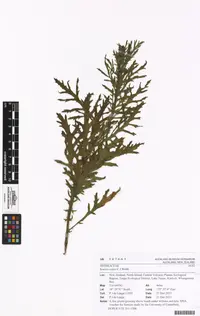
Use a shallow, heavy pot or hanging basket and gently loop longer stems back onto the soil surface so they root at the nodes, creating a denser, more stable mat of growth that is less likely to snap under its own weight.

Encourage Compact Growth

Pinch back soft stem tips with clean fingers or scissors at the start of the growing season to promote branching and a fuller plant instead of a few long, sparse runners.

Targeted Pest Checks

Inspect the undersides of leaves and along the stems every 2–3 weeks with a hand lens, since the fine hairs can hide early mealybug or spider mite infestations that are easier to control when caught early.

Controlled Propagation Strategy

Take several short, 5–7 cm cuttings from different parts of the plant once per year rather than one large cutting session, which spreads the stress out over time and keeps the mother plant looking balanced as you grow Senecio esleri.

Rotate For Even Form

Turn the pot 90° every 2–3 weeks so all sides receive similar light exposure, which helps prevent the trailing stems from leaning strongly to one side and keeps the plant symmetrical.

Common Pests and Diseases

Mealybugs

This pest commonly settles in leaf joints and along the fuzzy stems, sucking sap and causing stunting and leaf yellowing.

Solution

Isolate the plant, then dab visible insects with cotton swabs dipped in 70% isopropyl alcohol and gently wipe the stems and leaf bases; repeat weekly until no new pests appear and reduce excess nitrogen fertilization that encourages soft, vulnerable growth.

Aphids

These insects cluster on tender new shoots and flower stalks, feeding on sap and causing distorted growth and sticky honeydew on the foliage.

Solution

Rinse the plant under a gentle but thorough stream of lukewarm water to dislodge colonies, then follow up with insecticidal soap or a dilute neem oil spray every 7–10 days, keeping the plant in bright, airy conditions to discourage reinfestation.

Spider mites

This pest thrives on Hairy-legs groundsel in warm, dry indoor air, causing fine webbing, dull foliage, and tiny pale stippling on the leaves.

Solution

Increase humidity slightly around the plant without overwatering, rinse stems and foliage thoroughly, and apply insecticidal soap to all leaf surfaces, repeating several times while improving airflow and avoiding very dry, hot spots near heaters or vents.

Powdery mildew

This disease appears as white, powdery patches on leaves and stems, which can reduce photosynthesis and cause gradual decline in vigor.

Solution

Remove heavily affected leaves, improve spacing and airflow around the plant, avoid overhead watering, and apply a sulfur-based or potassium bicarbonate fungicide according to label directions if the infection continues to spread.

Interesting Facts

Distinct hairy foliage

This species forms trailing stems with thick, linear leaves covered in fine hairs, which reduce water loss and reflect strong light in its native habitat.

South African origin

It is native to arid or semi-arid regions of South Africa, where it grows in rocky, well-drained sites and experiences strong sun and irregular rainfall.

Daisy family member

This succulent belongs to the Asteraceae, the daisy family, and produces small composite flower heads that follow the typical structure of this group, with many tiny florets packed together.

FAQs about Hairy-legs groundsel

Lack of flowers usually results from insufficient light intensity, nutrient imbalance, or stress from repeated repotting or pruning. Ensure bright conditions, avoid heavy feeding with high-nitrogen fertilizer, and allow the plant a stable period to form buds.

Grow Healthy Plants with Botan Care

Keep your plants happy and healthy with plant identification, disease detection, and easy care guidance.

Botan plant care app — identify plants on mobile

Explore More Plants