casia amarilla Care (Senna spectabilis)

Also known as: whitebark senna, Scented Cassia
casia amarilla

About casia amarilla

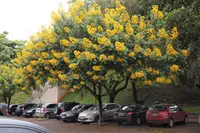
Casia amarilla, correctly known as Senna spectabilis, is a fast-growing small tree or large shrub from tropical regions of Central and South America. It is often grown for its bright yellow flower clusters that cover the branches in warm seasons, giving a strong ornamental impact in streetscapes and larger gardens.

This species has a rounded, open crown with pinnate leaves that drop in cooler or very dry conditions. In suitable climates it can spread quickly and may self-seed aggressively.

Senna spectabilis prefers full sun, warmth, and well-drained soil, which makes it easier to manage in tropical and subtropical areas. Understanding how to care for casia amarilla helps prevent unwanted spreading while keeping the plant healthy and floriferous.

Main Plant Requirements

Care Difficulty

Moderate Care

Light Preference

Full Sun

Water Requirements

Moderate Water

Temperature Preference

Tropical / Frost Sensitive

Hardiness Zone

9–11

Soil Texture

Sandy, Loamy, Organic-rich

Soil pH

Acidic (5.5–6.5), Slightly acidic (6.5–7.0)

Soil Drainage

Well-drained

Fertilization

Minimal (feed rarely)

Get Personalized Care Plan

Scan your plant to receive care tips personalized for your specific plant

Available on iOS and Android

How to Care for the casia amarilla

This fast-growing tropical tree needs abundant direct sun to flower and develop a strong canopy.

  • Provide 6–8 hours of full sun daily; morning and early afternoon sun give the best flowering for casia amarilla.
  • In very hot inland climates, allow light afternoon shade to reduce leaf scorch, especially on young or newly planted trees.
  • Avoid planting under dense shade; sparse flowering, elongated shoots, and thin foliage indicate the site is too dim and the tree should be moved or surrounding shade reduced.

This species prefers evenly moist, well-drained soil while establishing, then becomes moderately drought tolerant.

  • Water deeply when the top 5–8 cm of soil is dry, focusing on slow soaking that reaches at least 20–30 cm into the root zone.
  • Reduce watering in cool or rainy seasons to prevent soggy soil; yellowing leaves and soft stems suggest overwatering and poor aeration.
  • During hot, dry spells, especially in the first 2–3 years, increase frequency if leaves wilt midday and do not recover by evening.

This tropical tree grows best in consistently warm, frost-free climates.

  • Optimal growth occurs around 70–90°F (21–32°C); flowering and canopy development slow noticeably below this range.
  • The tree is frost sensitive and typically damaged below 30°F (-1°C); young plants may die at brief exposure near 28°F (-2°C).
  • Mature specimens tolerate short hot spells up to about 100°F (38°C) if soil moisture is maintained, but extended heat and hot, dry winds can cause leaf scorch and reduced flowering.

Senna spectabilis handles a wide humidity range but grows best with moderately moist air.

  • Aim for 40–60% humidity; the plant tolerates drier air but prefers the mid-range for lush foliage when caring for casia amarilla.
  • Dry indoor air may cause leaf edge browning, curling, and premature leaf drop as humidity stress signs.
  • Increase humidity by grouping plants outdoors on sheltered patios, placing water trays nearby, or using a humidifier in very dry climates.

Senna spectabilis prefers free-draining, moderately fertile soil that does not stay wet after watering or rain.

  • Use a loamy or sandy base with visible structure, mixing roughly 50–60% garden loam with 20–30% coarse sand and 20–30% compost.
  • Ensure rapid drainage; excess water should pass through within seconds, so add coarse sand or fine gravel if water lingers on the surface.
  • Keep pH slightly acidic to neutral, around 6.0–7.5, avoiding highly alkaline or strongly acidic conditions that can limit nutrient uptake.
  • Improve aeration in heavy clay by raising the planting area and blending in coarse materials such as grit, pine bark fines, or perlite, avoiding compacted spots.

This species can be grown in large containers if the pot provides enough room and stability for its vigorous root system.

  • Choose a deep, heavy pot that resists tipping as the plant gains height and develops a broad canopy.
  • Select thick-walled terracotta or similar porous material to prevent waterlogged roots yet moderate rapid drying in hot conditions.
  • Raise the container on pot feet or bricks so drainage holes clear the ground, allowing fast runoff and preventing water from pooling at the base.

Senna spectabilis benefits from moderate feeding to support fast growth and abundant flowering.

  • Use a balanced NPK fertilizer (such as 10-10-10) or well-rotted compost for trees, following casia amarilla care instructions for nutrient needs.
  • Feed every 4–6 weeks during the warm growing season, adjusting for soil fertility and plant vigor.
  • Apply fertilizer at half the label strength, keeping granules or solution away from direct contact with the trunk.
  • Stop feeding in late fall and do not fertilize in winter, especially in cooler climates or when growth slows.

Senna spectabilis responds well to structured pruning that manages size and encourages flowering wood.

  • Carry out main pruning at the end of winter or very early spring, before strong new growth starts.
  • Remove dead, diseased, or storm-damaged branches first, cutting back cleanly to healthy wood with sharp bypass pruners or a saw.
  • Thin crowded interior branches to improve light penetration and airflow, which supports healthier foliage and flowers.
  • Shorten overly long shoots to shape the canopy and maintain a strong framework, avoiding drastic cuts in a single year.

This fast-growing tree is usually transplanted outdoors rather than kept long term in containers.

  • Plan transplanting for late spring once soil has warmed and the risk of frost has passed, minimizing shock to Senna spectabilis.
  • Look for signs such as roots circling the pot, water running straight through, or slowed growth to decide when to move young trees.
  • Dig a wide planting hole, loosen circling roots gently, and set the root ball at the same depth as in the container.
  • Water deeply after transplanting, then keep soil evenly moist and shade the tree lightly for 1–2 weeks to reduce stress.

Senna spectabilis is most commonly propagated from seed, which allows production of many young plants at once.

  • Collect mature, dry seed pods and remove seeds, discarding any that are damaged or moldy.
  • Scarify hard seed coats lightly with sandpaper, then soak seeds in warm water for 12–24 hours to improve germination.
  • Sow in spring into a free-draining seed mix, keep at 70–80°F, and maintain light, even moisture.
  • Provide bright light and good air circulation for seedlings, then pot up individually once roots fill small cells or plugs.

This tropical to subtropical tree has low frost tolerance and needs protection in regions with cold winters.

  • In the ground, add a 5–8 cm layer of mulch around the root zone in late fall, keeping it slightly away from the trunk.
  • In climates with light frost, wrap young trunks with breathable frost cloth to reduce freezing injury.
  • Grow container plants in large pots and move them indoors or into a heated greenhouse before temperatures fall below 40°F.
  • Keep overwintered plants on the dry side, watering just enough to prevent the root ball from fully drying.

Care Tips

Root-zone mulching

Apply a 5–8 cm layer of coarse organic mulch around the drip line, keeping it 5–10 cm away from the trunk, to stabilize soil moisture, reduce weed competition, and protect the shallow feeder roots that support vigorous flowering.

Wind-safe staking

In very windy or exposed sites, install 2–3 low, flexible stakes with soft ties for the first 1–2 years to steady the young trunk while still allowing some movement that encourages strong wood formation.

Canopy training

During the first 3–4 years, selectively remove or shorten steep, crossing, or low branches after flowering to build a balanced, open canopy that lets light reach inner shoots and reduces the risk of storm damage.

Seed pod management

If self-seeding is a concern, remove developing seed pods before they fully mature and dry, which limits unwanted seedlings and directs the plant’s energy into new vegetative growth.

Dry-season planning

In climates with a distinct dry season, schedule any major transplanting, structural pruning, or soil amendment work for late dry to early wet season to reduce stress and support strong recovery when growing casia amarilla.

Common Pests and Diseases

Leaf-feeding caterpillars

This pest commonly attacks foliage of Senna species, chewing irregular holes and sometimes skeletonizing young leaves. Symptoms include ragged leaf margins, missing leaf sections, and frass (droppings) on leaves or the ground.

Solution

Hand-pick caterpillars where reachable and prune heavily infested twigs, then destroy removed material. For larger trees or repeated outbreaks, use a targeted biological insecticide containing Bacillus thuringiensis (Bt) on young foliage in the evening, and encourage natural predators by avoiding broad-spectrum insecticides.

Seed pod borers

These insects tunnel into developing pods and seeds, causing premature pod browning, reduced seed viability, and small entry or exit holes. Symptoms include distorted or shriveled seeds and pods that dry and drop earlier than healthy ones.

Solution

Collect and destroy affected pods as soon as damage is seen to break the life cycle. Where seed production is important, use fine mesh bags over selected flowering branches or time a systemic insecticide application early in pod development, following local regulations and label instructions.

Leaf miners

These insects feed between the upper and lower leaf surfaces, creating pale, winding tunnels that can coalesce into large blotches on Senna leaves. Symptoms include thin, serpentine trails and, in heavier infestations, early yellowing and drop of older leaflets.

Solution

Remove and dispose of leaves showing fresh mines to reduce the number of developing larvae. For young or high-value plants, apply a systemic insecticide labeled for leaf miners or use horticultural oil on new growth to deter egg laying, while maintaining plant vigor through regular watering and balanced nutrition.

Powdery mildew

This disease appears as white to gray powdery patches on leaves, especially in warm, dry conditions with high humidity at night. Symptoms include dull, mottled foliage, leaf curling, and in severe cases reduced flowering and premature leaf drop.

Solution

Prune to improve airflow through the canopy and remove heavily infected leaves, disposing of them away from the planting area. During active outbreaks, apply a sulfur-based or potassium bicarbonate fungicide labeled for ornamental trees, and avoid overhead irrigation that keeps foliage damp for long periods.

Anthracnose

This disease causes dark, sunken lesions on leaves and young stems, often starting along leaf veins or edges after warm, wet weather. Symptoms include brown or black spotting, distorted new growth, and in severe cases twig dieback on stressed trees, especially when trying to grow Senna spectabilis indoors or in overly shaded, humid positions, which ties into broader Senna spectabilis care instructions focused on light and airflow management.

Solution

Prune out and discard infected twigs and leaves, cutting back into healthy tissue and sterilizing tools between cuts. Improve light exposure and canopy ventilation, avoid overhead watering, and, if the disease recurs, apply a preventive copper or chlorothalonil fungicide at the start of wet periods according to label directions.

Interesting Facts

Showy yellow racemes

This species develops long hanging clusters (racemes) of bright yellow flowers that can cover the canopy so densely in bloom that very few leaves remain visible.

Nitrogen-fixing partner

Like many legumes, this tree forms root nodules with symbiotic bacteria that fix atmospheric nitrogen, enriching poor soils and often improving fertility for nearby plants.

Invasive in some regions

Although native to tropical America, this species has naturalized and become invasive in parts of Africa, Asia, and the Pacific, where it can outcompete local vegetation and alter natural habitats.

Botan icon

Did you know?

In several tropical cities this tree is used as a street and shade tree because its relatively fast growth, dense crown, and striking yellow bloom provide both cooling shade and a strong ornamental display in a short time.

FAQs about casia amarilla

Lack of flowers usually comes from insufficient light, heavy pruning at the wrong time, or nutrient imbalance with too much nitrogen. Ensure full sun, avoid cutting new wood before flowering, and use a balanced, low-nitrogen fertilizer.

Grow Healthy Plants with Botan Care

Keep your plants happy and healthy with plant identification, disease detection, and easy care guidance.

Botan plant care app — identify plants on mobile

Explore More Plants