Serpocaulon triseriale Care

Serpocaulon triseriale

About Serpocaulon triseriale

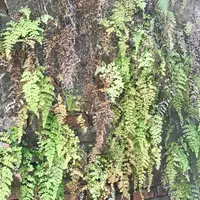
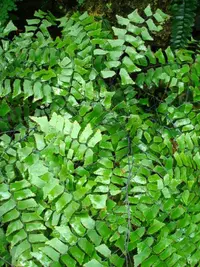
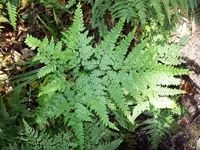
Serpocaulon triseriale is an epiphytic fern, meaning it often grows on trees rather than in deep soil. It forms creeping rhizomes with upright, narrow fronds that create a loose, airy clump.

In nature it occurs in tropical and subtropical forests of Central and South America, where it enjoys filtered light and constant moisture. Its relatively thin fronds and epiphytic roots make it sensitive to drying out and to heavy, compacted soils.

This species suits growers who can provide steady humidity, free-draining substrate, and gentle air movement. Understanding how to care for Serpocaulon triseriale starts with mimicking its cool, shaded forest habitat indoors or in a sheltered outdoor space.

Main Plant Requirements

Care Difficulty

Moderate Care

Light Preference

Partial Shade

Water Requirements

Moderate Water

Temperature Preference

Tropical / Frost Sensitive

Hardiness Zone

10–12

Soil Texture

Loamy, Peaty, Organic-rich

Soil pH

Acidic (5.5–6.5), Slightly acidic (6.5–7.0)

Soil Drainage

Moist but well-drained

Fertilization

Minimal (feed rarely)

Get Personalized Care Plan

Scan your plant to receive care tips personalized for your specific plant

Available on iOS and Android

How to Care for the Serpocaulon triseriale

This fern prefers soft, filtered light similar to a bright forest understory.

  • Provide bright, indirect light or dappled shade for 4–6 hours daily; gentle morning sun is acceptable, but avoid strong midday and afternoon rays that scorch fronds.
  • Outdoors, place Serpocaulon triseriale under light tree canopy or on an east-facing side; indoors, position it near a bright window with sheer curtain or a few feet back.
  • If fronds grow sparse, elongated, or pale, light is too low; if tips bleach, curl, or develop dry brown patches, reduce light intensity or move farther from the window.

This species prefers consistently slightly moist conditions without staying waterlogged.

  • Water when the top 2–3 cm of soil feels dry, allowing moisture deeper in the root zone while avoiding soggy conditions that promote rot.
  • Use a loose, well-draining mix and ensure excess water drains freely; never leave containers or planting pockets sitting in standing water.
  • In warm active growth, expect more frequent watering and watch for drooping or crisping fronds as signs of underwatering; in cooler seasons, reduce frequency if soil stays damp for several days.

This fern thrives in mild, frost-free conditions with stable temperatures.

  • Aim for 65–80°F (18–27°C) for best growth; short periods up to 85°F (29°C) are tolerated if humidity and soil moisture are kept steady.
  • Protect from cold; growth slows below 55°F (13°C) and tissue damage can occur near 40°F (4°C), so avoid planting in spots prone to frost pockets.
  • In climates with cool winters, grow it in a sheltered courtyard, greenhouse, or indoor space and keep it away from direct heater blasts, air-conditioning vents, and sudden temperature swings.

This fern prefers consistently moist air and reacts quickly to very dry conditions.

  • Aim for 60–80% humidity, especially indoors or in heated rooms.
  • Crisping frond tips, slowed growth, and frequent brown edges signal humidity stress rather than underwatering.
  • Use a pebble tray, group plants, or run a small humidifier near Serpocaulon triseriale to raise local humidity without waterlogging the soil.

Serpocaulon triseriale benefits from a loose, airy, organic-rich mix that drains quickly yet holds some moisture.

  • Use a mix of roughly 40% fine orchid bark, 30% peat or coco coir, and 30% perlite or pumice for structure and aeration.
  • Select a slightly acidic to neutral pH, around 5.5–7.0, which supports nutrient uptake and healthy root function.
  • Ensure the mix feels springy and never compacts; large, irregular particles keep oxygen around the roots.
  • Avoid heavy garden soil or peat-only mixes that stay soggy, as these promote rhizome rot and fungal issues.

This species adapts well to container growing when the pot supports its creeping rhizomes and moisture needs.

  • Choose a wide, shallow pot so rhizomes can spread horizontally rather than forcing them downward.
  • Opt for a slightly heavier container material if the foliage becomes top-heavy to prevent tipping.
  • Ensure a fast-draining potting mix and unobstructed drainage holes so excess water leaves the container within minutes after watering.

This fern grows in relatively low‑nutrient forest habitats and benefits from light, careful feeding in containers or depleted soils.

  • Use a balanced liquid fertilizer (around 10‑10‑10) at 1/4–1/2 strength for Serpocaulon triseriale in active growth.
  • Apply every 4–6 weeks during spring and summer; skip feeding if growth is very slow or plant looks stressed.
  • In autumn and winter, feed at most once, or not at all, especially in low light or cool rooms.
  • On established outdoor clumps, a thin layer of fine compost in spring is usually sufficient.

Pruning needs are light and mainly focused on keeping the fern clean and healthy rather than shaping.

  • Best timing is late winter to early spring, before new fronds unfurl, or any time damaged fronds appear.
  • Remove dead, yellowing, or torn fronds of Serpocaulon triseriale at the base to limit disease and pest issues.
  • Thin out badly crowded or crossing fronds to improve air flow and reduce fungal problems.
  • Use clean, sharp scissors or pruners and disinfect blades when working on multiple plants.

This rhizomatous fern prefers stable conditions and only occasional repotting or division when clearly root‑bound.

  • Check for roots circling the pot, pushing through drainage holes, or very slow growth as signs it needs repotting.
  • Plan to repot every 2–3 years in spring, choosing a pot only 2–3 cm wider with free‑draining, humus‑rich mix.
  • Water Serpocaulon triseriale well the day before, then gently loosen the root ball and keep rhizomes at the same depth.
  • After repotting, firm the mix lightly, water thoroughly, and keep in shaded, humid conditions for 1–2 weeks to reduce stress.

Division of the rhizome is the most practical method for home propagation, as spore raising is slow and technical.

  • Divide established clumps in spring when new growth starts, choosing firm, healthy rhizome sections.
  • Lift the plant, gently tease apart the root mass, and cut rhizomes into pieces with at least 2–3 fronds each.
  • Replant divisions into small pots with moist, well‑aerated fern mix and keep humidity high but soil only lightly damp.
  • Spore propagation is possible under sterile, warm (70–75°F), consistently moist conditions but takes many months.

This fern dislikes hard frost, so some winter attention is helpful, especially in containers or cooler regions.

  • In mild climates, an in‑ground plant usually survives light frosts but benefits from a 5–8 cm mulch layer over the root zone.
  • Move container plants indoors or to a cool, frost‑free porch before temperatures drop near 32°F.
  • Provide bright, indirect light indoors and keep soil barely moist, allowing the top layer to dry slightly between waterings.
  • Avoid cold drafts and sudden temperature swings, which can damage fronds and weaken the plant.

Care Tips

Mounting on slabs

Attach the rhizomes to a hardwood slab or cork bark with sphagnum and soft ties, then secure the whole mount so it hangs or leans at a slight angle to mimic its natural epiphytic growth and improve air movement around the roots.

Rhizome orientation

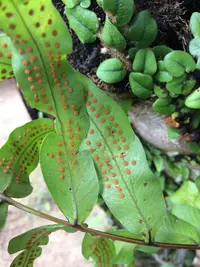
When potting, position the creeping rhizome horizontally on or just above the substrate surface instead of burying it, which reduces rot risk and encourages new fronds to emerge evenly along its length.

Portioning and renewal

Every 2–3 years, divide congested rhizomes into several healthy sections with at least 3–4 fronds each, discarding any hollow or mushy portions to rejuvenate the plant and produce multiple vigorous clumps.

Targeted frond grooming

Remove individual older fronds only once they are more than half yellow or brown, cutting them close to the rhizome with clean scissors to maintain airflow in the center of the plant and limit fungal spotting.

Quarantine and inspection

Quarantine any new ferns for 2–3 weeks and inspect the frond undersides and rhizomes under bright light so that pests such as scale or mealybugs are detected early, which simplifies caring for Serpocaulon triseriale in mixed collections.

Common Pests and Diseases

Scale insects

This pest feeds on fronds and rhizomes, causing yellowing, slow growth, and sticky honeydew on the foliage. Symptoms include small, dome-shaped brown or tan bumps firmly attached to stems or leaf veins.

Solution

Isolate the plant, then manually remove visible scale with a cotton swab dipped in alcohol or by gently scraping with a fingernail. Rinse fronds under lukewarm water, increase airflow, and use repeated applications of insecticidal soap or a light horticultural oil, focusing on the rhizome and leaflet midribs, which are common feeding sites when caring for Serpocaulon triseriale.

Rhizoctonia leaf blight

This disease causes irregular tan to brown lesions on fronds, often starting where moisture lingers, and can lead to frond collapse in warm, humid, poorly ventilated conditions. Symptoms include patchy dead areas that may merge, giving fronds a scorched or tattered look.

Solution

Remove and discard affected fronds and any fallen debris around the rhizome. Reduce overhead watering, keep fronds dry, improve air movement around the plant, and if spread continues, use a fungicide labeled for ornamental ferns, applying only to well-watered plants to avoid chemical stress.

Nematode leaf streak

This disease is caused by microscopic roundworms that move in free water films on the frond surface, creating water-soaked streaks or angular lesions between veins that later turn brown. Symptoms include distorted new fronds and a patchy, mosaic-like damage pattern along the pinnae.

Solution

Avoid overhead watering and splashing, especially in indoor collections, and remove heavily damaged fronds promptly. In home settings, management focuses on strict sanitation, using clean tools and pots, and if damage is severe, discarding the plant and replacing with nematode-free stock to prevent spread to other ferns.

Spider mites

These insects are tiny sap feeders that thrive in warm, dry indoor air, leading to dull, stippled fronds, fine webbing, and premature leaflet drop. Symptoms include a grayish cast to the foliage and very small moving dots on the undersides of fronds.

Solution

Increase humidity around the plant, then thoroughly rinse fronds, especially undersides, with a gentle lukewarm shower. Repeat rinsing every few days and, if needed, follow with insecticidal soap or a light horticultural oil, ensuring full coverage of the lower leaf surfaces where mites concentrate.

Bacterial blight

This disease creates water-soaked, translucent spots on young fronds that quickly turn dark brown or black with a yellow halo. Symptoms include rapidly spreading lesions along the midrib and margins, often associated with splashing water and crowded, humid growing conditions.

Solution

Remove and discard all affected fronds and avoid misting or overhead watering that leaves moisture on the foliage. Improve spacing and airflow, irrigate at the soil level in the morning, disinfect cutting tools with alcohol or a bleach solution, and if infections recur, consider replacing highly affected plants to protect nearby specimens.

Interesting Facts

Epidermal scale armor

The fronds have a distinctive covering of tiny brown scales on both surfaces, which helps reduce water loss and protects the leaf tissue from intense light in its native cloud forest habitats.

Climbing fern habit

Instead of forming only tidy ground-level rosettes, this species grows from a creeping rhizome that can scramble over rocks and tree trunks, allowing it to occupy both terrestrial and epiphytic niches.

Cloud forest specialist

In the wild, this fern is most often recorded from moist, cool Andean cloud forests, where it experiences frequent mists, filtered light, and very stable temperatures throughout the year.

FAQs about Serpocaulon triseriale

This fern adapts to both, but performs best outdoors or in greenhouses where humidity stays high and temperatures are mild. Indoors, success depends on stable moisture, filtered light, and avoiding dry heated or air-conditioned spots.

Grow Healthy Plants with Botan Care

Keep your plants happy and healthy with plant identification, disease detection, and easy care guidance.

Botan plant care app — identify plants on mobile

Explore More Plants