Galápagos carpetweed Care (Sesuvium edmonstonei)

Also known as: Galápagos carpet
Galápagos carpetweed

About Galápagos carpetweed

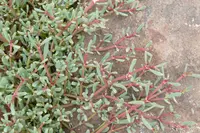
Galápagos carpetweed (Sesuvium edmonstonei) is a low, spreading succulent native to coastal zones of the Galápagos Islands. It forms dense mats that hug the ground and help stabilize salty shorelines. Leaves are small, fleshy, and usually bright green, with starry pink to purplish flowers that open in good light. This compact habit makes it interesting for rock gardens, coastal-style plantings, or as a groundcover in very dry, sunny spots. As a halophyte, it tolerates high salt levels and drought but dislikes shade and poorly drained, heavy soils. Gardeners who care for Galápagos carpetweed should focus on strong light, very free-draining soil, and minimal watering once established.

Main Plant Requirements

Care Difficulty

Easy Care

Light Preference

Full Sun

Water Requirements

Low Water

Temperature Preference

Tropical / Frost Sensitive

Hardiness Zone

11–12

Soil Texture

Sandy, Rocky, Loamy

Soil pH

Neutral (7.0), Slightly alkaline (7.0–7.5)

Soil Drainage

Waterlogged tolerant

Fertilization

Minimal (feed rarely)

Get Personalized Care Plan

Scan your plant to receive care tips personalized for your specific plant

Available on iOS and Android

How to Care for the Galápagos carpetweed

This coastal succulent thrives in strong light and is highly adapted to open, exposed sites.

  • Provide full sun for 6–10 hours daily; Galápagos carpetweed shows best growth and compact form in unobstructed coastal or garden exposure.
  • Accepts light partial shade for 2–4 hours, especially in very hot inland climates, but prolonged shade leads to weak, stretched stems and sparse foliage.
  • In summer, intense afternoon sun combined with reflected heat can scorch new growth in shallow or rocky soils, so ensure soil does not dry to a powdery state for long.

This halophytic coastal plant is built for drought and prefers drier conditions with excellent drainage.

  • Allow sandy or gravelly soil to dry at least in the top 5–8 cm before watering again; in many coastal climates, natural rainfall is enough once plants are established.
  • Increase watering slightly during the first growing season and in very windy, hot periods, using deep, infrequent soakings rather than small, frequent applications.
  • Watch for overwatering signs such as yellowing, soft leaves and stem collapse; wrinkling or limp, thin leaves on Sesuvium edmonstonei usually indicate prolonged drought stress.

This species is adapted to warm, coastal climates and dislikes cold, wet conditions.

  • Optimal growth occurs around 70–85°F (21–29°C), where shoots spread quickly and foliage stays dense along sandy or rocky shorelines.
  • Tolerates heat up to about 95–100°F (35–38°C) if soil drains rapidly and plants are not confined in heat-trapping pockets against walls or pavement.
  • Minimum safe temperatures are around 40°F (4°C); brief dips to 32°F (0°C) may burn tips, while repeated frosts can kill plants, so protection or replanting is needed in colder winters.

This coastal succulent tolerates a wide humidity range and rarely needs special humidity control indoors or outdoors.

  • Ideal humidity is 30–60%, similar to typical indoor air or dry coastal conditions.
  • Plant handles very dry air without issue; excess humidity is more problematic than low humidity.
  • Watch for persistent leaf wetness, soft stems, or fungal spotting as signs of humidity stress, and improve air movement rather than misting Galápagos carpetweed.

Sesuvium edmonstonei prefers lean, highly drained, sandy soil that mimics its native coastal habitat.

  • Use a mix of 50–70% coarse sand or grit with the rest cactus mix to create a sharply drained, mineral substrate.
  • Aim for slightly alkaline to neutral pH, roughly 7.0–8.0, avoiding strongly acidic mixes rich in peat.
  • Improve aeration by adding pumice or perlite instead of fine compost, which can compact and retain excess water.
  • Avoid dense, clay-heavy, or water-retentive soils that stay wet for more than 1 day after watering, as roots are prone to rot.

This species is suitable for container growing, especially in shallow, wide pots that support its spreading habit.

  • Choose a broad, low container to support lateral spread and reduce the chance of the plant spilling over and snapping stems in wind.
  • Select a heavy terracotta or ceramic pot if grown outdoors to resist tipping and to allow faster evaporation from the root zone.
  • Elevate the pot slightly on feet or blocks so drainage holes stay clear and runoff water does not reabsorb into the mix.

Sesuvium edmonstonei is adapted to lean, sandy, saline soils, so only light fertilization is needed in containers or poor substrates.

  • Use a diluted balanced liquid fertilizer (around 10-10-10 NPK at 1/4–1/2 strength) for Galápagos carpetweed in pots.
  • Feed every 4–6 weeks during the warm, active growing season if growth looks weak or pale.
  • Avoid rich compost layers; a thin top-dress of sandy, low-nutrient mix is usually sufficient.
  • Stop feeding in late fall and do not fertilize during winter dormancy or very cool periods.

Sesuvium edmonstonei responds well to light pruning that maintains a low, even mat of foliage.

  • Trim in late spring or early summer, after new growth starts but before flowering peaks.
  • Use clean, sharp scissors or hand pruners to remove dead, damaged, or leggy stems.
  • Shorten excessively long runners to keep the plant dense and prevent bare patches in the center.
  • Avoid cutting into woody bases; leave green tissue on each stem segment to sustain regrowth.

This coastal succulent is usually grown in the ground, but container plants or nursery stock benefit from occasional transplanting.

  • Plan transplanting or repotting in late spring once temperatures are consistently mild and soil is warming.
  • Look for roots circling the pot, water running straight through, or noticeably slower growth as signals to move up 1 pot size.
  • Use a shallow, wide container with a gritty, fast-draining mix (sand plus cactus mix) to limit root stress.
  • Water lightly immediately after transplanting, then let the mix partly dry; provide bright light but avoid harsh midday sun for 3–5 days.

Sesuvium edmonstonei is commonly propagated from stem cuttings and less often from seed for habitat or restoration work.

  • Take short, non-flowering stem cuttings in late spring or summer and remove the lower leaves.
  • Allow cut ends to dry for several hours, then place in a sandy, well-drained mix kept just slightly moist.
  • Provide bright, indirect light and warm conditions around 70–80°F to encourage rooting within a few weeks.
  • For seeds, sow on the surface of a salty, sandy mix, keep warm and lightly moist, and do not bury deeply.

This species is adapted to mild, frost-free coastal climates and has limited tolerance of hard freezes.

  • In regions with light frost, a thin gravel or sand mulch can help buffer root temperature and improve drainage.
  • Move container-grown plants indoors or to a cool, bright, frost-free space when temperatures approach 32°F.
  • Water sparingly in winter so the soil stays mostly dry, which reduces cold damage to succulent roots and stems.

Care Tips

Salinity management

Use a slightly saline irrigation regime only if mimicking coastal conditions for restoration trials, but in typical gardens use low-salt water and avoid de-icing salts or pool backwash near plantings to prevent gradual salt accumulation in the root zone.

Erosion control use

Plant it on sandy banks or the upper edge of coastal beds and lightly pin down longer stems with U-shaped landscape staples so they root at the nodes and form a tighter mat that stabilizes loose soil.

Container spread control

In pots or troughs, occasionally redirect or trim back outer shoots that hang over hard surfaces so the plant maintains a dense, even cushion instead of becoming sparse in the center.

Storm and wind resilience

In exposed coastal sites, establish plants slightly behind low rock edging or driftwood so the mat can spread over these features and gain some physical protection from sandblasting and strong winds common when growing Galápagos carpetweed outdoors.

Flowering performance check

If flowering declines, inspect for thatch-like build-up of old, woody stems and selectively thin or clip out some of the oldest sections to stimulate new, more floriferous growth from the base.

Common Pests and Diseases

Mealybugs

This pest feeds on succulent stems and leaves, sucking sap and leaving cottony white clusters in leaf axils and along young shoots. Symptoms include stunted growth, honeydew, and sooty mold on dense mats of foliage.

Solution

Isolate affected plants, then dab visible insects with cotton swabs dipped in 70% isopropyl alcohol and gently rinse the plant with a strong but controlled stream of water. For recurring issues, use a systemic insecticide labeled for succulents or a horticultural oil spray, applied in the early morning, and reduce excess fertilization that encourages soft, mealybug-prone growth.

Aphids

These insects cluster on soft shoot tips and flower stalks, sucking sap and causing distorted new growth and sticky honeydew on the sprawling carpet. Ants may appear, attracted to the honeydew on coastal or container-grown plants.

Solution

Spray infested areas with a firm stream of water to dislodge colonies, then treat remaining aphids with insecticidal soap or a light horticultural oil, making sure to coat undersides of leaves and stems. Limit high-nitrogen feeding that promotes tender growth, and monitor regularly during warm, calm weather for early intervention when caring for Galápagos carpetweed.

Coastal leaf spot

This disease causes small, water-soaked or brown spots on leaves, often starting on older foliage exposed to salt spray and high humidity. Symptoms include speckling, yellowing, and premature drop of affected leaves along the outer edges of mats.

Solution

Remove and discard the most affected leaves and any dead, decaying plant debris to reduce inoculum. Improve air circulation by thinning very dense patches, avoid overhead watering in containers, and if needed apply a copper-based fungicide or bactericide labeled for leaf spots during extended humid periods.

Spider mites

These pests thrive in hot, dry, and sheltered sites, causing fine stippling, a dull or bronzed appearance on leaves, and delicate webbing in tight internodes. Symptoms include patchy discoloration that may be mistaken for sun or salt damage.

Solution

Increase humidity around container plants, then wash foliage thoroughly with water, paying attention to leaf undersides and tight stem joints. For persistent infestations, use insecticidal soap or a miticide labeled for spider mites, repeating at 5–7 day intervals while monitoring with a hand lens for moving mites and eggs.

Interesting Facts

Galápagos coastal specialist

This species is native to the Galápagos Islands, where it forms low succulent mats on coastal lava, sand, and salt-sprayed shores, helping stabilize fragile shoreline substrates.

High salt tolerance

It is a halophyte, meaning it can grow in very saline conditions; the leaves and stems store water and tolerate salt spray and salty soils that would kill many other plants.

Role in marine iguana habitat

Along parts of the Galápagos shoreline, its mats grow among lava rocks and beach areas used by marine iguanas, contributing to the structure and microclimate of these coastal ecosystems.

FAQs about Galápagos carpetweed

This species forms low, spreading mats but is not usually invasive in garden settings. It expands gradually through stems that root at the nodes, especially in sandy or coastal soils, and is easily controlled with edging or occasional trimming.

Grow Healthy Plants with Botan Care

Keep your plants happy and healthy with plant identification, disease detection, and easy care guidance.

Botan plant care app — identify plants on mobile

Explore More Plants