Pinch Young Stems
Pinch out the soft tips of young shoots once or twice in spring to encourage bushier plants with more flowering stems and better wind resistance.

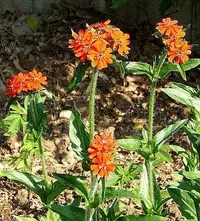
Maltese-cross, Silene chalcedonica, is a clump-forming perennial grown mainly for its bright, dense clusters of star-shaped red flowers. The upright stems carry narrow leaves and create a strong vertical accent in mixed borders or cottage-style gardens.
This species originates from central and eastern Europe and parts of Russia, where it grows in open, sunny meadows and grasslands. It is generally considered easy to grow in temperate climates, provided it receives good light and reasonably moist, well-drained soil.
Gardeners who want to learn how to care for Maltese-cross usually focus on providing full sun, avoiding waterlogged conditions, and deadheading spent blooms to encourage a tidy appearance.

Care Difficulty
Easy Care

Light Preference
Full Sun

Water Requirements
Moderate Water

Temperature Preference
Cold Hardy

Hardiness Zone
3–7

Soil Texture
Sandy, Loamy, Organic-rich

Soil pH
Acidic (5.5–6.5), Slightly acidic (6.5–7.0)

Soil Drainage
Moist but well-drained

Fertilization
Light (every 4–6 weeks)
Scan your plant to receive care tips personalized for your specific plant
Available on iOS and Android
Silene chalcedonica performs best in bright outdoor conditions with stable daily sun exposure.
Silene chalcedonica prefers evenly moist, well-drained soil that never stays soggy for long periods.
This perennial tolerates a wide temperature range but flowers best in cool to mild conditions.
Humidity is not critical for Silene chalcedonica, which handles typical outdoor ranges well.
Silene chalcedonica prefers moderately fertile, well-drained, slightly moist soil to flower reliably.
This species can grow successfully in containers when drainage and stability are managed carefully.
Silene chalcedonica benefits from modest feeding in reasonably fertile soil.
Silene chalcedonica responds well to light, timely pruning to support flowering and plant health.
This perennial is more often transplanted in the ground than grown long term in containers.
Silene chalcedonica is commonly propagated by seed and by division of mature clumps.
This species is generally cold hardy in temperate climates and needs only modest winter attention.

Plant Health Check
Not sure what's wrong with your plant? Check your plant's health inside the app.
Despite the common name Maltese-cross, this species is native to central and eastern Europe and western Siberia, not Malta or the Mediterranean region.
The plant is a herbaceous perennial that can persist and flower in the same spot for many years, forming dense clumps when grown in suitable temperate climates.
Its bright scarlet flower clusters are highly attractive to butterflies and other pollinating insects, making it valuable for wildlife-friendly garden plantings.

The cross-shaped blooms are so visually striking that the species was widely grown in European monastery and cottage gardens by the 16th century, and it appears in several early herbals as an ornamental symbolically linked to the Christian cross.
This species forms tight clumps and spreads slowly by short rhizomes and self-seeding. It is not considered aggressive in most gardens, but deadheading and removing unwanted seedlings keeps it neatly contained in mixed borders.
Keep your plants happy and healthy with plant identification, disease detection, and easy care guidance.