

potato plant Identification (Solanum tuberosum)

Recognize potato plant by its low, upright to spreading stems, usually 1 to 3 feet tall (30 to 90 cm), and its compound leaves with one large terminal leaflet and several smaller side leaflets.

It also shows five-pointed, star-shaped flowers with a fused yellow cone of anthers in the center, a distinctive Solanum feature.

Solanum tuberosum Identification

Identify Your Plant with Botan

Upload a clear photo to check your plant identification with Botan.

Clear images work best. Avoid photos taken too close or too far away

Check the leaf pattern, flowers, and berry-like fruits on Solanum tuberosum.

  • Leaves are alternate and compound, usually 8-14 inches (20-35 cm) long, with one large terminal leaflet and several smaller side leaflets.
  • Stems are upright to spreading, thick, green, and ridged rather than woody.
  • Flowers form in small clusters and are star-shaped with 5 fused petals and a yellow cone of stamens at the center.
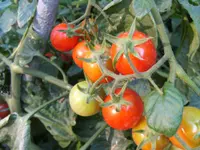
  • Fruits, when present, are smooth, round, green berries about 1 inch (2.5 cm) wide.

Look for the combined leaf-and-flower pattern rather than a single trait.

Solanum tuberosum shows clear visual shifts from sprouting stems to flowers and berries.

  • Young plant: New shoots emerge as a few stout green stems with simple to weakly divided leaves, giving a sparse, upright outline unlike the later bushier form.
  • Mature plant: By maturity, plants form a branched, leafy clump about 1-3 feet (30-90 cm) tall, with pinnate leaves carrying a larger terminal leaflet and smaller side leaflets.
  • Flowering stage: Flowering stems hold small clusters above the foliage; five-pointed white, pink, purple, or bluish flowers make the plant look less purely leafy than before bloom.
  • Fruiting stage: After flowering, round green berries replace the flower clusters, standing out against the leaves and showing a fruiting structure absent in earlier stages.

Some potato plant cultivars are easy to separate by tuber skin and flesh color, flower color, and plant stature.

  • 'Yukon Gold': Tubers have smooth tan to yellow skin and distinctly yellow flesh, unlike the usual white-fleshed types.
  • 'Red Norland': Tubers are bright red-skinned with shallow eyes, making the crop visibly different from brown- or tan-skinned forms.
  • 'Purple Majesty': Tubers are deep purple outside and inside, with stems and leaves often carrying a darker purple cast.
  • 'Russian Banana': Tubers are long and finger-shaped, usually 2 to 4 inches (5 to 10 cm) long, rather than rounded to oval.

In spring, the potato plant emerges from the soil with soft green shoots that quickly develop into leafy stems. By early to midsummer, star-shaped flowers become visible above the foliage, usually white, pink, purple, or pale blue. Later in summer, small green berries may appear after flowering. As the season ends, the foliage yellows, browns, and collapses, leaving little above-ground growth once the plant enters dormancy.

A few nightshades can be mistaken for potato plant at a glance.

Jerusalem cherry(Solanum pseudocapsicum)

Both are leafy Solanum plants with star-shaped flowers and berries. Jerusalem cherry stays much smaller, usually under 2 feet (60 cm), and has simple, unlobed leaves rather than the compound leaves with several leaflets seen on potato.

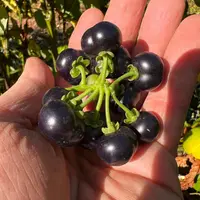
Black nightshade(Solanum nigrum)

This weed can resemble young plants through its oval leaves and white star-shaped flowers. It differs by having simple leaves, not divided into leaflets, and its small black berries hang in clusters on slender stalks.

  • Toxic green parts: Leaves, stems, flowers, fruits, and green tubers contain glycoalkaloids. This is an ingestion risk for humans and pets.
  • Sprouted or damaged tubers: Tubers that are green, heavily sprouted, or bitter can have higher glycoalkaloid levels. The concern is ingestion by humans and pets.

Confirm the Species with Botan

Upload a photo to help identify the plant or double-check your result before labeling, buying, or troubleshooting common issues.

FAQ

Leaves are alternate along the stem, not opposite. Each leaf is compound, with one larger terminal leaflet and several smaller side leaflets. This pattern is useful when identifying potato plant in the garden.

Everything About potato

More Plant Identification Guides

Know What Plant You Have

Identify it from a photo, then get plant details, care information, and common problems matched to the result.

Botan app identifying a plant from a photo
Frozen vs Fresh Vegetable Nutrients: Which Option Is Healthier?

6 min read · 8 Sept 2026

Frozen vs Fresh Vegetable Nutrients: Which Option Is Healthier?

Frozen and fresh vegetables are nutritionally comparable: frozen produce often retains vitamins just as well as fresh and may sometimes contain more. Here’s how blanching and storage affect nutrients—and when to choose each.

Plant Recommendations
Frozen vs Fresh Vegetable Nutrients: Which Option Is Healthier?
What Do Plants Need to Grow – 5 Things Every Greenery Can't Live Without

8 min read · 31 Jul 2026

What Do Plants Need to Grow – 5 Things Every Greenery Can't Live Without

To keep plants healthy and thriving, provide the right balance of light, humidity, nutrients, airflow, and quality soil. This guide covers the essentials of year-round plant care.

Beginner Guides
What Do Plants Need to Grow – 5 Things Every Greenery Can't Live Without
12 Best Plants for Bathroom That Thrive in Humid Conditions

9 min read · 29 Sept 2026

12 Best Plants for Bathroom That Thrive in Humid Conditions

Discover the 12 best plants for bathroom spaces. Each pick comes with its own advantages, plus light, humidity, watering, and placement tips. Take a look and match the plant to your specific bathroom.

Plant Recommendations
12 Best Plants for Bathroom That Thrive in Humid Conditions