giant potato creeper Care (Solanum wendlandii)

Also known as: marriage vine
giant potato creeper

About giant potato creeper

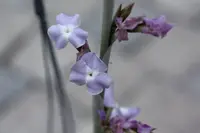
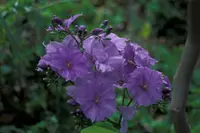
The giant potato creeper, Solanum wendlandii, is a vigorous evergreen climber from Central America. It is grown mainly for its clusters of large, star-shaped lavender to violet flowers.

This plant scrambles or climbs using hooked prickles, forming a dense, leafy screen when well supported. Its foliage is glossy and divided, giving a slightly tropical look.

In gardens it is usually trained on fences, pergolas, or large trellises in mild climates. It prefers bright light, moderate moisture, and well-drained soil.

Gardeners who want to know how to care for giant potato creeper should note that its fast growth and size make it better suited to outdoor spaces with room for strong support structures.

Main Plant Requirements

Care Difficulty

Moderate Care

Light Preference

Full Sun

Water Requirements

Moderate Water

Temperature Preference

Tropical / Frost Sensitive

Hardiness Zone

10–11

Soil Texture

Sandy, Loamy, Organic-rich

Soil pH

Acidic (5.5–6.5), Slightly acidic (6.5–7.0)

Soil Drainage

Moist but well-drained

Fertilization

Light (every 4–6 weeks)

Get Personalized Care Plan

Scan your plant to receive care tips personalized for your specific plant

Available on iOS and Android

How to Care for the giant potato creeper

Solanum wendlandii thrives with bright, direct light but needs protection from harsh afternoon sun.

  • Provide 4–6 hours of morning sun or early afternoon sun, with light shade after 2–3 pm, especially in hotter regions.
  • Tolerates bright partial shade, but flowering decreases if it receives less than 4 hours of direct sun per day.
  • In summer, prevent leaf scorch by shielding from intense late-afternoon sun; in winter, give the giant potato creeper the brightest, sunniest spot available.

This vigorous climber prefers evenly moist, fast-draining soil that never stays soggy for long periods.

  • Water when the top 3–5 cm of soil feels dry, soaking the root zone thoroughly and letting excess drain away.
  • Reduce watering in cooler months, but do not let the soil dry out completely for more than a day or two, especially in windy sites.
  • Yellowing, soft leaves and a sour smell indicate overwatering, while limp, curling leaves and dry stems suggest Solanum wendlandii is staying too dry.

This species grows best in consistently warm, frost-free conditions.

  • Ideal growth occurs at 65–80°F (18–27°C), with good flowering where nights stay above 55°F (13°C).
  • Tolerates brief dips to about 40°F (4°C), but foliage damage and growth slowdown occur near this point, especially in exposed, windy spots.
  • It is highly sensitive to frost; protect or cover the vine if temperatures are forecast below 35°F (2°C), and provide light shade and good airflow during heat above 90°F (32°C) to limit stress.

This species benefits from moderate to moderately high humidity for robust growth and flowering.

  • Aim for 50–70% humidity, as very dry air leads to slower growth and weaker flower display.
  • Tolerates brief dips to 30–40%, but prolonged dry air can cause leaf edge browning and increased spider mite issues.
  • For caring for giant potato creeper in dry homes, group plants, use a pebble tray with water below the pot base, or run a small humidifier nearby.

Solanum wendlandii prefers a loose, well-drained, organic-rich soil that still holds some moisture.

  • Use a mix of about 50% peat- or coir-based potting mix, 25% compost, and 25% perlite or fine bark for both aeration and moisture retention.
  • Aim for slightly acidic to neutral pH, roughly 6.0–7.0, to support balanced nutrient availability and healthier root development.
  • Ensure the soil structure is crumbly and loamy, not compacted; break up clods and mix in coarse materials to prevent waterlogging.
  • Avoid heavy clay, constantly wet substrates, or mixes with excessive fine peat that stay soggy, which encourages root rot and poor oxygen supply.

This vigorous climber is suitable for container growing if given adequate root space and support.

  • Choose a deep, heavy container that resists tipping once the vine and support structure gain height and mass.
  • Select a pot slightly wider than the current root system to allow lateral spread without leaving large, unused, water-retentive pockets.
  • Use a container tall enough to anchor a trellis or obelisk firmly so wind or vine weight does not loosen the root ball.

Solanum wendlandii responds well to moderate feeding during the active growing season.

  • Use a balanced liquid fertilizer (for example 10-10-10) at 1/2 strength every 3–4 weeks in spring and summer.
  • Alternatively, apply slow-release granules at the base in early spring, following label rates.
  • Stop feeding giant potato creeper in late summer so new growth hardens before cold weather.
  • Avoid fertilizing in winter dormancy and always water before applying any fertilizer to reduce root burn.

Pruning Solanum wendlandii helps control its vigorous climbing habit and supports flowering.

  • Carry out main pruning in late winter or early spring before strong new growth starts.
  • Remove dead, damaged, or crossing stems first, then thin congested sections to improve light and airflow.
  • Shorten long, wayward shoots to shape the vine and keep it within its support structure.
  • Use sharp, clean bypass pruners and make angled cuts just above a healthy bud or side shoot.

This vigorous climber often benefits from timely transplanting or repotting to support strong growth.

  • Plan major transplanting or repotting in early spring when new growth begins and temperatures are mild.
  • Look for roots circling the pot, pushing through drainage holes, or noticeably slowed growth as signs it needs more space.
  • Move to a container 1–2 in wider or a prepared ground site with well-drained, fertile soil and a sturdy support.
  • Water thoroughly after moving, shade from intense sun for 3–5 days, and keep soil evenly moist to limit root stress.

Solanum wendlandii is most commonly propagated by semi-ripe stem cuttings rather than seed.

  • Take 10–15 cm semi-ripe cuttings in late spring or summer from non-flowering shoots.
  • Remove lower leaves, dip the cut end in rooting hormone, and insert into a moist, well-drained cutting mix.
  • Maintain high humidity with a clear cover and keep at 70–75°F in bright, indirect light.
  • For seeds, sow fresh in warm conditions and expect slower, less uniform germination.

This species is frost-tender and needs thoughtful winter care in cooler climates.

  • In regions below 30°F, grow in containers and move plants indoors or into a heated greenhouse before frost.
  • For in-ground plants in mild climates, mulch the root zone with 5–8 cm of organic material in late fall.
  • Wrap vulnerable stems with horticultural fleece or burlap during cold spells to limit freeze damage.
  • Reduce watering in winter, keeping soil just lightly moist, especially for indoor or greenhouse specimens.

Care Tips

Arching Support Frame

Install a strong arch, pergola, or horizontal wires early so the vine can be tied and looped over the structure, which keeps heavy flower clusters visible and prevents stems from kinking under their own weight.

Directed Stem Training

Guide new stems along their support with loose, soft ties every 20–30 cm, because this species twines slowly and benefits from manual direction to avoid tangling and shading its own flowering wood.

Seasonal Rejuvenation Cuts

Every 2–3 years, remove 1–3 of the oldest, thickest stems at the base in late winter to stimulate vigorous replacement shoots and maintain a good balance between foliage and flowers.

Root Zone Mulch Band

Lay a 5–8 cm band of composted bark or leaf mold around, but not touching, the base to keep roots cool, retain moisture, and reduce weed competition that can stress this fast-growing climber.

Preventive Pest Scouting

Inspect the undersides of leaves and young shoots weekly in warm weather for mites, whiteflies, or caterpillars, and treat early with insecticidal soap or horticultural oil to keep caring for giant potato creeper manageable and avoid severe defoliation.

Common Pests and Diseases

Spider mites

This pest thrives on the thin, vigorous foliage and stems, especially in warm, dry, sheltered spots where the vine is often grown. Symptoms include fine webbing, stippled leaves, and gradual yellowing and drop of older foliage.

Solution

Rinse the foliage thoroughly with a strong but controlled stream of water, including the undersides of leaves, then repeat every few days until activity drops. If needed, apply insecticidal soap or horticultural oil labeled for mites, and increase humidity and airflow around the vine to make conditions less favorable for them as part of routine Solanum wendlandii plant care.

Whiteflies

These insects are attracted to the lush, tender growth and can build up dense colonies on the undersides of leaves, especially in protected greenhouse or patio conditions. Symptoms include swarms of tiny white insects when the plant is disturbed, sticky honeydew, and sooty mold on leaves.

Solution

Remove heavily infested leaves if practical, then use a handheld sprayer to wash the undersides of foliage regularly. For ongoing control, introduce yellow sticky traps near the vine, and treat the undersides of leaves with insecticidal soap or horticultural oil, repeating at 5–7 day intervals until populations collapse.

Aphids

These insects often cluster on new shoots, flower stalks, and the undersides of young leaves, drawn by the plant’s fast, soft growth. Symptoms include curled or distorted leaves, sticky honeydew, and reduced flowering.

Solution

Prune or pinch off badly affected shoot tips, then hose down remaining growth to dislodge colonies. Follow up with insecticidal soap applied thoroughly to tender shoots and leaf undersides, and encourage natural predators outdoors by avoiding broad-spectrum, long‑lasting insecticides.

Botrytis blight

This disease can affect flowers, flower stalks, and soft stems when the vine grows in cool, damp, or shaded conditions with poor air movement. Symptoms include water-soaked spots on petals or stems that develop into gray, fuzzy mold and browning, collapsing tissue.

Solution

Remove and discard all affected flowers and stems promptly, and avoid overhead watering that keeps foliage and flowers wet for long periods. Improve spacing and airflow around the vine, and if conditions remain cool and humid, use a fungicide labeled for Botrytis on ornamentals as a protective spray, following the product instructions carefully.

Powdery mildew

This disease appears in crowded or shaded plantings where airflow is restricted, coating leaves with white, powdery patches. Symptoms include dulled or mottled foliage, leaf distortion, and premature leaf drop that can weaken the vigorous vine over time.

Solution

Thin out congested stems to increase light and airflow and avoid wetting the foliage late in the day. Remove and dispose of heavily infected leaves, then apply a suitable fungicide for powdery mildew or a labeled sulfur or potassium bicarbonate product, covering both upper and lower leaf surfaces and repeating as directed until new growth stays clean.

Interesting Facts

Blue-violet star clusters

This species produces large, branched clusters of blue-violet, star-shaped flowers with bright yellow anthers, giving each inflorescence a striking, almost firework-like appearance in full bloom.

Hooked climbing spines

Instead of tendrils, it climbs using numerous small, recurved spines on its stems and leaf veins, which hook into nearby supports and allow the vine to scramble rapidly over trees or structures.

Highland Central American native

It is naturally found in montane forests of Central America, especially Costa Rica, where it grows in warm, humid, but not extremely lowland tropical habitats.

Botan icon

Did you know?

In suitable frost-free climates this vine can become remarkably vigorous, forming dense, almost wall-like coverings over pergolas or large trees when given strong structural support and enough space to grow.

FAQs about giant potato creeper

Lack of flowers usually comes from insufficient light, heavy nitrogen fertilization, or pruning at the wrong time that removes flower buds. Ensure strong support, moderate feeding, and avoid hard pruning just before the main flowering period.

Grow Healthy Plants with Botan Care

Keep your plants happy and healthy with plant identification, disease detection, and easy care guidance.

Botan plant care app — identify plants on mobile

Explore More Plants